
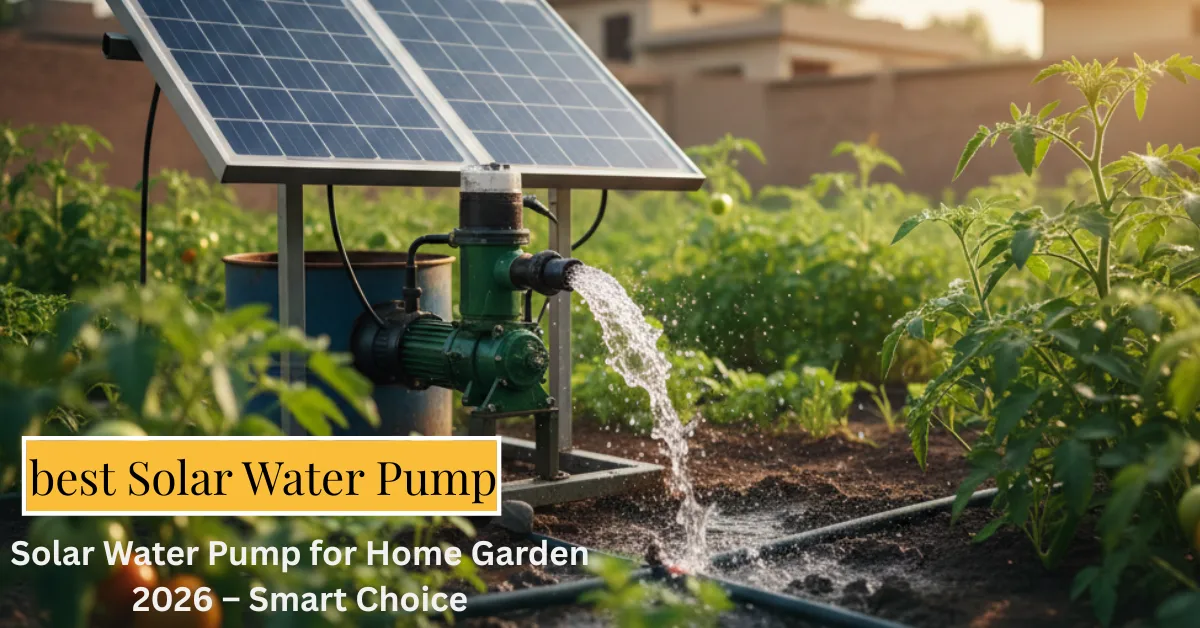
Are you looking for a sustainable way to keep your garden lush and green without increasing your electricity bill? The search for a solar water pump for home garden 2026 is driven by the desire for an eco-friendly, cost-effective, and reliable irrigation solution. You want a system that works independently of the grid, is easy to install, and ensures your plants get water even when you are away. This guide answers your intent by reviewing the top pumps, explaining how they work, and helping you choose the perfect model for your specific needs.
Why Switch to a Solar Water Pump in 2026?
In 2026, solar technology has become more efficient and affordable than ever before. Traditional electric pumps add to your monthly utility costs and are useless during power outages or load shedding.
A solar water pump harnesses free energy from the sun. It eliminates operating costs entirely. Whether you have a small backyard flower bed or a large vegetable garden, these pumps provide autonomy. You no longer need to run long extension cords or worry about safety hazards near water.
Types of Solar Water Pumps for Gardens
Understanding the different types is crucial. Your choice depends on your water source and how much water you need.
1. Submersible Solar Pumps
These are designed to be placed underwater. They are perfect if your water source is a deep well, a pond, or a rain barrel.
- Best for: Deep wells (over 20 ft), large ponds, and lifting water to a height.
- Pros: Highly efficient, quiet operation, and self-priming.
- Cons: Harder to access for maintenance since they are submerged.
2. Surface Solar Pumps
These are installed above ground, usually next to the water source. A pipe draws water from the source and pushes it to your garden.
- Best for: Shallow sources like streams, shallow wells, or water tanks.
- Pros: Easy to install and maintain.
- Cons: Noisier and not suitable for deep water sources (limited suction lift).
3. Solar Fountain Pumps
Small, low-power pumps designed primarily for decoration and aeration.
- Best for: Birdbaths, small fish ponds, and decorative garden features.
- Pros: Very cheap and easy to set up.
- Cons: Low flow rate, not suitable for irrigating large areas.
Key Features to Consider Before Buying
Don’t just buy the first pump you see. Check these specifications to ensure it matches your requirements.
Flow Rate (GPH/GPM)
This measures how much water the pump moves per hour or minute.
- For drip irrigation, a lower flow rate (e.g., 50-100 GPH) is fine.
- For sprinklers or filling tanks, you need a higher rate (e.g., 300+ GPH).
Maximum Head Lift
This is the vertical height the pump can push water. Measure the distance from your water source surface to the highest point in your garden. Always buy a pump with a head lift slightly higher than you need.
Battery Backup
This is a game-changer. A standard solar pump stops working when a cloud passes or the sun sets. A system with a battery backup ensures consistent water pressure throughout the day and can even run at night or on cloudy days.
Power of the Panel
The power of the pump is limited by the solar panel. A higher wattage panel (e.g., 20W, 50W, 100W) means the pump can run stronger and start earlier in the morning.
What to Avoid When Buying
Not all solar pumps are created equal. Avoid these common pitfalls:
- Cheap plastic casings: These crack easily in the sun. Look for UV-resistant ABS or stainless steel.
- Undersized panels: If the panel is too small (e.g., 1-2W for a fountain), it will only work in blazing noon sun.
- Short cords: Ensure the cable from the pump to the panel is at least 10-15 feet long so you can place the panel in the sun while the pump is in the shade.
Top Solar Water Pumps for Home Garden 2026
Based on performance, durability, and user reviews, here are the top picks for this year.
1. ECO-WORTHY Solar Well Pump Kit
A powerhouse for those with deeper water needs.
- Features: Submersible, typically comes with 100W+ panels, high lift capacity.
- Best Use: Filling large storage tanks from a well for garden irrigation.
- Verdict: The most reliable option for heavy-duty gardening.
2. Solariver Solar Water Pump Kit
Known for its versatility and durability.
- Features: Submersible, 360+ GPH flow rate, long life (20,000+ hours).
- Best Use: DIY water features, aquaponics, and medium-sized garden watering.
- Verdict: Excellent value for money with a solid warranty.
3. AISITIN Solar Fountain Pump
A bestseller for small water features.
- Features: Integrated panel, multiple nozzle heads, very affordable.
- Best Use: Bird baths and small patio ponds.
- Verdict: Great for beginners or decorative use.
4. Lewisia Solar Pump with Battery
Perfect for those needing consistency.
- Features: Separate solar panel, built-in battery backup, adjustable flow.
- Best Use: Consistent waterfall features or small irrigation loops.
- Verdict: The best choice for cloudy climates.
Step-by-Step Installation Guide
Installing a solar water pump is a great DIY project. Follow these general steps.
Step 1: Choose the Location
Find the sunniest spot for your solar panel. It should face South (in the Northern Hemisphere) or North (in the Southern Hemisphere) and be free from shade between 9 AM and 4 PM.
Step 2: Set Up the Panel
Mount the solar panel securely. You can use a ground stake or mount it on a wall/roof. Ensure the angle is adjustable to capture maximum sunlight in winter and summer.
Step 3: Position the Pump
- Submersible: Lower it gently into the water. Ensure it is not sitting directly in mud (raise it on a brick).
- Surface: Place it on a dry, flat surface near the water. Connect the inlet pipe securely.
Step 4: Connect Tubing
Attach the outlet tubing to the pump. Run this tubing to your garden beds, sprinklers, or storage tank. Use hose clamps to prevent leaks.
Step 5: Connect and Test
Plug the pump wire into the solar panel or battery controller. If the sun is out, the water should start flowing immediately. Adjust the flow rate dial if available.
Step 6: Optimize Panel Angle
To get the most out of your system, adjust the tilt of your solar panel. In summer, a flatter angle (closer to horizontal) works best. In winter, a steeper angle captures the lower sun.
Troubleshooting Common Issues
Even the best systems can face hiccups. Here keeps a quick guide to fix them.
Problem: Pump is not running.
- Check connections: Ensure all wires are plugged in tightly.
- Check the sun: Is the panel in shade? Even a small shadow can cut power.
- Check the impeller: Algae or debris might be jamming it. Open the pump cover and clean it.
Problem: Low water flow.
- Clogged filter: Clean the intake sponge.
- Kinked tubing: Check your hose for bends.
- Cloudy weather: Without a battery, flow drops with sunlight intensity.
Problem: Pump runs but no water comes out.
- Air lock: Tilt the pump underwater to release trapped air.
- Lift too high: Ensure the vertical height is within the pump’s “Max Head” limit.
Comparison Table: Top Models 2026
| Model | Type | Flow Rate | Head Lift | Battery? | Best For |
|---|---|---|---|---|---|
| ECO-WORTHY | Submersible | High | 100+ ft | Optional | Large Gardens / Wells |
| Solariver | Submersible | Medium | 6-8 ft | No | Ponds / Waterfalls |
| Lewisia | Submersible | Medium | 5-7 ft | Yes | Consistent Flow |
| AISITIN | Floating | Low | 2-3 ft | Yes | Bird Baths |
Maintenance Tips for Longevity
To ensure your system lasts for years, follow these simple maintenance tips.
- Clean the Panel: Dust, pollen, and bird droppings block sunlight. Wipe the panel with a damp cloth once a week.
- Clean the Filter: Most pumps have a sponge or mesh filter. Rinse it monthly to prevent clogging, which strains the motor.
- Winter Care: If you live in a freezing climate, remove the pump from the water in winter to prevent ice damage. Store it indoors.
- Check Water Levels: Never let a submersible pump run dry. It can burn out the motor in minutes. Ensure your water source is always sufficient.
Benefits of Solar Irrigation Systems
Why are gardeners worldwide making the switch?
1. Cost Savings
Once you pay for the kit, the water is free. There are no monthly electricity bills.
2. Environmentally Friendly
You are reducing your carbon footprint. Solar pumps produce zero emissions.
3. Independence
You are not unaffected by power outages. Your garden stays watered even if the grid goes down.
4. Flexible Installation
You can place a solar pump anywhere, even in remote corners of your property where running a power cable would be impossible or too expensive.
Cost Analysis: Solar vs. Electric
Let’s look at the numbers.
Electric Pump:
- Initial Cost: $50 – $100
- Extension Cords/Wiring: $50+
- Monthly Electricity: $5 – $15
- 5-Year Total: $400 – $1,000+
Solar Pump:
- Initial Cost: $80 – $200
- Wiring: Included
- Monthly Electricity: $0
- 5-Year Total: $80 – $200
The Solar Water Pump for Home Garden 2026 clearly wins in the long run.
Frequently Asked Questions (FAQs)
1. Do solar pumps work at night?
Standard solar pumps do not work at night. They stop when the sun sets. However, models with a battery backup store energy during the day to run the pump at night or on cloudy days.
2. How long do solar water pumps last?
A good quality brushless pump can last 2 to 5 years or more (over 20,000 hours). Solar panels typically last 20 to 25 years.
3. Can I use a solar pump for drip irrigation?
Yes! Solar pumps are excellent for drip irrigation. You may need a gravity-feed system where the pump fills a raised tank, and gravity pushes water through the drip lines.
4. How deep can a solar pump lift water?
It depends on the model. Small garden pumps lift 3-5 feet. Powerful deep well solar pumps can lift water from 100 to 300 feet or more.
5. What happens if the pump runs dry?
Running dry can damage the pump motor permanently. Look for models with a dry-run protection sensor that turns the pump off if water levels get too low.
Conclusion
Investing in a Solar Water Pump for Home Garden 2026 is a smart decision for any homeowner. It combines technology with nature, providing a hassle-free way to maintain your landscape. Whether you need a powerful submersible unit for a vegetable patch or a gentle fountain for zen vibes, there is a model out there for you.
By choosing the right pump, maintaining it well, and setting it up correctly, you ensure your garden thrives year-round. Say goodbye to dragging heavy hoses and paying high electric bills. Embrace the power of the sun and watch your garden bloom.
Ready to upgrade? Browse the recommended models above and take the first step towards a greener, more sustainable home garden today.


Pingback: Solar Water Pump Price in Pakistan 2026 – Compare Costs Now