What is Net Billing in Punjab 2026? is a new solar energy framework introduced by NEPRA that replaces the previous net metering system. Under this new policy, solar system owners sell their excess electricity to the grid at the National Average Energy Purchase Price (approx. Rs. 8-11 per unit) and buy electricity from the grid at the standard retail tariff (approx. Rs. 35-55 per unit). This shift, effective from February 2026, aims to address circular debt and changes the financial dynamics for solar consumers by separating import and export billing rates.
The Shift from Net Metering to Net Billing
The solar landscape in Punjab What is Net Billing in Punjab 2026?, has undergone a major transformation in 2026. The government has officially replaced the popular “Net Metering” system with a “Net Billing” mechanism.
This change is part of the National Electric Power Regulatory Authority (NEPRA) (Prosumer) Regulations 2026. It fundamentally alters how you interact with the national grid.
previously, under net metering, you could trade electricity unit-for-unit. If you exported 100 units and imported 100 units, your bill was effectively zero (excluding taxes).
Now, with net billing, these two transactions are treated separately. You sell at one rate and buy at another.
Why the Change Happened
The primary driver for this shift is the growing circular debt in the energy sector. The government found the previous 1-to-1 exchange rate unsustainable.
Discos (Distribution Companies) argued that paying retail rates for solar energy was hurting their revenue. They still have to maintain the grid infrastructure you use.
By moving to net billing, the government aims to reduce the capacity payments made to IPPs (Independent Power Producers) and stabilize the grid’s finances.
Key Features of Punjab Net Billing Policy 2026
Understanding the specific rules is crucial for any current or prospective solar owner in Punjab. Here are the core components of the new policy.
1. Dual-Rate Structure
The most significant change is the introduction of two different rates for electricity. The “Buyback Rate” and the “Purchase Rate”.
Buyback Rate: This is the price at which the government buys your excess solar power. It is now set at the National Average Energy Purchase Price (NAEPP).
In 2026, this rate significantly dropped to approximately Rs. 8.13 to Rs. 11 per unit. This is a stark contrast to the previous rates of Rs. 20+.
Purchase Rate: This is the price you pay when you use electricity from the grid (e.g., at night). You will be charged the standard National Retail Tariff.
This tariff varies by slab but generally ranges between Rs. 37 and Rs. 55 per unit (excluding taxes).
2. Contract Duration
The agreement period for solar connections has been shortened. Previously, net metering licenses were valid for seven years.
Under the 2026 regulations, the standard contract term is now five years. After this period, the contract can be renewed based on the rules applicable at that time.
This shorter duration gives the government more flexibility to adjust policies as the energy market evolves.
3. Capacity and Load Limits
There is some good news in the new regulations regarding system size. The previous cap that limited solar systems to a specific percentage of your sanctioned load has been relaxed.
You can now install a solar system up to 100% of your sanctioned load. This allows for larger systems that can better cover your daytime consumption.
However, the maximum generation capacity for a single distributed generation facility is capped at 1 MW.
4. Metering Requirements
To support this dual-rate system, the metering infrastructure is critical. You must install a bi-directional meter or separate meters for import and export.
These meters record exactly how much you feed into the grid and how much you take out, allowing for the separate billing calculation.
Consumers are responsible for the cost of these meters and any necessary grid upgrades. A non-refundable concurrence fee of Rs. 1,000 per kW is also applicable.
Comparative Analysis: Net Metering vs. Net Billing
To clearly understand the financial impact, let’s look at a direct comparison between the old and new systems.
| Feature | Old Net Metering (Pre-2026) | New Net Billing (2026) |
|---|---|---|
| Export Rate | Equal to Off-Peak Retail Rate (~Rs. 22-25) | National Average Energy Price (~Rs. 8-11) |
| Import Rate | Standard Retail Rate | Standard Retail Rate (~Rs. 37-55) |
| Billing Mechanism | Unit-for-Unit Adjustment (kWh) | Monetary Adjustment (Rupees) |
| Contract Term | 7 Years | 5 Years |
| Banking of Units | Surplus units carried forward up to 3 months | Surplus amount credited to bill (reset periodically) |
| ROI (Return on Investment) | 2.5 – 3.5 Years | 4.5 – 6 Years |
As you can see, the Return on Investment (ROI) period has extended. The financial attractiveness of “oversizing” your system to sell back to the grid has diminished.
Impact on Solar Consumers in Punjab
The transition affects different types of consumers in different ways. It is important to know where you stand.
New Consumers
If you are installing solar in 2026, you will automatically fall under the Net Billing regime. You must calculate your savings based on self-consumption rather than export.
The goal for new systems should be to minimize grid reliance during the day and use batteries for peak hours if possible.
Existing Consumers
If you already had a valid net metering license before February 2026, you are generally protected for the remaining term of your contract.
You will likely continue to receive the older, more favorable rates until your agreement expires. However, verify this with your local DISCO (like LESCO, FESCO, MEPCO).
Some reports suggest that upon contract renewal, or even sooner in specific cases, existing users might be migrated to the net billing protocol.
Strategies for Solar Owners in 2026
Given the lower buyback rates, the strategy for solar investment must change. Simply filling your roof with panels is no longer the best approach.
1. Maximize Self-Consumption
The gap between the buying rate (Rs. 50+) and selling rate (Rs. 10) is huge. Your most valuable unit of electricity is the one you consume instantly.
Shift your heavy loads to daytime. Run air conditioners, washing machines, and water pumps when the sun is shining.
Every unit you use directly saves you ~Rs. 50, whereas exporting it only earns you ~Rs. 10.
2. Invest in Hybrid Inverters and Batteries
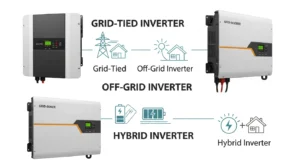
Since exporting is less profitable, storing excess energy becomes viable. Hybrid systems with battery backup are now more attractive.
Batteries allow you to store the cheap solar energy generated during the day and use it during the evening peak hours.
This “load shifting” strategy avoids buying expensive grid electricity during the 5 PM – 10 PM peak window.
3. Right-Sizing Your System
Do not oversize your system largely for export purposes. Design a system that closely matches your daytime load profile.
Consult with a solar engineer to analyze your hourly consumption patterns before deciding on the system size (kW).
New Models: Virtual and Group Net Metering
The 2026 regulations also touch upon innovative models that could offer alternatives for those without suitable roof space.
Group Net Metering: This allows a group of consumers to share a solar facility. Useful for housing societies or commercial complexes.
Virtual Net Metering: This allows you to own a part of a remote solar farm and credit that generation against your home bill.
These models are still in the early stages of rollout in Punjab but offer promising avenues for future energy independence.
Frequently Asked Questions (FAQs)
What is the buyback rate for solar in Punjab in 2026?
The buyback rate under the new net billing policy is based on the National Average Energy Purchase Price (NAEPP), which is currently estimated between Rs. 8.13 and Rs. 11 per unit.
Will my existing net metering contract be cancelled?
Generally, no. Existing contracts remain valid for their specified term (usually 7 years). However, upon expiry or renewal, you will likely be switched to the net billing regime.
Is solar still profitable in Punjab with net billing?
Yes, solar is still profitable, but the payback period has increased. The primary saving now comes from reducing your own bill by consuming solar power directly, rather than selling it.
Can I install a hybrid system to avoid net billing losses?
Absolutely. A hybrid system with batteries allows you to store your surplus energy instead of selling it at a low rate. This is the recommended strategy for 2026.
Which meter is required for net billing?
A specific bi-directional meter (green meter) or a set of separate import/export meters is required to record the distinct flows of electricity.
Conclusion
The shift to Net Billing in Punjab 2026 marks the end of the “golden era” of high export returns for solar owners. The policy aligns Pakistan with global trends where grid parity is prioritized.
While the profit from selling electricity has dropped, the savings from not buying expensive grid electricity remain substantial.
For homeowners and businesses, the focus must shift from “exporting for profit” to “generating for self-reliance.”
Adapting to this change requires smarter energy management. Utilizing hybrid inverters, optimizing daytime usage, and right-sizing systems are the keys to success in this new regulatory environment.
Solar remains a critical tool against rising electricity costs, but the math has changed. Plan your investment wisely to ensure maximum long-term benefits.