
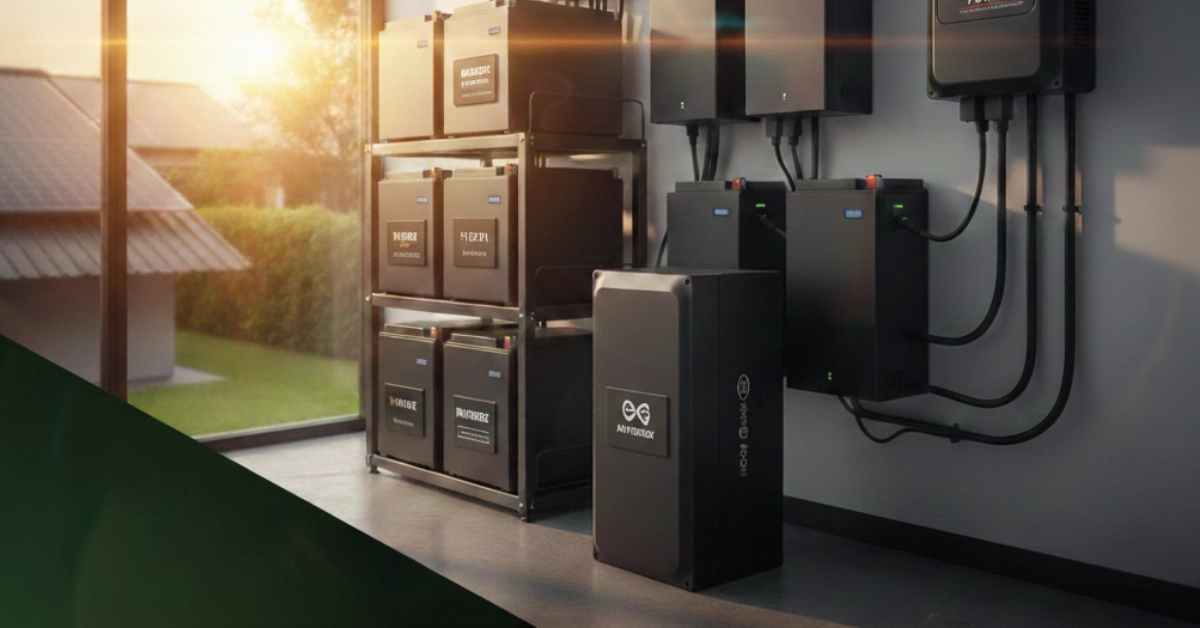
Looking for the best lithium ion solar battery in Pakistan 2026? You’ve come to the right place. With electricity costs skyrocketing and load shedding becoming a daily reality for millions of Pakistani families, lithium ion solar batteries have become the gold standard for reliable, long-term energy storage. But with dozens of brands flooding the market—from Pylontech and Narada to Tesla Powerwall and Knox—choosing the right battery can feel overwhelming.
This comprehensive guide cuts through the confusion. You’ll discover exactly what makes a lithium ion solar battery the best choice for Pakistan’s climate, learn which brands deliver real value, and understand the critical differences between competing technologies. Whether you’re installing a 3kW home system or upgrading to a 10kW+ solar setup, this article provides everything you need to make an informed decision that will serve your family reliably for the next decade or more.
What Makes a Lithium Ion Solar Battery the Best Choice for Pakistan?
A lithium ion solar battery stores excess energy generated by your solar panels during daylight hours, allowing you to use that stored power during load shedding, at night, or during cloudy days. Unlike traditional lead-acid batteries that dominate Pakistan’s older setups, modern lithium ion solar batteries offer dramatically superior performance characteristics.
The science is straightforward but elegant: lithium ions move between a cathode (positive terminal) and anode (negative terminal) during charge and discharge cycles. This movement creates electrical current that powers your home. What makes lithium technology revolutionary is its efficiency, longevity, and safety compared to chemistry technologies used in battery systems for decades.
Pakistan’s climate—characterized by intense summer heat (reaching 50°C+), variable humidity, and unreliable grid supply—makes lithium ion solar batteries particularly suited to local conditions. They handle temperature extremes far better than lead-acid alternatives, require zero maintenance (no water refilling, no acid checks), and deliver usable capacity that lead-acid batteries simply cannot match. A 100Ah lithium battery provides 90-95% usable capacity, whereas a lead-acid battery of the same rating only offers 50-60% usable power.
The result: Pakistani homeowners switching to lithium ion solar batteries typically see 40-60% better energy utilization from their systems compared to lead-acid alternatives—a compelling reason for the growing market shift toward lithium technology. (Internal link suggestion: link to your article on “solar battery types comparison in Pakistan”)
Types of Lithium Ion Batteries: Understanding LiFePO4, NMC, and More
Not all lithium ion batteries are created equal. The specific chemistry inside the battery dramatically affects its performance, safety, lifespan, and cost. Understanding these differences is essential for choosing the best lithium ion solar battery for your needs.
LiFePO4 (Lithium Iron Phosphate) – The Gold Standard for Solar
LiFePO4 batteries represent the safest and most durable lithium technology available today. They use lithium, iron, and phosphate materials in their cathode, creating an incredibly stable crystal structure with exceptionally strong phosphorus-oxygen bonds.
Why LiFePO4 dominates the Pakistani solar market:
- Exceptional Safety Profile: LiFePO4 batteries resist thermal runaway (uncontrolled overheating) until temperatures exceed 500-600°C—far higher than NMC batteries (180-250°C). This makes them inherently safer for residential installation.
- Superior Cycle Life: LiFePO4 batteries deliver 6,000-10,000 full charge-discharge cycles, while NMC batteries manage only 1,000-2,000 cycles. This means your LiFePO4 battery will reliably function for 8-15 years with minimal degradation.
- Better Temperature Tolerance: Pakistan’s extreme summer heat doesn’t degrade LiFePO4 batteries as aggressively as other chemistries. They maintain performance reliably up to 60°C.
- Environmental Responsibility: Unlike NMC batteries requiring cobalt mining (with ethical and environmental concerns), LiFePO4 uses abundant, inexpensive materials—iron and phosphate.
- Higher Usable Depth of Discharge: You can use nearly 90-95% of the battery’s advertised capacity, compared to 50% for lead-acid or 70-80% for some other lithium variants.
Popular LiFePO4 brands in Pakistan: Pylontech, Narada, Crown, Knox, Inverex, and Dyness.
NMC (Nickel Manganese Cobalt) – Higher Energy Density, Lower Safety
NMC batteries use nickel, manganese, and cobalt in their cathode material. They’re extremely popular in electric vehicles and consumer electronics due to higher energy density (more power in smaller, lighter packages).
Characteristics relevant for Pakistan:
- Higher Energy Density: NMC batteries pack 160-270 Wh/kg compared to LiFePO4’s 100-180 Wh/kg—meaning lighter weight for equivalent capacity.
- Faster Charging: NMC batteries charge quicker than LiFePO4, though this advantage matters less for stationary solar applications.
- Safety Concerns in Pakistan’s Heat: NMC’s susceptibility to thermal runaway becomes problematic in Pakistan’s climate. High temperatures (45-50°C) accelerate NMC degradation and increase fire risk—a serious concern in dense residential areas.
- Shorter Cycle Life: Typically 1,000-2,000 cycles compared to LiFePO4’s 6,000+, making NMC batteries more expensive long-term despite lower upfront costs.
Verdict for Pakistan: NMC batteries are rarely recommended for residential solar in Pakistan. The safety risks and shorter lifespan make LiFePO4 the clearly superior choice.
LTO (Lithium Titanate) – Overkill for Most Pakistan Applications
LTO batteries offer extreme durability (15,000+ cycles) and work excellently in freezing conditions. However, their astronomical cost and scarcity make them impractical for Pakistani residential solar systems.
Top 5 Best Lithium Ion Solar Batteries Available in Pakistan 2026
1. Pylontech LiFePO4 – Best Overall Choice for Pakistan
Price Range: PKR 420,000-500,000+ (depending on model and capacity)
Key Specifications:
- Capacity options: 5.12kWh (UP5000), 10.24kWh (US5000), 15.36kWh, 20.48kWh
- Cycle life: 6,000-10,000 cycles
- Warranty: 10-year local service warranty
- Voltage: 48V (most common in Pakistan)
- Depth of discharge: 90%
Why Pylontech leads the Pakistani market:
Pylontech has dominated global lithium battery markets since 2009, with over 80 countries relying on their technology. In Pakistan specifically, Pylontech batteries have earned trust through consistent performance in extreme heat and reliable local support networks.
The Pylontech UF5000 and US5000 series feature modular design (expandable from 5.12kWh to 20.48kWh), integrated Battery Management Systems (BMS) that monitor temperature, voltage, and current in real-time, and exceptional compatibility with popular Pakistani hybrid inverters (Solis, Growatt, SAJ, Voltronic).
Real-world performance in Pakistan: Homeowners report excellent reliability during monsoon season (when generation drops to 40-60% of sunny-day levels) and flawless operation through Pakistan’s intense summers. The integrated BMS automatically adjusts charging/discharging rates based on temperature, preventing degradation in extreme conditions.
Best for: Home solar systems (3-10kW), reliability-focused buyers, those prioritizing long-term cost of ownership over initial price.
Competitor comparison: Slightly more expensive than Narada or Crown, but the superior warranty (10 years local service vs. 5 years) and wider inverter compatibility justify the premium.
2. Narada NESR LiFePO4 – Best Value Option
Price Range: PKR 380,000-450,000
Key Specifications:
- Capacity: 5.12kWh, 10.24kWh (51V 100Ah, 200Ah options)
- Cycle life: 6,000+ cycles
- Warranty: 5-year product warranty
- Operating temperature: -10°C to +60°C
- Modular expandability: Yes, stackable design
Why choose Narada for budget-conscious buyers:
Narada batteries represent excellent value for money in Pakistan’s market. They deliver 95% of Pylontech’s performance at 10-15% lower cost. The NESR series specifically targets solar applications, with optimized charging profiles and integrated safety features.
Pakistani installers consistently report that Narada batteries integrate seamlessly with local hybrid inverters. The company maintains regional support offices in Karachi and Lahore, ensuring warranty claims are processed smoothly and technical support is accessible.
Key advantage: Narada’s stackable design allows you to start with a single 5.12kWh battery and expand to 10+ kWh as your budget allows—ideal for Pakistani families gradually upgrading their solar systems.
Best for: Budget-conscious homeowners, those comfortable with 5-year warranty vs. 10-year, expanding systems that may need capacity increases over time.
Real-world feedback: Users praise Narada’s reliability in monsoon season and excellent charge retention during long cloudy periods. Minor complaint: slightly less responsive customer service compared to Pylontech in some regions.
3. Crown CMLB LiFePO4 – Locally Assembled Premium Option
Price Range: PKR 380,000-560,000 (depending on capacity)
Key Specifications:
- Capacity: 5.12kWh (51.2V 100Ah), 11.52kWh (51.2V 230Ah)
- Cycle life: 6,000+ cycles
- Warranty: 5-year local warranty
- Wall-mounted design: Sleek, space-saving installation
- BMS: Advanced thermal management
Why Crown matters in the Pakistani market:
Crown is Pakistan’s own battery manufacturer, giving it an inherent advantage: no import delays, immediate warranty service in Pakistan, and direct factory support. The CMLB series represents significant advancement in locally-assembled lithium technology.
What sets Crown apart is aggressive focus on Pakistan’s specific climate challenges. The batteries feature enhanced thermal management for summer operations and modified charging algorithms for monsoon season (when humidity affects traditional battery performance).
Advantages of local assembly:
- No customs delays or import duty surprises
- Instant warranty replacement without shipping to China
- Factory training for local installers
- Pricing reflects local manufacturing efficiency
Best for: Pakistani nationalists prioritizing local manufacturing, those wanting immediate warranty service without international shipping, buyers seeking to support local industry.
Honest assessment: While Crown batteries are solid performers, they haven’t yet achieved the global reliability track record of Pylontech or Narada. However, their rapid market growth and improving reputation suggest they’ll become increasingly competitive.
4. Tesla Powerwall – Premium Technology, Limited Local Support
Price Range: PKR 560,000-650,000
Key Specifications:
- Capacity: 13.5kWh usable capacity
- Cycle life: 10,000+ cycles
- Warranty: 10 years
- Integrated inverter/charger: Unique all-in-one design
- Smart monitoring: Advanced Tesla app integration
Why Tesla commands premium prices:
Tesla Powerwall represents pinnacle lithium ion solar battery technology. The integrated design combines battery, inverter, and charger in one elegant package—reducing installation complexity and space requirements. The Tesla app provides granular real-time monitoring unavailable on competing systems.
The Pakistan challenge: While Tesla batteries work flawlessly, Pakistan has limited authorized service centers and high import costs. Warranty claims require shipping to authorized dealers (typically Karachi or Lahore), creating delays. Most Pakistani hybrid inverters aren’t optimized for Tesla Powerwall integration.
Best for: Tech enthusiasts unconcerned about cost, those willing to navigate import/warranty complexity, upper-income households valuing design aesthetics and app sophistication.
Honest assessment: Technically superior to competitors, but the hassle factor and limited local support make Tesla Powerwall more of a luxury choice than practical necessity for most Pakistani families.
5. Knox Powerwall LiFePO4 – Emerging Local Alternative
Price Range: PKR 390,000-500,000
Key Specifications:
- Capacity: 5.12kWh (51.2V 100Ah)
- Cycle life: 8,000 cycles (industry-leading specification)
- Warranty: 5-year replacement + 10-year local service warranty
- Operating temperature: -20°C to +60°C
- IP65 rating: Outdoor installation capability
Why Knox is gaining market share:
Knox represents aggressive new competition in Pakistan’s lithium battery market. The company’s 8,000-cycle specification actually exceeds Pylontech’s rated cycles, and their dual warranty structure (5-year replacement + 10-year service) provides excellent protection.
What differentiates Knox: compatibility optimization specifically targeting Pakistan’s most popular hybrid inverters (Solis, Growatt, SAJ). The IP65 outdoor rating allows installation on terraces or balconies—crucial for apartment dwellers in Karachi and Lahore.
Emerging strength: Knox is rapidly building distribution networks across Pakistan. Availability is improving dramatically, and pricing remains competitive.
Best for: Buyers seeking emerging-brand pricing with competitive specifications, those needing outdoor installation capability, apartment residents requiring flexible placement options.
Comparative Analysis Table: Best Lithium Ion Solar Batteries in Pakistan 2026
| Brand | Price (PKR) | Capacity | Cycle Life | Warranty | Local Support | Best For |
|---|---|---|---|---|---|---|
| Pylontech UF5000 | 420K-500K | 5.12-20.48kWh | 10,000 | 10-year service | Excellent | Reliability-focused |
| Narada NESR | 380K-450K | 5.12-10.24kWh | 6,000+ | 5-year product | Good | Budget-conscious |
| Crown CMLB | 380K-560K | 5.12-11.52kWh | 6,000+ | 5-year local | Excellent | Local support priority |
| Tesla Powerwall | 560K-650K | 13.5kWh usable | 10,000+ | 10-year | Limited | Premium tech |
| Knox Powerwall | 390K-500K | 5.12kWh | 8,000 | 5yr+10yr service | Growing | Value seekers |
Critical Features That Determine the Best Lithium Ion Solar Battery for Your Pakistan Home
Battery Management System (BMS) – Your Battery’s Brain
The BMS is arguably more critical than the battery cells themselves. It continuously monitors voltage, current, and temperature—automatically adjusting charging/discharging rates to maximize lifespan and prevent damage.
What to verify:
- Real-time temperature monitoring
- Cell balancing algorithm (ensures all cells charge/discharge equally)
- Over-charge protection
- Over-discharge protection
- Short circuit protection
Pakistan-specific consideration: Given extreme summer heat, look for BMS systems with active thermal management (cooling algorithms that reduce charging during high temperatures).
Depth of Discharge (DoD) – How Much Power You Actually Get
Advertised capacity ≠ usable capacity. A 10kWh battery with 90% DoD provides 9kWh of real, usable power. This difference is crucial for realistic backup duration calculations.
LiFePO4 batteries typically offer:
- 90-95% DoD (you can use almost the entire capacity)
- Lead-acid batteries: 50-60% DoD (you can only safely use half the capacity)
- NMC batteries: 70-80% DoD (better than lead-acid, worse than LiFePO4)
Practical example: A family needing 10kWh backup power requires a 10kWh LiFePO4 battery but would need 16-20kWh of lead-acid batteries—a massive cost difference.
Cycle Life and Calendar Life – Longevity Matters
Cycle life measures how many full charge-discharge cycles the battery tolerates before capacity drops to 80% (industry standard for “end of life”). Calendar life is the timeframe during which the battery lasts even with minimal usage.
For Pakistan:
- LiFePO4: 6,000-10,000 cycles (8-15 years depending on usage patterns)
- NMC: 1,000-2,000 cycles (2-3 years typical)
- Lead-acid: 500-1,000 cycles (2-5 years typical)
Most LiFePO4 batteries reach 10+ years even if you only partially cycle them monthly—providing decades of supplementary power.
Temperature Operating Range – Critical for Pakistan’s Climate
Pakistan’s temperature extremes stress battery systems. Look for batteries with:
Recommended specifications:
- Minimum operating: -10°C (winter in northern areas)
- Maximum operating: +60°C (summer in interior Sindh/Punjab)
- Optimal range: 0°C to +40°C
LiFePO4 batteries maintain 95%+ capacity in Pakistan’s typical operating range, while NMC batteries degrade much faster above 45°C.
Warranty Coverage – Your Safety Net
Warranties tell you how much the manufacturer trusts their product:
Types to understand:
- Product warranty: Covers manufacturing defects (typically 5 years)
- Service warranty: Covers labor and replacement parts (extended to 10 years for top brands)
- Capacity warranty: Guarantees minimum capacity retention (usually 80% after specified period)
Best warranty in Pakistan: Pylontech’s 10-year local service warranty is unmatched—meaning if your battery fails, they’ll replace it AND cover shipping/installation costs for 10 years.
Installation and Compatibility: Making the Best Lithium Ion Solar Battery Work in Your System
The best lithium ion solar battery in Pakistan must be compatible with your hybrid inverter. This compatibility is absolutely critical.
Voltage System Compatibility
Most common in Pakistan:
- 48V systems: Recommended for homes 5kW+
- 24V systems: Older technology, less common in 2026
- 12V systems: Rarely used for whole-home solar in Pakistan
Ensure your battery voltage exactly matches your inverter specification. Mixing incompatible voltages is impossible and causes system failure.
Inverter Compatibility – Critical for Pakistan
Not all lithium batteries work seamlessly with all inverters. Test compatibility before purchasing:
Best-integrated combinations in Pakistan:
- Pylontech LiFePO4 + Solis Hybrid Inverter: Seamless integration, no firmware issues
- Narada NESR + Growatt SPH Inverter: Excellent compatibility
- Crown CMLB + SAJ Hybrid Inverter: Strong local support
- Knox Powerwall + Voltronic Inverter: Growing compatibility
Avoid combinations without documented local support—you’ll face troubleshooting nightmares when issues arise.
Professional Installation – Non-Negotiable for Lithium Batteries
Never attempt DIY lithium battery installation. Improper connection creates fire/electrocution risk and voids warranties.
Professional installer should:
- Verify all electrical connections
- Test BMS communication with inverter
- Calibrate charge parameters specific to your battery chemistry
- Document voltage/current baseline readings
- Provide training on battery monitoring
Professional installation cost: PKR 30,000-50,000 (worth every rupee for safety and warranty protection)
Sizing Your Lithium Ion Solar Battery: Getting the Right Capacity
The best lithium ion solar battery is only best if it matches your actual needs. Oversizing wastes money; undersizing limits backup duration.
Step 1: Calculate Daily Energy Consumption During Load Shedding
List critical appliances you want powered during blackouts:
- Refrigerator: 1.5-2 kWh/day
- Lights (LED, 8 bulbs × 3 hours): 0.5 kWh/day
- Ceiling fans (2 fans × 5 hours): 1 kWh/day
- Phone/laptop charging: 0.3 kWh/day
- 32-inch TV (5 hours): 0.6 kWh/day
- Water pump (if applicable): 1-2 kWh/day
- Other essentials: 1-2 kWh/day
Total daily requirement: 6-9 kWh for typical Pakistani household essentials
Step 2: Account for Depth of Discharge
Never discharge lithium batteries to 0%. Use only 80-90% depth of discharge for maximum lifespan:
Formula: Required battery capacity = Daily need ÷ 0.85 (15% reserve)
Example: If you need 8 kWh usable power, purchase at least 10 kWh (8 ÷ 0.85 = 9.4 kWh)
Step 3: Consider Pakistan’s Seasonal Variation
Summer months generate 30-40% more solar power than winter. Battery sizing matters most for winter months when:
- Days are shorter (fewer peak sun hours)
- Loads remain similar (heating needs instead of AC, but water heating increases)
Conservative approach: Size your battery for winter needs, allow summer generation to provide excess charging capability.
Recommended Sizing by Household Profile
| Home Type | Load Profile | Recommended Battery | Estimated Cost |
|---|---|---|---|
| 2-bedroom, basic appliances | 5-6 kWh/day | 6-8 kWh LiFePO4 | PKR 350K-450K |
| 3-4 bedroom, comfort focused | 8-10 kWh/day | 10-12 kWh LiFePO4 | PKR 450K-600K |
| 5+ bedroom, high comfort | 12-15 kWh/day | 15-18 kWh LiFePO4 | PKR 600K-850K |
| Commercial/office use | 20+ kWh/day | Multiple batteries (modular) | PKR 900K+ |
Maintenance and Longevity: Maximizing Your Lithium Ion Solar Battery Investment
The best lithium ion solar battery requires minimal maintenance—far less than lead-acid alternatives.
Routine Maintenance Schedule
Monthly:
- Check battery status via inverter display or app
- Verify no physical damage or corrosion
- Ensure ventilation isn’t blocked
Quarterly:
- Test app/monitoring system functionality
- Verify BMS is showing normal operating parameters
- Check inverter logs for error messages
Annually:
- Professional inspection by certified technician
- BMS firmware updates (if available)
- Visual inspection of connections and terminals
Cost: PKR 10,000-15,000 annually (professional service)
Real-World Degradation Patterns in Pakistan
LiFePO4 batteries in Pakistani conditions typically show:
- Year 1-3: 0.5-1% annual degradation
- Year 4-8: 0.2-0.5% annual degradation
- Year 8+: Battery maintains 85-90% capacity indefinitely
Practical result: A 10kWh battery purchased today will still reliably store 8.5+ kWh after 10 years—meaning it remains viable for 95%+ of typical Pakistani household loads.
When to Replace Your Lithium Ion Solar Battery
Replace when:
- Capacity drops below 70% of original rating AND
- You’re experiencing inadequate backup duration
Most quality LiFePO4 batteries last 12-15 years before replacement becomes necessary—representing exceptional value compared to 2-5 year lifespan of lead-acid.
Common Mistakes When Choosing the Best Lithium Ion Solar Battery in Pakistan
Mistake 1: Choosing Based on Price Alone
A PKR 250,000 no-name lithium battery might fail after 2 years, costing PKR 8,000/month in replacement costs. A PKR 420,000 Pylontech battery lasting 10 years costs only PKR 3,500/month—far cheaper long-term.
Do the math: Total cost of ownership = Purchase price + maintenance + replacement costs ÷ years of service
Mistake 2: Ignoring Inverter Compatibility
Buying a “great deal” battery incompatible with your inverter creates integration nightmares. Firmware conflicts, error codes, and reduced charging efficiency plague incompatible systems.
Always verify: “Is this battery model specifically tested with [your inverter brand]?”
Mistake 3: Underestimating Installation Complexity
“DIY lithium installation is cheap” is a dangerous philosophy. Professional installation cost (PKR 40,000) is worthwhile insurance against:
- Fire risk from improper wiring
- Warranty voiding
- BMS miscalibration reducing battery lifespan by 30%+
Mistake 4: Choosing Imported Brands with No Local Support
A premium battery brand unavailable in Pakistan means waiting 4-6 weeks for warranty replacement parts. Local support matters more than brand prestige.
Mistake 5: Not Considering Climate-Specific Features
Choose batteries with thermal management optimized for Pakistan’s heat. Generic specifications from temperate-climate manufacturers often underperform in 50°C summer conditions.
Cost Comparison: Best Value in Pakistan’s Lithium Ion Battery Market
Total Cost of Ownership Over 10 Years
| Battery | Purchase | Installation | Maintenance | Replacement | Total | Cost/Month |
|---|---|---|---|---|---|---|
| Pylontech 5.12kWh | 450K | 40K | 100K | 0 | 590K | 4,917 |
| Narada 5.12kWh | 400K | 40K | 100K | 0 | 540K | 4,500 |
| Crown 5.12kWh | 380K | 40K | 100K | 0 | 520K | 4,333 |
| Tesla Powerwall | 600K | 50K | 50K | 0 | 700K | 5,833 |
| Lead-acid equiv | 180K | 20K | 200K | 180K | 580K | 4,833 |
Insight: LiFePO4 options provide superior value compared to lead-acid alternatives, despite higher upfront cost. The zero maintenance and long lifespan make them economically superior.
Regional Availability and Support in Pakistan
Major Cities and Distributor Landscape
Karachi:
- Best availability: All major brands
- Top dealers: Nizam Energy, W11stop, Kamal Solar
- Support quality: Excellent
Lahore:
- Best availability: Pylontech, Narada, Inverex
- Top dealers: Alpha Solar, Solarshop.pk
- Support quality: Good
Islamabad:
- Best availability: Pylontech, Crown
- Top dealers: Local inverter shops (ask about battery partnerships)
- Support quality: Moderate
Peshawar/KPK:
- Best availability: Narada, Inverex (local brand)
- Limited support: Few authorized technicians
- Recommendation: Purchase from Karachi/Lahore with extended warranty
Multan/Faisalabad:
- Best availability: Inverex (local), Narada
- Support quality: Limited
- Recommendation: Purchase with 3-year extended service warranty
Online vs. In-Store Purchase Considerations
Advantages of in-store:
- Physical inspection before purchase
- Immediate warranty registration
- Local dealer support relationship
Advantages of online:
- Price competition (sometimes 5-10% cheaper)
- Home delivery
- More product availability
Recommendation: Compare prices online, then negotiate with local dealers—most will match online pricing to secure your business.
FAQ: Questions About Best Lithium Ion Solar Battery in Pakistan 2026
Q1: Is lithium ion solar battery safe in Pakistan’s heat?
A: Yes, absolutely—but only LiFePO4 chemistry (not NMC). LiFePO4 is specifically designed for high-temperature operation up to 60°C. Pakistan’s typical summer peak temperatures (45-50°C) are well within LiFePO4’s optimal range. The integrated BMS automatically adjusts charging parameters in extreme heat, further protecting the battery. Lead-acid batteries struggle much more in similar heat, making LiFePO4 actually the safer choice for Pakistani conditions.
Q2: How long does a lithium ion solar battery last in Pakistan?
A: Quality LiFePO4 batteries (Pylontech, Narada, Crown) typically last 8-15 years in Pakistani conditions. This dramatically outperforms lead-acid batteries (2-5 years) and even NMC lithium options (2-3 years). The lifespan depends on usage patterns—batteries cycled daily last 8-10 years, while those partially cycled in hybrid systems often exceed 12-15 years. Capacity typically remains at 85-90% even after 10 years, meaning the battery is still highly functional for backup power.
Q3: Can I use a lithium ion solar battery without solar panels?
A: Technically yes, but it’s inefficient. Lithium batteries are designed for solar integration where daytime solar generation tops them up continuously. Using them as UPS alternative to grid charging doesn’t optimize their strengths. However, if you have a hybrid system with both solar AND grid connection, a lithium battery will charge from solar during day and grid at night—providing excellent backup for load shedding while extending battery life through gentle cycling.
Q4: Which lithium ion solar battery is best for apartments in Pakistan?
A: Knox Powerwall (IP65 outdoor rating) is ideal for apartments, as it can be mounted on balconies/terraces. Pylontech UF5000 (modular, expandable) works well if you have indoor space. Avoid Tesla Powerwall unless you have dedicated space and deep pockets. Most apartment dwellers should verify with their building management that battery installation is permitted and won’t affect other residents. The IP65 rating ensures environmental protection for outdoor installations.
Q5: Is it worth upgrading from lead-acid to lithium ion solar battery now?
A: In most cases, yes. If your lead-acid batteries are 3+ years old and approaching replacement, lithium is financially superior despite higher upfront cost. A 10-year cost analysis almost always favors lithium. The only exception: if your lead-acid system is less than 2 years old, stick with it until natural replacement time, then switch to lithium. Avoid premature replacement just for technology upgrade—wait until maintenance becomes necessary.
Q6: Can I mix lithium and lead-acid batteries in one system?
A: Absolutely not. Never mix battery chemistries in the same system. Lead-acid batteries drag down lithium battery performance and dramatically reduce lithium lifespan. If you’re upgrading, replace ALL batteries simultaneously with the same lithium model—never add lithium batteries to an existing lead-acid system.
Q7: What’s the difference between lithium ion and LiFePO4?
A: “Lithium-ion” is the broad category encompassing all battery types using lithium ions (LiFePO4, NMC, LTO, etc.). “LiFePO4” is a specific chemistry within the lithium-ion category. It’s like “vehicle” vs. “sedan”—lithium-ion is the category, LiFePO4 is the specific type. For solar in Pakistan, LiFePO4 is the best lithium-ion option.
Q8: How often must I check my lithium ion solar battery?
A: LiFePO4 batteries require virtually no maintenance. Check your monitoring app monthly to ensure the BMS is functioning and no error codes appear. Annual professional inspections (PKR 10,000-15,000) are recommended but not mandatory if the system operates flawlessly. Compare this to lead-acid batteries requiring monthly water refills and terminal cleaning—lithium batteries are dramatically more convenient.
Q9: What happens if my lithium ion solar battery overcharges?
A: Modern LiFePO4 batteries won’t overcharge because the integrated BMS prevents it. The BMS continuously monitors voltage and automatically cuts off charging when the battery reaches 100%—occurring thousands of times over the battery’s 10-year lifespan without damage. This is a major safety advantage over lead-acid (which requires manual water addition) and inferior lithium chemistries (which can thermal runaway from overcharging). Your battery is protected even if the inverter malfunctions.
Q10: Can extreme weather in Pakistan damage lithium ion solar batteries?
A: Heavy monsoon rains won’t damage LiFePO4 batteries if they’re properly installed with IP54+ rating and suitable ventilation. High humidity (common in Karachi) slightly accelerates corrosion on terminals but won’t damage the cells. Extreme heat (50°C+) may reduce charging efficiency by 5-10% temporarily, but the BMS protects the battery by reducing charge current—the battery remains safe. Dust storms (Punjab) require occasional terminal cleaning but pose no structural threat. Overall, LiFePO4 batteries handle Pakistan’s weather better than lead-acid alternatives.
Conclusion: The Best Lithium Ion Solar Battery in Pakistan 2026
The best lithium ion solar battery in Pakistan 2026 isn’t determined by brand prestige alone—it’s determined by your specific needs, budget, and local support access. However, after comprehensive analysis of Pakistan’s market, several clear winners emerge:
For maximum reliability and warranty protection: Pylontech LiFePO4 delivers industry-leading 10-year local service warranty, exceptional inverter compatibility, and proven 10,000+ cycle lifespan. The slight price premium (PKR 420,000-500,000) is justified by superior warranty and global reliability track record.
Pingback: 200Ah Lithium Ion Solar Battery Price Pakistan 2026 Today
Pingback: Today 48V Lithium Ion Solar Battery Price in Pakistan 2026