
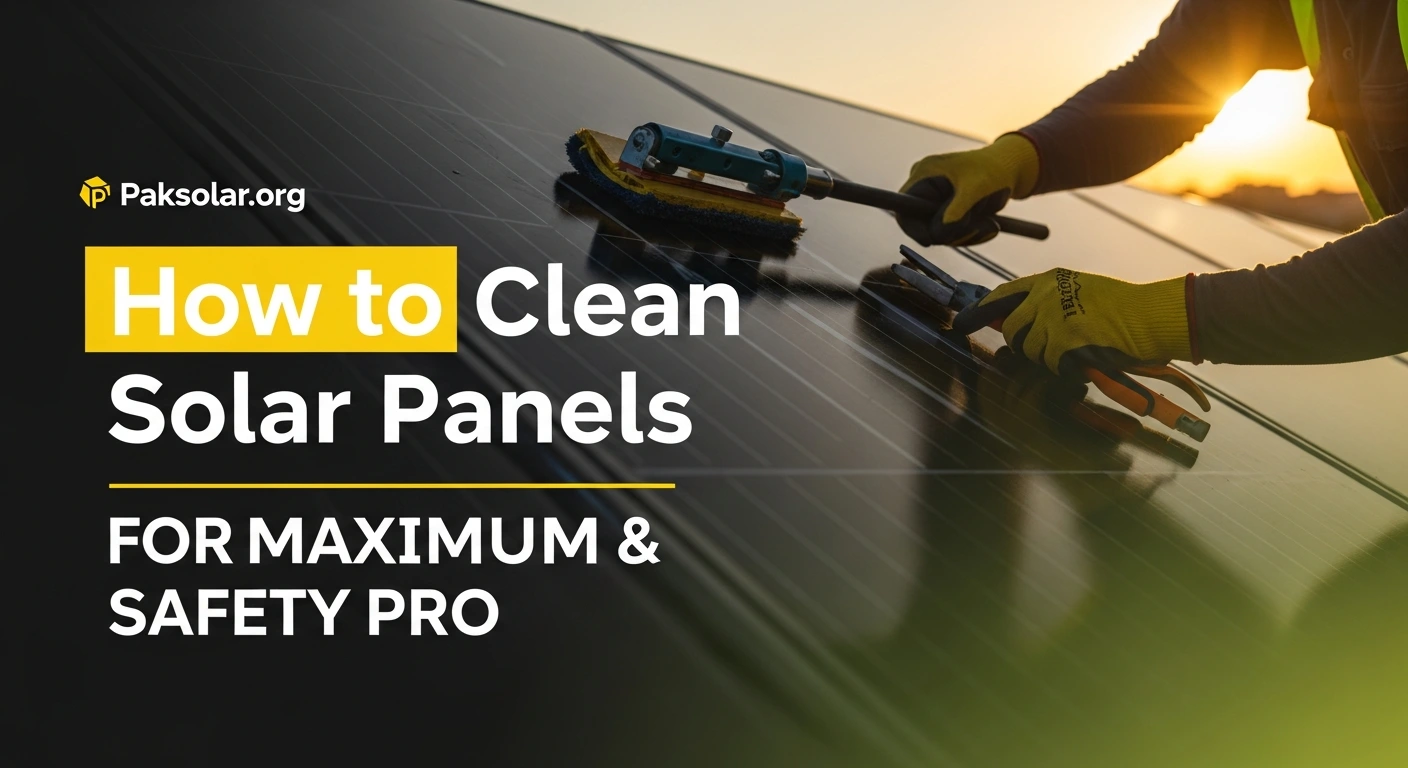
Solar panels are a significant investment that promises long-term energy savings and environmental benefits. However, many Pakistani homeowners overlook one crucial maintenance task that directly impacts their solar system’s performance: regular cleaning. If you’re wondering how to clean solar panels safely and effectively, this comprehensive guide will walk you through everything you need to know.
Dirty solar panels can lose 15-25% of their efficiency, which translates to substantial financial losses over time. In Pakistan’s dusty climate—especially in cities like Karachi, Lahore, Faisalabad, and Islamabad—dust, bird droppings, pollution, and seasonal changes can significantly reduce your solar investment’s output. This guide provides expert-backed cleaning methods, safety protocols, cost-effective solutions, and maintenance schedules specifically tailored for Pakistani weather conditions.
By the end of this article, you’ll know exactly when to clean, what tools to use, which mistakes to avoid, and whether DIY cleaning or professional services make more sense for your situation. Longi Panel Verification 2026.
Why Cleaning Solar Panels is Critical for Performance
Before diving into the “how,” understanding the “why” helps you appreciate the importance of regular solar panel maintenance.
Impact of Dirt on Solar Panel Efficiency
Solar panels generate electricity when sunlight hits the photovoltaic cells. Any obstruction—dust, dirt, bird droppings, pollen, or pollution residue—creates a barrier that blocks sunlight from reaching these cells.
Research-backed efficiency losses:
- Light dust accumulation: 5-10% efficiency reduction
- Moderate dirt buildup: 15-20% efficiency loss
- Heavy soiling with bird droppings: 25-35% performance decrease
- Extreme neglect (1+ years without cleaning): Up to 50% output reduction
Pakistan’s Unique Environmental Challenges
Pakistani solar panel owners face specific environmental factors that accelerate dirt accumulation:
Dust Storms & Seasonal Winds: During summer months, particularly in Punjab and Sindh, dust storms deposit layers of fine particles on solar surfaces.
Urban Pollution: Cities like Lahore and Karachi experience high pollution levels, creating sticky residue that attracts more dirt.
Bird Activity: Bird droppings are highly acidic and can create permanent shadowing effects, causing hot spots that damage panels.
Monsoon Season Debris: While rain helps clean panels, heavy monsoons can leave mineral deposits and mud splashes.
Agricultural Areas: Properties near farmland experience pollen, pesticide residue, and agricultural dust accumulation.
When to Clean Your Solar Panels: Optimal Timing & Frequency
Determining the right cleaning schedule maximizes efficiency while avoiding unnecessary labor.
Recommended Cleaning Frequency for Pakistan
| Region/Condition | Cleaning Frequency | Best Season |
|---|---|---|
| Urban Areas (Lahore, Karachi, Islamabad) | Every 4-6 weeks | Year-round, avoid extreme heat |
| Rural/Agricultural Areas | Every 3-4 weeks | Spring and post-harvest seasons |
| Coastal Regions (Karachi, Gwadar) | Every 5-6 weeks | After monsoon season |
| Desert/Arid Zones (Interior Sindh, Balochistan) | Every 2-3 weeks | Early morning hours |
| After Major Dust Storms | Immediately | Within 24-48 hours |
| Monsoon Season | Monthly inspection | October-November (post-monsoon) |
Signs Your Solar Panels Need Immediate Cleaning
Don’t wait for scheduled cleaning if you notice:
✓ Visible dirt or dust layer when looking at panels from ground level ✓ Energy output dropped by 10%+ compared to previous months (check your inverter data) ✓ Bird droppings or leaves accumulated on panel surface ✓ Water spots or mineral deposits after rain ✓ Uneven discoloration across panel surface ✓ Performance inconsistency between different panels in your array
Best Time of Day for Cleaning
Early morning (5:00-8:00 AM) or late evening (5:00-7:00 PM) are optimal because:
- Panels are cool, preventing thermal shock and cracking
- Lower risk of rapid water evaporation that leaves streaks
- Better lighting for inspection without direct sun glare
- Safer working conditions with lower heat exposure
- Water efficiency (less evaporation)
⚠️ Never clean solar panels during peak sunshine hours (10 AM – 4 PM) as this can cause thermal shock, crack panels, and create safety hazards.
Essential Tools & Materials for Cleaning Solar Panels
Using the right equipment prevents damage while ensuring effective cleaning.
Basic DIY Cleaning Kit
Must-Have Items:
- Soft-bristle brush or sponge (car wash brushes work well)
- Extension pole (telescopic, 10-20 feet length)
- Garden hose with spray nozzle (adjustable pressure)
- Squeegee with soft rubber blade
- Two buckets (one for cleaning solution, one for rinsing)
- Microfiber cloths (lint-free, non-abrasive)
- Safety harness and rope (for rooftop access)
- Non-slip shoes
- Ladder (stable, appropriate height)
Cleaning Solutions:
- Pure water (most effective and safest)
- Distilled water (for hard water areas to prevent mineral deposits)
- Mild dish soap solution (2-3 drops per gallon of water)
- Specialized solar panel cleaner (available in Pakistan: brands like Solar Shine, EcoClean)
What NOT to Use (Critical Warnings)
❌ Abrasive materials: Steel wool, scouring pads, rough brushes ❌ Harsh chemicals: Bleach, ammonia, strong detergents, acetone ❌ High-pressure washers: Can damage anti-reflective coating and seals ❌ Hard water from bore wells: Leaves mineral deposits ❌ Metal scrapers or sharp tools: Permanently scratch panel surface ❌ Hot water: Creates thermal stress and potential cracking
Budget-Friendly Alternatives in Pakistan
For cost-conscious homeowners:
- Use regular car wash soap (diluted heavily)
- Soft kitchen sponges (new, unused)
- Old cotton bedsheets cut into cleaning cloths
- Household vinegar solution (1:10 ratio with water) for stubborn spots
- Rainwater collection for cleaning (naturally soft water)
Step-by-Step Guide: How to Clean Solar Panels Safely
Follow this comprehensive process for professional-quality results.
Step 1: Safety First – Pre-Cleaning Assessment
Before climbing onto your roof:
- Check weather forecast (avoid windy days, rain predictions)
- Inspect ladder stability and roof condition
- Turn off the solar system at the inverter (optional but safer)
- Wear appropriate safety gear (harness, non-slip shoes)
- Inform someone in your household you’re working on the roof
- Assess panel accessibility and plan your cleaning route
Electrical Safety Note: While panels can’t electrocute you during cleaning, turning off the system provides peace of mind and prevents equipment issues.
Step 2: Initial Dust Removal
Dry cleaning method:
- Use a soft-bristle brush on an extension pole
- Gently brush away loose dust, leaves, and debris
- Work from top to bottom in systematic rows
- Avoid pressing hard—let the brush do the work
- This step removes 60-70% of dry debris
Why dry cleaning first? Wetting heavily soiled panels immediately can create muddy residue that’s harder to remove and may leave streaks.
Step 3: Water Rinsing
Proper rinsing technique:
- Use garden hose with gentle spray setting (NOT high pressure)
- Start at the top edge and work downward
- Allow water to flow naturally down the panel surface
- Focus extra water on stubborn spots
- Continue until water runs clear
Water pressure guideline: Similar to washing your car—enough flow to rinse effectively but not forceful enough to damage seals.
Step 4: Soap Application (If Needed)
When to use soap: Only for stubborn dirt, bird droppings, or oily residue that water alone can’t remove.
Application method:
- Mix 2-3 drops of mild dish soap per gallon of water
- Apply with soft sponge or microfiber cloth
- Work in small sections (2-3 panels at a time)
- Gentle circular motions without excessive pressure
- Avoid letting soap dry on panels
Step 5: Thorough Rinsing
Critical rinsing phase:
- Rinse thoroughly with clean water
- No soap residue should remain (can attract more dirt)
- Use squeegee to remove excess water
- Work from top to bottom in overlapping strokes
- Check for streaks or spots
Step 6: Final Inspection & Drying
Post-cleaning checklist:
✓ Inspect each panel for remaining spots ✓ Check frame and edges for trapped debris ✓ Verify no water pooling at corners ✓ Spot-clean any missed areas ✓ Allow panels to air dry (don’t use towels if avoidable) ✓ Document the cleaning date for maintenance records
Step 7: Performance Monitoring
After cleaning verification:
- Turn system back on
- Monitor inverter readings over next 2-3 days
- Compare output to pre-cleaning performance
- Expected improvement: 15-25% increase in generation
- Note any panels still underperforming (may need professional inspection)
Advanced Cleaning Techniques for Stubborn Stains
Some situations require specialized approaches.
Removing Bird Droppings
Bird droppings are acidic and can etch glass if left too long.
Effective removal method:
- Soak the affected area with water for 5-10 minutes
- Apply diluted vinegar solution (1:10 ratio)
- Let sit for 2-3 minutes
- Gently scrub with soft brush
- Rinse thoroughly with clean water
- Repeat if necessary
Prevention tip: Install bird deterrents (spikes or netting) around panel edges if bird activity is frequent.
Dealing with Hard Water Stains
Pakistan’s bore water often contains high mineral content, leaving white spots.
Solution:
- Use distilled water for final rinse
- Apply diluted white vinegar (1:4 ratio) to mineral deposits
- Let sit for 5 minutes
- Wipe with microfiber cloth
- Rinse with distilled or RO water
Handling Tree Sap & Sticky Residues
For sticky substances:
- Apply isopropyl alcohol (70%) to a cloth
- Gently dab (don’t rub) the sticky area
- Let alcohol break down the residue (30 seconds)
- Wipe clean with damp cloth
- Rinse thoroughly
Professional vs. DIY Solar Panel Cleaning: What’s Best for You?
Understanding when to clean yourself versus hiring professionals.
DIY Cleaning: Pros & Cons
Advantages:
- Cost savings: No service fees (only minimal supply costs)
- Flexibility: Clean on your schedule
- Immediate action: Don’t wait for appointments
- Learning experience: Understand your system better
- Regular maintenance: Easy to clean frequently
Disadvantages:
- Safety risks: Rooftop work can be dangerous
- Time investment: 1-3 hours depending on system size
- Equipment purchase: Initial tool investment needed
- Physical demands: Requires mobility and strength
- Potential damage risk: Improper technique can harm panels
Professional Cleaning Services: When to Hire
Consider professionals for:
- Multi-story buildings where roof access is dangerous
- Large commercial systems (20+ panels)
- Panels with specific issues (persistent underperformance)
- Steep or difficult roof angles
- Elderly or mobility-challenged homeowners
- Warranty requirements (some manufacturers require professional cleaning)
Professional Cleaning Costs in Pakistan (2026)
| Service Type | Price Range | Frequency |
|---|---|---|
| Residential (5-10 panels) | PKR 1,500-3,000 | Quarterly |
| Residential (11-20 panels) | PKR 3,000-5,000 | Quarterly |
| Commercial (21-50 panels) | PKR 5,000-10,000 | Monthly |
| Large Commercial (50+ panels) | PKR 10,000-25,000 | Monthly |
| One-time Deep Clean | PKR 2,500-6,000 | As needed |
| Annual Maintenance Contract | PKR 15,000-40,000 | Monthly service |
Maintaining Peak Performance: Beyond Cleaning
Comprehensive solar panel care extends beyond surface cleaning.
Regular System Inspections
Monthly checks:
- Visual inspection for cracks, chips, or physical damage
- Frame and mounting system stability
- Wire and connection integrity
- Inverter performance indicators
- Unusual sounds or burning smells
Performance Monitoring
Track these metrics:
- Daily energy production (kWh)
- Comparison to previous months
- Individual panel performance (if monitoring available)
- Voltage and current readings
- Temperature variations
Performance tracking tip: Many modern inverters have smartphone apps that provide real-time data. Review weekly to catch issues early.
Preventive Measures
Protect your investment:
- Tree trimming: Keep branches from shading or dropping debris
- Bird deterrents: Install if bird activity is high
- Debris guards: Consider mesh guards for problematic areas
- Proper grounding: Ensure lightning protection is intact
- Warranty registration: Keep documentation updated
- Annual professional audit: Comprehensive system check
Pingback: Lithium Ion Solar Battery Price in Pakistan 2025 | Rates!
Pingback: Solar Panel Complete System Price in Pakistan | Latest 2026
Pingback: Solar Plates Price in Pakistan 2026 - NEW RATES OUT!
Pingback: Longi Panel Verification 2026 – Check Authenticity Methods