January, 2026, the solar battery price in pakistan has experienced a 10% increase compared to late 2025, driven by rising global material costs and local currency fluctuations. Currently, the price for a standard tubular battery (185Ah – 230Ah) ranges from PKR 45,000 to PKR 75,000, while a high-efficiency 5kWh Lithium-ion (LiFePO4) battery is priced between PKR 195,000 and PKR 350,000 depending on the brand. These rates are market-competitive and reflect the latest import duties announced for the Q1 2026 cycle. This article provides a comprehensive breakdown of battery types, top brands like Phoenix and Pylontech, and expert advice on pairing storage with Jinko solar panels.
What is Solar Battery Price in Pakistan?
The cost of solar energy storage in Pakistan is no longer just about the initial purchase price; it is about the “Levelized Cost of Storage” (LCOS). In 2026, consumers are shifting rapidly from traditional lead-acid technology toward Lithium Iron Phosphate (LiFePO4) due to its longer lifespan and higher depth of discharge. Jinko Solar Panels Price in Pakistan 2026 – Latest Rates & Guide
For a typical household using a 5kW or 10kW hybrid system, the battery often constitutes 30% to 40% of the total project cost. While the solar battery price in pakistan for lead-acid remains lower upfront, the frequent replacement cycles every 2–3 years make them more expensive in the long run compared to lithium options that last over 10 years.
Current Market Overview (January 2026)
- Tubular Batteries: Prices have stabilized after the January hike, with 200Ah models being the most sought-after for UPS and small solar setups.
- Lithium-ion (LiFePO4): High demand for 51.2V 100Ah (5kWh) modules has led to a slight shortage in premium brands like Huawei and Pylontech, causing a price premium in retail markets.
- Dry/Gel Batteries: Mostly used in specialized telecommunications or high-heat environments, these maintain a niche market with prices slightly above tubular but below lithium.
Latest Official Update and Market Trends
In the first few weeks of 2026, the solar industry in Pakistan faced an “unexpected shock” as solar panel and battery rates surged. According to data from the Karachi Electronics Dealers Association, global increases in copper and silver prices—essential for high-quality battery terminals and internal wiring—pushed manufacturing costs higher in China, which provides nearly 90% of Pakistan’s solar inventory.
Official Status: While the government has not announced new direct taxes on solar equipment in the mid-year budget review, the indirect impact of shipping freight and currency parity has kept prices elevated. Expected Policy: There are rumors of a revised “Green Energy Storage Subsidy” for industrial consumers, though this remains unannounced at the federal level.
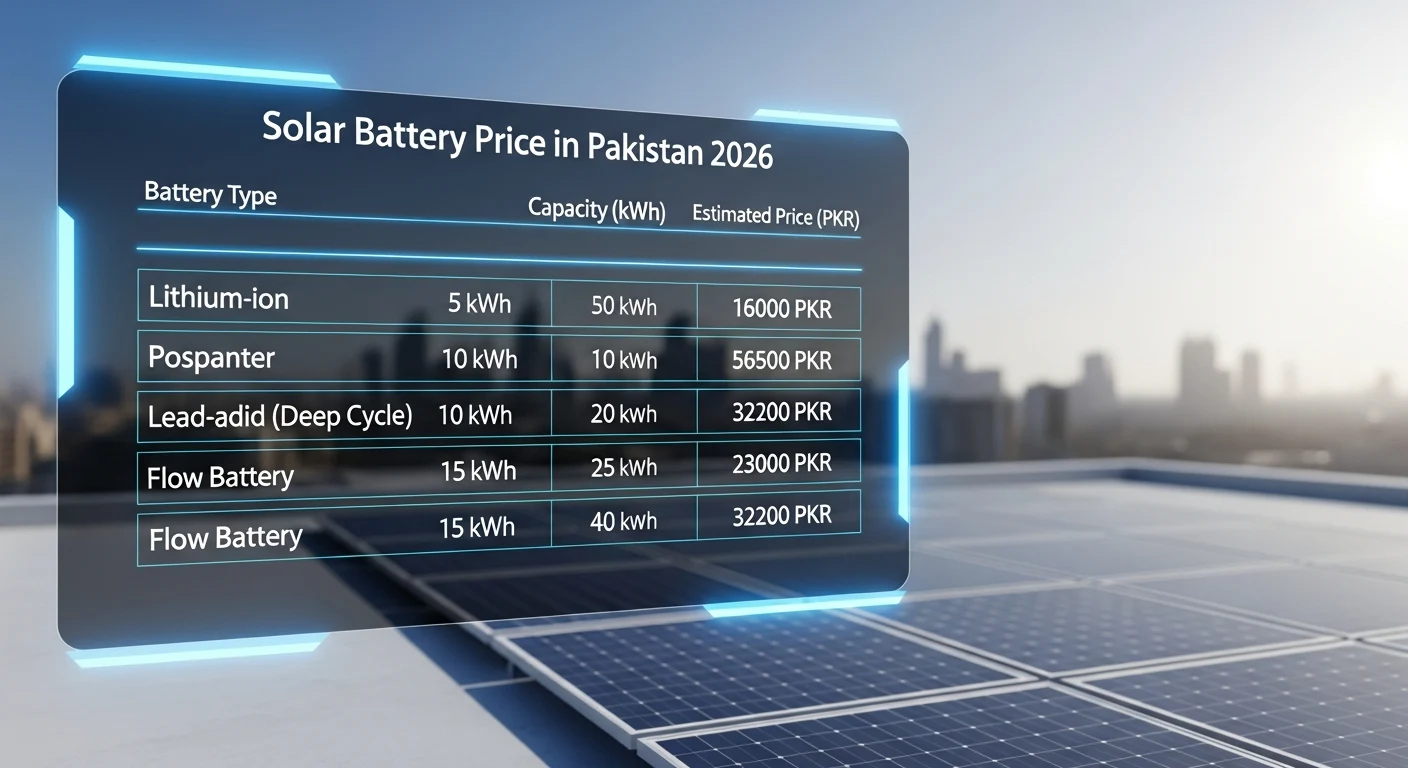
Detailed Price Comparison Table 2026
To help you budget for your solar installation, here is a detailed breakdown of current market rates for the most popular battery models in Pakistan.
As of January 26, 2026, the Solar Battery Price in Pakistan 2026 has experienced a 10% increase compared to late 2025, driven by rising global material costs and local currency fluctuations. Currently, the price for a standard tubular battery (185Ah – 230Ah) ranges from PKR 45,000 to PKR 75,000, while a high-efficiency 5kWh Lithium-ion (LiFePO4) battery is priced between PKR 195,000 and PKR 350,000 depending on the brand. These rates are market-competitive and reflect the latest import duties announced for the Q1 2026 cycle. This article provides a comprehensive breakdown of battery types, top brands like Phoenix and Pylontech, and expert advice on pairing storage with Jinko solar panels.
What is Solar Battery Price in Pakistan?
The cost of solar energy storage in Pakistan is no longer just about the initial purchase price; it is about the “Levelized Cost of Storage” (LCOS). In 2026, consumers are shifting rapidly from traditional lead-acid technology toward Lithium Iron Phosphate (LiFePO4) due to its longer lifespan and higher depth of discharge.
For a typical household using a 5kW or 10kW hybrid system, the battery often constitutes 30% to 40% of the total project cost. While the solar battery price in pakistan for lead-acid remains lower upfront, the frequent replacement cycles every 2–3 years make them more expensive in the long run compared to lithium options that last over 10 years.
Current Market Overview (January 2026)
- Tubular Batteries: Prices have stabilized after the January hike, with 200Ah models being the most sought-after for UPS and small solar setups.
- Lithium-ion (LiFePO4): High demand for 51.2V 100Ah (5kWh) modules has led to a slight shortage in premium brands like Huawei and Pylontech, causing a price premium in retail markets.
- Dry/Gel Batteries: Mostly used in specialized telecommunications or high-heat environments, these maintain a niche market with prices slightly above tubular but below lithium.
Latest Official Update and Market Trends
In the first few weeks of 2026, the solar industry in Pakistan faced an “unexpected shock” as solar panel and battery rates surged. According to data from the Karachi Electronics Dealers Association, global increases in copper and silver prices—essential for high-quality battery terminals and internal wiring—pushed manufacturing costs higher in China, which provides nearly 90% of Pakistan’s solar inventory.
Official Status: While the government has not announced new direct taxes on solar equipment in the mid-year budget review, the indirect impact of shipping freight and currency parity has kept prices elevated.
Expected Policy: There are rumors of a revised “Green Energy Storage Subsidy” for industrial consumers, though this remains unannounced at the federal level.
Detailed Price Comparison Table 2026
To help you budget for your solar installation, here is a detailed breakdown of current market rates for the most popular battery models in Pakistan.
| Battery Type | Brand & Model | Capacity | Current Price (PKR) |
| Tubular | Phoenix TX-2500 | 230 Ah | 72,000 – 76,000 |
| Tubular | Osaka TA-2000 | 200 Ah | 62,000 – 66,000 |
| Tubular | Exide TR-3000 | 260 Ah | 84,000 – 89,000 |
| Lithium-ion | Pylontech US5000 | 4.8 kWh | 340,000 – 380,000 |
| Lithium-ion | Narada 48V | 5.0 kWh | 210,000 – 240,000 |
| Lithium-ion | Dyness BX51100 | 5.1 kWh | 265,000 – 290,000 |
| Lithium-ion | Inverex Powerwall | 5.0 kWh | 280,000 – 315,000 |
| Dry / Gel | Narada 2V Cells | 300 Ah | 48,000 – 52,000 |
Satisfying “Jinko Solar Panels” Intent with Storage
Most users searching for solar battery price in pakistan are also looking to optimize their jinko solar panels setup. In 2026, Jinko’s N-type Tiger Neo modules (585W to 720W) have become the industry standard in Pakistan due to their high efficiency.
Why Pair Jinko Panels with Lithium Storage?
High-efficiency panels like Jinko generate a significant amount of “clipped” energy during peak sunlight hours. Without a robust battery system, this excess energy is either sent back to the grid at low buyback rates (expected to be around PKR 10–12 per unit in some regions) or wasted.
- Efficiency Matching: Jinko N-type panels perform better in low light. Pairing them with a lithium battery allows you to capture every possible watt during cloudy days or early mornings.
- Hybrid Savings: By using a 10kW Jinko system with a 10kWh lithium bank, a typical household in Lahore or Karachi can achieve up to 95% energy independence.
- Voltage Compatibility: Modern 585W+ Jinko panels often require high-voltage or sophisticated hybrid inverters (like Deye or Growatt) which communicate best with Lithium batteries via BMS (Battery Management System).
Types of Solar Batteries Available in Pakistan
1. Tubular Batteries (The Budget Choice)
Tubular batteries are the “bread and butter” of the Pakistani solar market. They are deep-cycle lead-acid batteries designed with thick plates to handle long discharge cycles.
- Lifespan: 2–3 years.
- Maintenance: Requires regular distilled water topping.
- Best For: Small 1kW to 3kW systems or basic UPS backups.
2. Lithium-ion / LiFePO4 (The Modern Standard)
Lithium Iron Phosphate is the safest and most durable lithium technology. It has become the top choice for solar battery pakistan users who want a “set it and forget it” solution.
- Lifespan: 10–15 years (6,000+ cycles).
- Depth of Discharge (DoD): Up to 90–95%, meaning you can use almost all the stored energy.
- Best For: 5kW, 10kW, and industrial systems.
3. Deep Cycle Dry/Gel Batteries
These are sealed batteries that do not require water. While cleaner and safer to keep indoors, they are sensitive to high temperatures, which can be a drawback in regions like Multan or Jacobabad.
Step-by-Step Guide to Choosing the Right Battery
Choosing the wrong battery can lead to system failure or even damage your expensive inverter. Follow these steps:
- Determine Your Load: Calculate the wattage of appliances you need to run during a power outage (e.g., 2 Inverter ACs = 3000W).
- Check Inverter Compatibility: Does your inverter support Lithium communication? If yes, always opt for LiFePO4. If it’s an older model, you may be restricted to tubular.
- Calculate Capacity: * For 2 hours of backup on a 1000W load, you need a 24V 200Ah tubular bank (2 batteries).
- For the same load on lithium, a single 2.5kWh module is sufficient.
- Check the C-Rating: Ensure the battery can handle the discharge current. Most lithium batteries in Pakistan are 0.5C or 1C, meaning they can discharge half or all of their capacity in one hour.
- Verify Warranty: Premium brands like Pylontech offer 5–10 years, while local tubular brands offer 1 year.
Common Mistakes to Avoid
In the pursuit of a lower solar battery price in pakistan, many consumers make critical errors that cost them more in the long run.
- Buying Unbranded Lithium: The market is flooded with “repacked” lithium cells. These lack a proper Battery Management System (BMS) and can be a fire hazard. Always buy from authorized dealers of brands like Growatt, Huawei, or Pylontech.
- Mixing Old and New Batteries: Never add a new tubular battery to an old bank. The old battery will “pull down” the new one, leading to premature failure of both.
- Incorrect Inverter Settings: Setting the charging voltage too high for a tubular battery will “boil” the electrolyte, while setting it too low for lithium will prevent it from reaching a full charge.
- Ignoring Temperature: Batteries lose efficiency in extreme heat. Ensure your battery bank is stored in a ventilated, shaded area.
Final Update Section (January 2026)
This article was last updated on January 26, 2026. The solar market in Pakistan remains volatile due to high demand and global supply chain pressures. While current inventory levels are sufficient in major hubs like Lahore, Karachi, and Islamabad, the per-watt price of panels and the per-Ah price of batteries are expected to remain high through the first half of the year.