Are you tired of frequent load shedding and skyrocketing electricity bills in Pakistan? Solar inverters are the game-changer for harnessing solar energy efficiently, converting DC power from panels into usable AC for your home or business. In this ultimate guide to Solar Inverters in Pakistan 2026, we’ll break down everything from types and how they work to the best brands available in Pakistan, current prices in PKR, and expert tips on selection and installation. Whether you’re in Lahore, Karachi, or Bahawalpur, this article equips you with all the knowledge to make an informed decision and go solar seamlessly. Let’s power up your understanding.
How Do Solar Inverters Work?
At their core, solar inverters use electronic circuitry to invert DC to AC. Solar panels produce DC voltage, typically 300-600V in arrays, influenced by sunlight intensity and temperature. The inverter samples this output and adjusts to extract maximum power via MPPT algorithms, such as perturb-and-observe or incremental conductance.
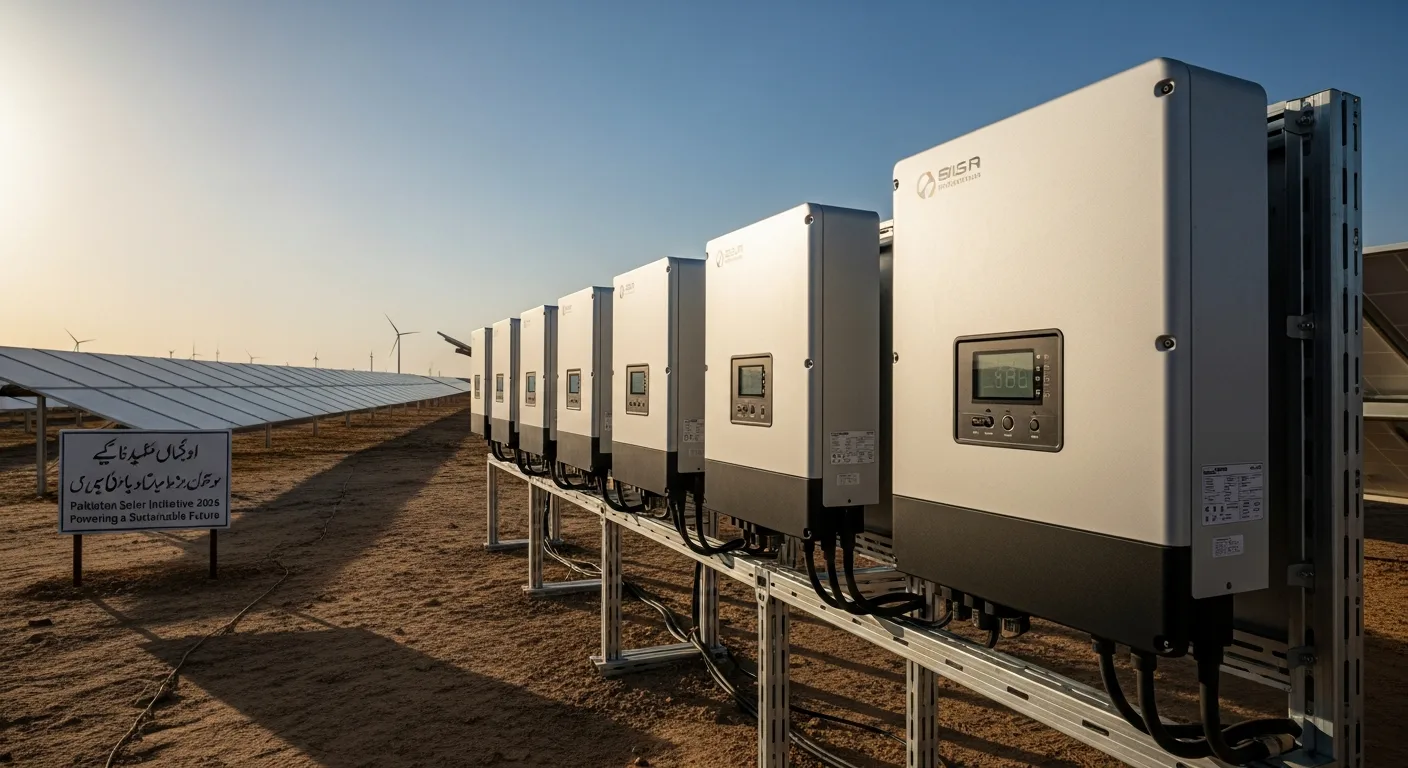
The conversion process involves switching transistors to create a sine wave AC output matching Pakistan’s grid standard (220-240V, 50Hz). In grid-tie models, they synchronize with the utility grid, exporting excess power. Hybrid versions integrate battery storage, switching seamlessly between solar, battery, and grid sources. Safety features like anti-islanding prevent feeding power back during outages, protecting utility workers.
Efficiency is crucial—top models in 2026 boast 98%+ rates, minimizing energy loss. For Pakistani users facing humid or dusty climates, IP65-rated inverters ensure durability against environmental factors.
Types of Solar Inverters: Which One Suits Your Needs?
Solar Inverters in Pakistan 2026 come in various types, each tailored to specific applications. Understanding these helps match them to Pakistan’s energy challenges, like intermittent grid supply.
On-Grid Solar Inverters
Also called grid-tie inverters, these connect directly to the utility grid. They convert solar DC to AC for immediate use or export, enabling net metering where you earn credits for surplus energy.
- Pros: Cost-effective, no battery needed, high efficiency (up to 99%).
- Cons: No backup during load shedding; shuts down if grid fails.
- Ideal for: Urban areas with stable grids, like Islamabad or Rawalpindi, where net metering reduces bills by 50-70%.
Off-Grid Solar Inverters
These operate independently, using batteries to store solar energy for later use. Perfect for remote locations without grid access.
- Pros: Full energy independence, works in blackouts.
- Cons: Requires expensive batteries, lower efficiency due to storage losses.
- Ideal for: Rural Punjab farms or Balochistan off-grid homes.
Hybrid Solar Inverters
Combining on-grid and off-grid features, hybrids manage solar panels, batteries, and the grid. They prioritize solar/battery use before drawing from the grid.
- Pros: Backup power, smart energy management, supports lithium-ion batteries for longer life.
- Cons: Higher upfront cost.
- Ideal for: Most Pakistani households dealing with 4-8 hours of daily load shedding.
String Inverters vs. Micro-Inverters
String inverters connect multiple panels in series, cost-effective for large setups. Micro-inverters attach to individual panels, optimizing each for shaded roofs common in densely packed cities like Karachi.
- String Pros/Cons: Affordable but vulnerable to shading (one shaded panel affects all).
- Micro Pros/Cons: Better performance in partial shade, but pricier.
Other types include solar pumping inverters for agricultural water needs in Sindh’s irrigation systems and three-phase inverters for commercial factories.
Best Solar Inverters in Pakistan for 2026
Based on efficiency, reliability, warranty, and local availability, here are top picks for 2026. These brands dominate the market due to their adaptation to Pakistan’s hot climate and voltage fluctuations.
- Inverex Nitrox Series: Local favorite with hybrid models up to 10kW, 98% efficiency, and IP65 protection. Great for residential use with built-in MPPT.
- Growatt MID Series: International brand with on-grid options, smart monitoring via apps, and 10-year warranty. Popular for commercial setups.
- Huawei SUN2000: High-tech hybrid with AI optimization, 98.6% efficiency, and seamless net metering integration.
- GoodWe GW Series: Affordable hybrid, 97.8% efficiency, easy installation, and lithium battery compatibility.
- Solis Hybrid: Reliable for off-grid, with strong performance in dusty environments like Bahawalpur.
Ziewnic and Solarmax are rising local brands offering competitive warranties and service networks across Lahore, Karachi, and Peshawar.
Solar Inverter Prices in Pakistan 2026
Prices have stabilized in 2026 amid global supply chains, but fluctuate with dollar rates and import duties. Expect 5-10% inflation from 2025.
- On-Grid (3-5kW): PKR 150,000-300,000 (e.g., Growatt 5kW at PKR 210,000).
- Off-Grid (3-5kW): PKR 100,000-250,000.
- Hybrid (5-10kW): PKR 200,000-500,000 (e.g., Inverex 10kW at PKR 350,000).
- Micro-Inverters (per panel): PKR 20,000-40,000.
Regional variations: Higher in remote areas like Quetta due to logistics (add 10-15%). Government subsidies under the Roshan Pakistan scheme can cut costs by 20% for low-income households.
Comparison of Top Hybrid Solar Inverters in Pakistan 2026
Here’s a detailed table comparing popular models based on key specs, tailored for Pakistani users.
| Brand/Model | Power Rating | Efficiency | Key Features | Price (PKR) | Warranty | Best For |
| Inverex Nitrox 10kW | 10kW | 98% | Dual MPPT, Wi-Fi monitoring, lithium compatible, anti-dust design | 350,000-400,000 | 5 years | Homes with load shedding |
| Growatt MID 5kW | 5kW | 97.5% | Smart app, export limiting, grid-tie ready | 220,000-250,000 | 10 years | Small businesses |
| Huawei SUN2000-6KTL | 6kW | 98.6% | AI optimization, battery ready, IP66 rating | 280,000-320,000 | 10 years | Urban net metering |
| GoodWe GW5000 | 5kW | 97.8% | Compact, easy install, overvoltage protection | 180,000-210,000 | 5 years | Budget residential |
| Solis S5 8kW | 8kW | 98% | Multiple inputs, remote firmware updates, robust for heat | 300,000-350,000 | 5 years | Farms in hot climates |
This comparison highlights efficiency and features critical for Pakistan’s variable weather and grid instability.
How to Choose the Right Solar Inverter in Pakistan
Selecting a solar inverter involves assessing your needs:
- Calculate Load: Estimate daily energy use (e.g., 5kW for a 3-bedroom home).
- Consider Type: Hybrid for backups; on-grid for savings.
- Check Efficiency and MPPT: Aim for 97%+ and multiple trackers for shaded roofs.
- Battery Compatibility: Lithium-ion for longer cycles (5,000+ vs. 1,000 for lead-acid).
- Warranty and Service: Opt for brands with local centers like Inverex in Lahore.
- Budget and Incentives: Factor in AEDB approvals for net metering rebates.
Avoid cheap imports; prioritize certified models to withstand Pakistan’s 40°C+ summers.
Installation and Maintenance Tips for Solar Inverters
Professional installation is key—hire AEDB-certified technicians to avoid voids in warranty.
- Steps:
- Site survey: Ensure shaded-free location.
- Mount inverter indoors or shaded (IP65 for outdoor).
- Connect panels, batteries, and grid.
- Test MPPT and anti-islanding.
- Cost: PKR 20,000-50,000 for 5kW system.
Maintenance: Clean dust quarterly, monitor via apps for faults, replace fans every 5 years. In humid Karachi, check for corrosion annually.
Government Incentives and Net Metering in Pakistan 2026
The Alternative Energy Development Board (AEDB) promotes solar through net metering, allowing export of excess power for bill credits. In 2026, incentives include zero import duty on inverters under 10kW and subsidies up to PKR 100,000 for rural installations. Provinces like Punjab offer additional rebates via the Solarization Program, reducing ROI to 3-5 years.
Conclusion
Solar Inverters in Pakistan 2026 are pivotal for Pakistan’s shift to renewable energy in 2026, offering resilience against load shedding and cost savings. From hybrid models like Inverex to efficient on-grid options from Huawei, choosing the right one depends on your setup. With prices starting at PKR 100,000 and incentives abound, now’s the time to invest. Stay powered and sustainable—consult a local expert today.