Pakistani homeowners and businesses face a critical energy crisis. Load shedding persists, electricity bills climb by 15–25% annually, and grid reliability remains questionable. The question “What is the solar panel and installation cost?” has become increasingly urgent for millions seeking energy independence.
The answer: Solar Panel and Installation Cost in Pakistan 2026 ranges from PKR 220,000–PKR 1,800,000 depending on system size, quality, and location. A typical 5kW residential system costs PKR 550,000–PKR 750,000 fully installed, generating returns within 3–4 years through electricity bill savings. This comprehensive guide breaks down exact component costs, regional variations, installation labor pricing, and hidden expenses that most vendors won’t mention.
Whether you’re in Karachi, Lahore, Islamabad, or smaller cities, understanding the true cost of Solar Panel and Installation Cost in Pakistan 2026 prevents overpaying and ensures you make informed decisions about your energy future.
Understanding Solar Panel and Installation Cost in Pakistan
Many Pakistani buyers mistakenly believe “solar panel cost” refers only to the physical panels. In reality, panels account for just 15–20% of total system cost. The remaining 80–85% covers inverters, mounting structures, electrical work, installation labor, and permits—costs that vary dramatically across Pakistan.
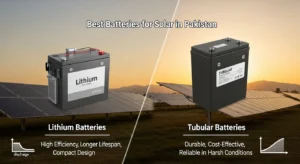
Before finalizing your setup, make sure to check the latest 5kW Lithium Battery Price in Pakistan 2026 to see how much you can save on long-term battery replacements.)
Why Solar Panel and Installation Cost Varies So Much in Pakistan
Unlike standardized Western markets, Pakistan’s solar industry has:
- No unified pricing standards – Different cities have vastly different rates
- Inconsistent installer qualifications – Certified vs. uncertified technicians create 20–30% price variations
- Import duty fluctuations – Equipment costs depend on USD/PKR exchange rates
- Regional labor cost differences – Karachi installers charge 3–4X more than rural areas
- Permit complexity variations – DISCO (Distribution Company) requirements differ by region
- Quality inconsistency – Inferior components sold as premium brands create “hidden” costs through failures
Understanding these factors helps you identify fair Solar Panel and Installation Cost in Pakistan 2026 rather than accepting the first quote.
Complete Breakdown of Solar Panel and Installation Cost in Pakistan
Here’s the realistic 2026 cost structure for a 5kW system (most popular for Pakistani homes):
Component-by-Component Cost Allocation (5kW System)
Solar Panels (20% of total: PKR 110,000–PKR 150,000)
- 9–10 panels × 550W capacity
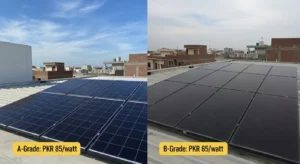
- Monocrystalline quality (recommended): PKR 12,000–16,000 per panel
- Total: PKR 108,000–160,000
- Quality brands: Longi, Jinko, Canadian, Trina
- Budget brands cost 20–30% less but have higher failure rates
Inverter System (18–22% of total: PKR 100,000–PKR 180,000)
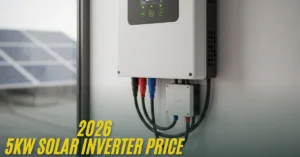
- On-grid inverter (5–6kW): PKR 80,000–120,000
- Hybrid inverter with battery management: PKR 150,000–220,000
- Quality matters significantly: Premium inverters (97% efficiency) vs. budget (92% efficiency)
- Premium brands: Inverex, Growatt, Fronius, Huawei
- Budget brands: Local assemblers, lesser-known imports
To see fully configured packages including plates, inverters, and structures for your home, visit our detailed guide on the Solar Panel Complete System Price in Pakistan.)
Mounting Hardware & Racking (12–15% of total: PKR 70,000–PKR 110,000)
- Aluminum L-brackets: PKR 65,000–95,000
- Installation hardware, bolts, fasteners: PKR 8,000–15,000
- Custom installations (sloped roofs, complex layouts): Add PKR 20,000–40,000
- Galvanized steel (coastal areas): Add PKR 15,000–25,000 for corrosion protection
Electrical Wiring & Safety Equipment (10–12% of total: PKR 55,000–PKR 90,000)
- DC cables (4mm²): PKR 8,000–12,000
- AC cables, connectors, breakers: PKR 15,000–25,000
- Disconnect switches, fuses, junction boxes: PKR 12,000–20,000
- Grounding and earthing system: PKR 10,000–15,000
- Monitoring equipment (WiFi/display): PKR 8,000–18,000
Installation Labor (12–18% of total: PKR 70,000–PKR 140,000)
- Structural assessment and system design: PKR 10,000–15,000
- Roof mounting and panel installation: PKR 25,000–50,000
- Electrical wiring and connections: PKR 15,000–30,000
- System testing and commissioning: PKR 8,000–15,000
- Rooftop assessment/reinforcement (if needed): PKR 10,000–30,000
Documentation & Permits (8–10% of total: PKR 40,000–PKR 75,000)
- Net metering license (DISCO): PKR 5,000–10,000
- Technical drawings and engineering: PKR 5,000–10,000
- DISCO inspection fees: PKR 2,000–5,000
- Building/electrical permits (municipal): PKR 15,000–30,000
- Warranty registration and documentation: PKR 5,000–10,000
- Grid interconnection processing: PKR 8,000–10,000
Company Overhead & Profit Margin (10–15% of total: PKR 60,000–PKR 120,000)
- Sales and customer acquisition: PKR 30,000–60,000
- Administrative overhead: PKR 20,000–40,000
- Company profit margin: PKR 10,000–20,000
TOTAL COST FOR 5kW ON-GRID SYSTEM: PKR 550,000–PKR 800,000
Complete Solar System Pricing by Capacity in Pakistan (January 2026)
This table shows realistic installed costs across Pakistan for complete systems:
| System Size | Typical Use | Equipment Cost | Installation Labor | Total Cost | Monthly Generation | Annual Payback Period |
|---|---|---|---|---|---|---|
| 1 kW | Small office, shop | PKR 110,000–150,000 | PKR 25,000–35,000 | PKR 135,000–185,000 | 80–100 kWh | 8–10 years |
| 3 kW | Small-medium home | PKR 250,000–350,000 | PKR 50,000–75,000 | PKR 300,000–425,000 | 240–300 kWh | 4–5 years |
| 5 kW | Average home | PKR 410,000–580,000 | PKR 70,000–140,000 | PKR 550,000–750,000 | 400–500 kWh | 3–4 years |
| 6 kW | Home with AC | PKR 490,000–690,000 | PKR 80,000–160,000 | PKR 650,000–850,000 | 480–600 kWh | 3–4 years |
| 8 kW | Large home | PKR 650,000–920,000 | PKR 110,000–200,000 | PKR 850,000–1,100,000 | 640–800 kWh | 3–4 years |
| 10 kW | 1-Kanal house, business | PKR 820,000–1,150,000 | PKR 150,000–250,000 | PKR 1,000,000–1,400,000 | 800–1,000 kWh | 3–4 years |
| 15 kW | Commercial, large office | PKR 1,230,000–1,730,000 | PKR 200,000–350,000 | PKR 1,500,000–2,050,000 | 1,200–1,500 kWh | 3–4 years |
| 20 kW | Industrial, farms | PKR 1,640,000–2,300,000 | PKR 280,000–450,000 | PKR 2,000,000–2,750,000 | 1,600–2,000 kWh | 3–4 years |
Important Notes for Pakistan:
- On-grid systems (no batteries) are PKR 200,000–350,000 cheaper than hybrid systems
- Installation costs vary 30–50% between Karachi (most expensive) and rural areas (cheapest)
- Monthly generation assumes 5–6 peak sun hours daily (varies by region)
- Payback includes government tax exemptions on solar equipment (valid through 2026)
- Prices fluctuate with USD/PKR exchange rate (currently 280–300 PKR per USD)
What Drives Solar Panel and Installation Cost Variations in Pakistan?
1. Roof Type and Installation Complexity
Flat Concrete Roofs (Most Common in Pakistan)
- Easiest installation: 1–1.5 days labor
- Cost: PKR 70,000–90,000 labor
- Mounting: Ballast or direct mounting (no penetrations)
Sloped/Pitched Roofs
- Moderate difficulty: 1.5–2 days labor
- Cost: +PKR 10,000–20,000 additional labor
- Requires custom L-brackets and careful angle calculations
Tile/Terraced Roofs (Common in Northern/Rural Areas)
- Complex: 2–3 days labor
- Cost: +PKR 30,000–50,000 additional labor
- Risk of tile damage; requires skilled tile workers; structural reinforcement often needed
Multi-Level Buildings
- Very complex: 3–5 days labor
- Cost: +PKR 40,000–80,000 additional labor
- Safety equipment; elevated risk; extended project timeline
- May require structural engineer certification
Ground-Mounted Systems (If No Suitable Roof)
- Labor intensive: 3–5 days
- Cost: PKR 100,000–150,000 (includes foundation work, trenching)
- Advantage: No roof damage risk; easier maintenance
2. Solar Panel Brand Quality
Budget Brands (15–20% cheaper)
- Examples: Local assemblers, lesser-known imports
- Price: PKR 10,000–13,000 per 550W panel
- Risks: Warranty disputes, higher failure rates (2–5% vs. 0.5%), inferior performance in heat
- Realistic total cost: PKR 430,000–580,000 for 5kW system (saves PKR 100,000–150,000)
- Not recommended: False savings due to reliability issues
Mid-Range Brands (Standard Recommendation)
- Examples: Longi, Jinko, Canadian, Trina
- Price: PKR 12,000–16,000 per 550W panel
- Proven 98%+ survival rates; excellent performance in Pakistan’s climate
- Total cost: PKR 550,000–750,000 for 5kW system
- Best value option
Premium Brands (20–30% more expensive)
- Examples: SunPower (USA), Fronius (Austria), Panasonic (Japan)
- Price: PKR 18,000–22,000 per 550W panel
- Superior efficiency (23%+); extended warranties (25 years+); exceptional longevity
- Total cost: PKR 700,000–900,000 for 5kW system
- Justifiable for: Large systems, space-constrained roofs, commercial installations
Hidden Costs Pakistani Buyers Often Miss
1. Structural Roof Reinforcement (PKR 10,000–50,000)
Many Pakistani roofs are weak. Before installation, assessment may reveal:
- Cracked concrete requiring repair before panel mounting
- Load-bearing capacity concerns requiring reinforcement
- Waterproofing needed before installation
- Cost: PKR 20,000–50,000 (not mentioned in initial quotes)
2. Electrical Switchboard Upgrades (PKR 15,000–35,000)
Older Pakistani homes often have outdated switchboards incompatible with solar systems. Upgrades may include:
- Additional circuit breakers
- New distribution panel
- Rewiring of main connections
- Cost: PKR 15,000–35,000
3. Net Metering Meter Replacement (Free to PKR 8,000)
Some DISCOs charge for net metering meter installation:
- DISCO-provided meter (usually free)
- Private contractor installation fee: PKR 3,000–8,000
- Verify with your DISCO; this is sometimes complimentary
4. Extended Warranty & Service Packages (PKR 8,000–15,000 annually)
Optional but recommended:
- Annual maintenance visits: PKR 3,000–5,000 per visit
- Panel cleaning service: PKR 2,000–5,000 per cleaning
- Extended equipment warranty: PKR 3,000–8,000 yearly
- Total: PKR 8,000–18,000 annually
5. System Upgrades Later (Budget for Future)
If your solar investment succeeds, you may want to expand:
- Adding more panels: PKR 40,000–60,000 per kW
- Upgrading inverter: PKR 50,000–100,000
- Adding battery backup: PKR 150,000–400,000
- Don’t let your initial system design prevent future expansion
6. Generator Integration (If Adding Hybrid System)**
If you already own a generator and want solar + battery + generator integration:
- System reconfiguration: PKR 20,000–40,000
- Additional controller: PKR 15,000–30,000
- Wiring and connections: PKR 10,000–20,000
- Total: PKR 45,000–90,000 additional
How to Calculate Your Actual Solar Panel and Installation Cost
Step 1: Determine Your System Size
Calculate your monthly electricity consumption from your DISCO bill (in kWh or units).
Example: Bill shows 400 units/month = 400 kWh
Pakistan receives 5–6 peak sun hours daily (varies by region):
- Multan/Bahawalpur: 6–7 hours
- Karachi/Lahore: 5.5–6 hours
- Islamabad: 5–5.5 hours
- Northern areas: 4.5–5 hours
Formula: Required System Size = Monthly Consumption ÷ 30 days ÷ Peak Sun Hours
Example (Lahore, 400 kWh/month, 5.5 hours):
- System needed = 400 ÷ 30 ÷ 5.5 = 2.42 kW
- Round up to 3kW system (add 20% for seasonal variation)
Step 2: Choose On-Grid vs. Hybrid
On-Grid (Cheaper, No Battery Backup)
- Saves PKR 200,000–350,000 vs. hybrid
- No power during load shedding
- Only viable if your area has <2–3 hours load shedding daily
- Best cost: PKR 550,000–750,000 for 5kW
Hybrid (Recommended for Pakistan)
- Includes battery backup capability
- Provides power during load shedding
- Adds PKR 200,000–350,000 to base cost
- Total: PKR 810,000–1,050,000 for 5kW
- Strongly recommended given Pakistan’s grid instability
Step 3: Estimate Component Costs
Using the breakdown above:
- Panels (20%): PKR 110,000–160,000
- Inverter (18%): PKR 100,000–180,000
- Mounting (12%): PKR 70,000–110,000
- Wiring/safety (10%): PKR 55,000–90,000
- Labor (15%): PKR 85,000–135,000
- Permits (8%): PKR 45,000–75,000
- Total: PKR 550,000–750,000 (on-grid)
Add PKR 200,000–350,000 for hybrid battery system.
Step 4: Compare to Market Quotes
Get at least 3 quotes from certified installers. Your calculated estimate should be ±10% of actual quotes. If quotes vary >15%, investigate the differences:
- Different panel brands (10% variance acceptable)
- Inverter type differences (15% variance acceptable)
- Labor rate differences (20% variance by location acceptable)
- Hidden components or omissions (investigate immediately)
Common Pricing Mistakes Pakistani Buyers Make
❌ Mistake #1: Choosing the Cheapest Quote
The Problem:
- Budget quote: PKR 480,000 (uses inferior panels, budget inverter)
- Quality quote: PKR 650,000 (mid-range components)
- Difference: PKR 170,000 (26% cheaper)
Hidden Costs of Budget Choice:
- Inferior panels: 0.5–2% annual degradation vs. 0.3% for quality (0.1% difference = PKR 5,000–10,000 annual loss over 20 years)
- Budget inverter fails Year 8–10 (vs. Year 15+ for quality): PKR 80,000 replacement cost + installation
- Warranty disputes and service issues: PKR 10,000–30,000 in unexpected costs
Reality: Budget option “saves” PKR 170,000 upfront but costs an additional PKR 150,000–250,000 over system lifespan.
Solution: Compare value, not just price. Mid-range quality at PKR 600,000–700,000 is optimal for most Pakistani homes.
❌ Mistake #2: Not Accounting for Seasonal Variation
The Problem:
- Sizing system for summer peak means insufficient winter generation
- Pakistani winters reduce efficiency 30–40% (November–February)
- Your battery (if hybrid) depletes faster during cloudy winter months
Solution:
- Size for winter generation (60–70% of summer estimate)
- Add 15–20% oversizing buffer
- Example: If winter needs suggest 3kW, install 3.5–4kW to maintain year-round reliability
❌ Mistake #3: Installing Without Professional Assessment
The Problem:
- “Cheap” installer misses load-bearing issues
- Roof requires PKR 30,000 reinforcement that wasn’t identified
- System produces 10–15% less than expected due to suboptimal angle
- Warranty voided due to improper installation
Solution:
- Always use certified installers with structural assessment experience
- Get physical roof inspection before quote, not just phone estimate
- Request references from nearby installations
❌ Mistake #4: Buying from Gray Market Vendors
The Problem:
- Counterfeit panels sold as premium brands
- No authentic warranty (forged certificates)
- No technical support when issues arise
- Spare parts unavailable or overpriced
Solution:
- Purchase only from authorized distributors
- Request original bills and import documents
- Verify warranty with manufacturer directly
- Check authorized dealer list on brand websites
❌ Mistake #5: Ignoring DISCO Approval Requirements
The Problem:
- Installing system without DISCO notification
- Grid synchronization issues causing inverter failures
- Potential fines or forced system disconnection
- Insurance void if grid damage occurs
Solution:
- Obtain net metering license before installation (if on-grid)
- Get DISCO written approval for hybrid systems
- Include permit costs in your budget (PKR 15,000–40,000)
- Use installers familiar with local DISCO procedures