If you’ve invested in solar panels, you’re making a smart choice for your home’s energy independence and Pakistan’s renewable energy future. However, many homeowners don’t realize that solar panel cleaning is one of the most critical yet overlooked aspects of system maintenance. Pakistan’s dusty climate, pollution, and unique weather patterns can significantly reduce your panels’ efficiency—sometimes by as much as 30%—if proper cleaning isn’t maintained.
This comprehensive Solar Panel Cleaning Guide will walk you through everything you need to know to keep your system performing at peak capacity. Whether you’re in Lahore, Karachi, Islamabad, or any other part of Pakistan, you’ll learn the right techniques, frequency, tools, and safety measures to maximize your solar investment.
Keeping your panels clean ensures you get the full value out of your investment. If you’re looking to add more capacity, check the latest 540 Watt Solar Panel Price in Pakistan here.
Why Solar Panel Cleaning Matters in Pakistan’s Climate
The Real Impact of Dirty Solar Panels
Most people underestimate the impact of dirt on solar panels. Studies show that dirty solar panels can lose between 15% to 30% of their energy production capacity. In Pakistan’s context, this isn’t just a minor efficiency drop—it translates to hundreds or thousands of rupees in lost savings annually.
The problem is particularly acute in Pakistan because:
- Dust and sand accumulation: Regions like Sindh and Balochistan experience frequent dust storms that deposit layers of fine particles on panels
- Urban pollution: Major cities (Lahore, Karachi) have high smog and pollution levels that create stubborn grime buildup
- Bird droppings: These contain acidic compounds that can etch glass if left uncleaned
- Seasonal pollen: Spring brings significant pollen accumulation, especially in northern Pakistan
- Industrial debris: Areas near construction sites or factories accumulate more contaminants
A typical 10kW residential solar system losing 25% efficiency means losing approximately 1,500-2,000 kWh of annual electricity production. At Pakistan’s current electricity rates, that’s a loss of Rs. 15,000-30,000 per year.
The Cost-Benefit Analysis
Professional Solar Panel Cleaning Guide in Pakistan typically costs between Rs. 3,000 to 8,000 per session for a residential system, depending on panel count and dirt level. A single cleaning session that restores 20-25% efficiency easily pays for itself within the month through increased energy production.
Understanding Solar Panel Soiling: What Damages Efficiency?
Soiling—the accumulation of unwanted materials on panel surfaces—is the primary culprit behind reduced efficiency. Understanding what causes soiling helps you recognize when cleaning is needed.
Common Sources of Panel Soiling in Pakistan
Dust and Sand: Fine particles that settle naturally and are particularly problematic in arid regions. Unlike loose dust, settled dust bonds to the panel glass through static electricity and moisture, becoming harder to remove with rain alone.
Urban Pollution and Smog: Smoke particles, vehicle emissions, and industrial pollutants create a greasy film that blocks sunlight more effectively than simple dust. This is especially problematic in Lahore during winter months (November-January).
Bird Droppings: Beyond being unsightly, bird droppings contain corrosive compounds that can permanently damage the anti-reflective coating on panels if left for extended periods. They also create hot spots that reduce panel lifespan.
Leaves and Organic Matter: In tree-covered areas, fallen leaves and twigs accumulate, particularly during autumn. While gravity helps remove loose leaves, decomposing matter leaves residue.
Pollen: Seasonal pollen accumulation is common in spring (March-May) across Pakistan. Pollen particles are sticky and require active cleaning rather than rain removal.
Salt Spray: Coastal areas like Karachi experience salt spray accumulation from sea air, which is highly corrosive to electrical components and reduces panel transmission.
Mineral Deposits: Hard water used for cleaning or residual minerals from rainfall can leave white streaks that scatter light and reduce efficiency.
The 540W panel is ideal for charging modern energy storage solutions. If you want 24/7 power, pair these panels with a high-capacity battery. Read our guide on the 5kW Lithium Battery Price in Pakistan 2026 for the best deals.
| Soiling Type | Common in Pakistan | Efficiency Loss | Removal Difficulty | Priority |
|---|---|---|---|---|
| Dust | Nationwide, especially Sindh/Balochistan | 10-15% | Low-Medium | High |
| Urban Smog | Lahore, Karachi, Islamabad | 15-20% | High | High |
| Bird Droppings | Urban areas with trees | 5-10% per spot | Medium-High | Very High |
| Pollen | Northern/Central Pakistan (spring) | 8-12% | Medium | Medium |
| Salt Spray | Karachi, coastal regions | 12-18% | High | High |
| Mineral Deposits | Throughout Pakistan | 5-8% | Medium | Medium |
How Often Should You Clean Solar Panels in Pakistan?
The answer isn’t one-size-fits-all—it depends on your location, weather patterns, and current system performance.
General Cleaning Frequency Recommendations
For Most of Pakistan: Solar Panel Cleaning Guide at least twice per year (every 6 months). This baseline ensures that seasonal soiling doesn’t accumulate excessively.
For High-Dust Areas: If you live in desert regions (southern Sindh, Balochistan), or near construction sites, industrial areas, or busy highways, increase to quarterly cleaning (every 3 months).
For Coastal Areas: Karachi and other coastal cities should follow a quarterly schedule to manage salt spray accumulation.
For Heavily Polluted Cities: Lahore should prioritize cleaning every 2-3 months during winter months when smog is heaviest, then revert to 6-month intervals during cleaner seasons.
Performance-Based Cleaning Triggers
Rather than relying solely on a fixed schedule, monitor your system’s actual performance. Most modern solar systems include performance monitoring apps or dashboards.
If you notice:
- A sudden drop of 5-10% in energy production compared to the same season last year
- Visible dirt, dust, or bird droppings covering more than 20% of panel surface
- Water stains or a dull, hazy appearance on the glass
- Streaks that remain after rainfall
- White mineral deposits that don’t wash away naturally
These are clear signs that cleaning is needed immediately. Your panels will tell you when they need attention if you’re paying attention to your system’s output.
Tools and Equipment for DIY Solar Panel Cleaning
If you choose to clean panels yourself (and only if they’re easily accessible from the ground), gather these essential tools first.
Essential Cleaning Equipment
Soft-Bristled Brush or Sponge: Never use abrasive materials, steel wool, or stiff brushes that can scratch the tempered glass. The best option is a soft-bristled brush with synthetic bristles designed specifically for solar panels or a non-abrasive sponge with microfiber cloth covering.
Long-Handled Extension Pole: A 20-25 foot extension pole allows you to reach panels from ground level safely, eliminating the need for roof access. Look for poles with quick-release handles for easy attachment of brushes.
Squeegee: After rinsing, use a soft rubber squeegee to push water off the panels. This prevents mineral deposits and water spots from forming.
Soft Cloth or Microfiber Cloth: Keep lint-free cloths on hand for drying panels and polishing away water spots after cleaning.
Water Source: A garden hose with low pressure (below 40 PSI) works well. Never use a pressure washer, as the force can crack tempered glass and damage seals.
Bucket: For mixing mild cleaning solution and holding warm water.
Safety Equipment:
- Non-slip rubber-soled shoes
- Clean work gloves (nitrile or cotton, not leather which absorbs water)
- Sunscreen and hat (you’ll be outside during early morning)
Cleaning Solutions for Pakistan’s Climate
The best cleaning solution depends on your water hardness and the type of soiling.
Pure Water Only: This is the manufacturer-recommended method and works best for light dust in areas with soft water. Most rain in Pakistan is naturally soft water, making this option viable for many regions.
Deionized or Distilled Water: Essential if you have hard water (common in Punjab and Sindh). Deionized water prevents mineral deposits that can be worse than the original soiling. You can purchase 20-liter containers for Rs. 150-300.
Mild Soap Solution: Mix 1 part mild dish soap (like Dawn or local equivalents) with 100 parts water. This works for stubborn grime and bird droppings. The key word is “mild”—never use harsh chemicals, degreasers, or abrasive cleaners that void warranties.
Solar-Specific Cleaners: Eco-friendly solar panel cleaners designed in Pakistan (like those from SoWash or PVCARE) use biodegradable formulations that won’t damage coatings. These cost Rs. 800-2,000 per bottle but are highly effective for severe soiling.
Avoid Completely: High-pH cleaners, vinegar solutions, bleach, acetone, and any alcohol-based products. These damage the anti-reflective coating and void manufacturer warranties.
Step-by-Step Guide: How to Clean Solar Panels Safely
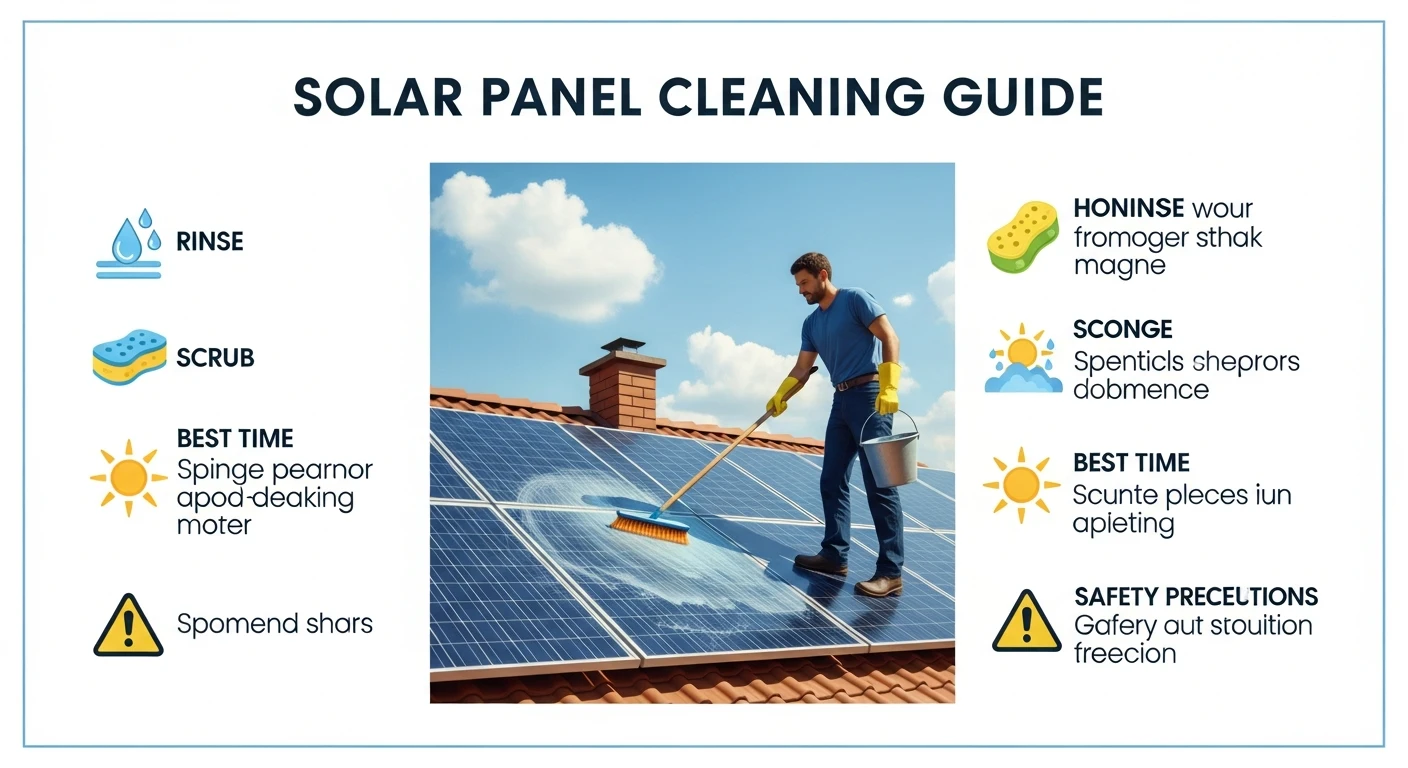
Follow this systematic approach for safe, effective cleaning. This process takes 1-2 hours for a typical residential system.
Step 1: Preparation and Safety First
Turn off your solar system completely: Switch off the DC disconnect, AC disconnect, and the main breaker. Wait 30 minutes to allow capacitors to discharge fully. Even with the system off, some residual charge may exist, and water conducts electricity.
Check the weather: Clean on overcast days or during early morning (5-7 AM) or late evening (5-7 PM) when panels are cool. Never clean during peak sunlight hours because:
- The sun’s heat will cause water to evaporate quickly, leaving mineral streaks
- Thermal shock from cold water on hot panels can cause microcracks
- Working in intense heat is dangerous
Wear appropriate safety gear: Non-slip shoes, clean gloves, long sleeves to protect from sun exposure, and sunscreen. If climbing a ladder, have someone spot you and consider a safety harness.
Inspect for visible damage: Before starting, scan panels for visible cracks, loose connections, or damaged wiring. If you see physical damage, stop and contact your installer.
Step 2: Rinse Away Loose Debris
Begin with a gentle water rinse using your garden hose at low pressure (below 40 PSI). Hold the hose at a 45-degree angle and let water flow downward across the panels. This removes:
- Loose dust and pollen
- Small leaves and twigs
- Surface debris that could scratch panels if scrubbed dry
Spend 2-3 minutes on this step. Don’t skip it—dry scrubbing loose dirt causes micro-scratches that reduce efficiency.
Step 3: Apply Your Cleaning Solution
Fill your bucket with warm (not hot, not cold) water mixed with your chosen cleaning solution. Using warm water helps dissolve stubborn grime and bird droppings more effectively than cold water.
Dip your soft brush or sponge into the solution and gently apply it to panels using circular motions. Focus extra attention on areas with visible soiling, bird droppings, or mineral deposits.
For stubborn deposits: Let the solution soak on the affected area for 10-15 minutes before gently scrubbing. This softens crusty bird droppings and mineral buildup without requiring aggressive scrubbing that scratches glass.
Do not scrub hard. You’re encouraging dirt to release, not forcing it off. The gentle approach takes longer but preserves your panel coatings.
Step 4: Rinse Thoroughly
After applying solution, rinse thoroughly with your garden hose again, ensuring all soap residue is completely removed. Soap left on panels will reduce light transmission and defeat the purpose of cleaning.
Rinse slowly and systematically, going from the top of each panel downward. Spend at least 3-4 minutes on this step.
Step 5: Dry to Prevent Water Spots
Use your squeegee to push remaining water off the panel surface, working from top to bottom. Then, using soft lint-free cloths (microfiber is best), dry the entire surface.
This final step is critical in hard-water areas of Pakistan, as mineral deposits left by evaporating water can reduce efficiency by 5-8%.
Step 6: Monitor and Document
After cleaning, note the date in a simple log. Over the next few days, monitor your system’s energy output. You should see an immediate increase if the cleaning was needed.
When to Hire Professional Solar Panel Cleaners
While DIY cleaning is possible for easily accessible ground-level systems, professional cleaning is often the better choice in Pakistan.
Situations Requiring Professional Service
Roof-Mounted Systems: If your panels are on your roof and you’d need a ladder, hire professionals. Falls are the leading cause of serious home injuries, and professional cleaners have safety equipment, harnesses, and extensive training.
High-Rise or Difficult Access: Buildings taller than 2 stories, panels on angled roofs, or systems surrounded by obstacles make DIY extremely risky.
Extensive Soiling: After months without cleaning, heavy bird droppings, significant mineral buildup, or thick dust layers require professional equipment and expertise.
Warranty Preservation: Some manufacturers require professional cleaning to maintain warranty coverage. Confirm your warranty terms before DIY cleaning.
Time Constraints: If you’re busy and value your time at more than the cleaning cost, hiring someone is economical.
Large Systems: Commercial systems with hundreds of panels are best handled by professionals with automated cleaning equipment.
What Professional Cleaners Provide
Quality professional solar panel cleaning services in Pakistan offer:
- Specialized equipment: Soft brushes, deionized water systems, and gentle pressure washers (under 40 PSI)
- Expertise: Training in different panel types and recognition of potential issues (cracks, loose connections)
- Safety compliance: OSHA-equivalent standards, proper harnesses, and insurance
- Eco-friendly solutions: pH-neutral, biodegradable cleaners safe for your panels and local environment
- Inspection services: Professional checks for microcracks, loose wiring, and early equipment failures
Cost of Professional Solar Panel Cleaning in Pakistan
Typical pricing as of 2025:
- One-time residential cleaning (10kW system): Rs. 3,000-5,000
- Quarterly cleaning package (4 sessions/year): Rs. 10,000-16,000
- Bi-annual cleaning (2 sessions/year): Rs. 6,000-10,000
- Post-construction cleaning: Rs. 4,000-7,000
- Commercial systems: Rs. 50-100+ per kWh of system size
Prices vary by location (Karachi slightly higher due to coastal soiling complexity, Lahore higher in winter), system accessibility, and current dirt level. Request quotes from multiple providers as they vary considerably.
Recommended Professional Services in Pakistan
Leading professional providers include SoWash (national coverage), Pakistan Home Solution (major cities), Alpha Solar (Lahore), Solar Sweep (Karachi), and PVCARE (Karachi). Most offer online booking and regular maintenance packages.
Seasonal Solar Panel Maintenance for Pakistan
Each season brings unique challenges that require adjusted cleaning schedules and specific approaches.
Spring (March-May): Pollen Management
Primary Challenge: Heavy pollen accumulation, especially in northern and central Pakistan where spring bloom peaks in April-May.
Recommended Action: Clean monthly during peak pollen season (April-May). Pre-clean in late March before heavy pollen arrives.
Special Technique: Use a soft brush to gently wipe away pollen without water first, as pollen becomes sticky when wet. Then rinse thoroughly.
Summer (June-August): Dust and Heat
Primary Challenge: Intense heat increases water evaporation during cleaning, leaving mineral deposits. Dust accumulation accelerates.
Recommended Action: Avoid cleaning during daytime heat (above 35°C). Clean very early morning (before 7 AM) only when absolutely necessary. Otherwise, defer to early evening.
Special Technique: Use deionized or distilled water exclusively to prevent mineral spotting. Allow panels to cool fully before any water contact.
Autumn (September-November): Leaf and Debris Accumulation
Primary Challenge: Falling leaves, twigs, and organic matter accumulation, especially in tree-covered areas.
Recommended Action: Clean monthly if your system is surrounded by trees; quarterly if in open areas. Pre-clean before peak leaf fall (late October-early November).
Special Technique: First, gently remove large debris (leaves, twigs) with a soft brush before water rinsing to prevent them from damaging panels when scrubbed.
Winter (December-February): Smog, Frost, and Snow
Primary Challenge: Maximum smog in cities like Lahore (especially January-February); frost can make panels slippery; snow accumulation reduces sunlight access.
Recommended Action: Increase cleaning frequency to every 4-6 weeks in heavily polluted areas. Clean after heavy smog episodes. For snow, let it melt naturally unless sunlight is completely blocked for more than 2 days.
Special Technique: Heavy smog requires more aggressive cleaning. Use mild soap solution and allow soaking. Never scrape frost or ice—this damages the surface. Let solar heat melt it naturally.
How to Handle Specific Stubborn Soiling Issues
Not all panel problems are solved with basic cleaning. Here’s how to tackle specific challenges.
Bird Droppings
Problem: Acidic and can etch glass if left for weeks; they’re sticky and don’t rinse away easily.
Solution:
- Do not scrape or scratch
- Let a mild soap solution soak for 15 minutes
- Gently wipe with a soft cloth
- For very stubborn droppings, use a dedicated bird dropping remover (available from PVCARE and similar providers in Pakistan)
- Rinse thoroughly and dry
Prevention: Install bird spikes or netting if birds regularly roost on your structure. Some systems use ultrasonic devices that deter birds without harming them.
Common Mistakes That Damage Solar Panels
Knowing what NOT to do is as important as knowing the right techniques.
Never Use These Cleaning Methods
Pressure Washers: Even “soft” pressure settings exceed the 40 PSI threshold. High pressure cracks tempered glass, forces water into seals, and breaks electrical connections. This causes damage far exceeding any soiling problem.
Abrasive Brushes or Scouring Pads: Metal brushes, steel wool, and stiff plastic scrubbers create micro-scratches that scatter light and reduce efficiency permanently.
Harsh Chemicals: Degreasers, bleach, acetone, window cleaners with ammonia, and heavy-duty soaps damage anti-reflective coatings. The coating is what allows panels to absorb maximum light—damage it, and you’ve guaranteed efficiency loss.
Scraping or Scratching: Using blades, knives, or hard objects to scrape off stuck-on debris may remove the debris, but the resulting scratches are far worse than the original soiling.
Cold Water on Hot Panels: Thermal shock from spraying cold water on panels heated by the sun causes microcracks in the glass and can destroy electrical components.
Walking on Panels: Your weight can crack the tempered glass, and you’ll damage the coating with your shoes.
Mistakes That Void Warranties
Check your specific warranty, but generally, these actions void coverage:
- Unauthorized disassembly or modification
- DIY cleaning on roofs that results in damage
- Using pressure washers or harsh chemicals
- Cleaning during installation or immediately after (before panels have fully cured)
- Failure to follow manufacturer-specific cleaning guidelines
Always contact your installer or panel manufacturer before cleaning to confirm approved methods.
The Role of Protective Coatings and Self-Cleaning Panels
Beyond regular cleaning, emerging technologies can reduce cleaning frequency and improve long-term performance.
Anti-Soiling Coatings
Products like Diamon-Fusion® create an invisible, ultra-thin barrier on panel glass that prevents dirt and water from adhering. Benefits include:
- Reduced cleaning frequency: Panels stay cleaner longer, potentially reducing annual cleaning needs from 2-4 times to 1-2 times
- Improved water shedding: Rain rolls off more easily, naturally removing some soiling
- Cost-effectiveness: The coating costs Rs. 10,000-30,000 to apply but pays for itself through reduced professional cleaning costs within 2-3 years
- Enhanced performance: These coatings can improve energy output by 3-5% by reducing light scattering from residual dust
Coatings typically last 5-7 years before needing reapplication.
Self-Cleaning Panel Technologies
Some newer solar panels incorporate self-cleaning technology, such as:
- Hydrophobic surfaces: Water beads and rolls off, carrying dust with it
- Photocatalytic coatings: Use UV light to break down organic matter (dust, pollen, algae)
- Electrostatic brushes: Automatically brush panels at intervals (robotic systems)
While these technologies aren’t yet standard in Pakistan, they’re becoming more available and may be worth considering for new installations.
Are Automated Cleaning Systems Worth It?
Robotic solar panel cleaners that autonomously clean your panels exist but cost Rs. 400,000-1,200,000 for residential systems. For most Pakistani homeowners, this ROI is poor unless you have:
- A very large system (20+ kW)
- Extreme soiling conditions
- Rooftop panels that professional access is dangerous
- Long-term ownership plans (15+ years)
For typical residential systems, regular professional cleaning is more economical.
Seasonal Energy Monitoring and Maintenance
Beyond cleaning, consistent monitoring ensures your system stays healthy.
Monthly Monitoring Checklist
- Check energy output: Compare this month’s production to the same month last year. A 5-10% drop signals cleaning is needed.
- Visual inspection: Look at panels from the ground for obvious soiling, bird droppings, or physical damage.
- Inverter status: Ensure your inverter display shows normal operation (no error codes).
- App review: If available, review your monitoring app for any performance issues.
Quarterly Maintenance Tasks
Beyond cleaning:
- Physical inspection: Look for loose mounting bolts, corrosion on electrical connections, or signs of water intrusion.
- Check for vegetation growth: Trim any branches that newly shade your panels.
- Inspect seals: Look for gaps, cracks, or areas where water might enter your system.
- Check grounding: Ensure grounding connections remain corrosion-free and tight.
Annual Professional Maintenance
Schedule a professional inspection and cleaning annually (at minimum). Professionals will:
- Clean your panels completely
- Inspect electrical connections and wiring for corrosion
- Check the inverter and string boxes
- Review system performance data
- Identify early signs of component failure
- Test your monitoring system
This annual service typically costs Rs. 5,000-15,000 but can identify problems worth thousands in damage prevention.
Conclusion:
A comprehensive approach to solar panel cleaning—combining regular maintenance, appropriate cleaning techniques, seasonal adjustments for Pakistan’s climate, and professional service when needed—ensures your solar investment delivers maximum returns.
The math is simple: dirty panels cost you thousands in lost energy production annually. A few hundred rupees in cleaning costs, whether DIY with proper tools or professional service, pays for itself many times over through restored efficiency.