
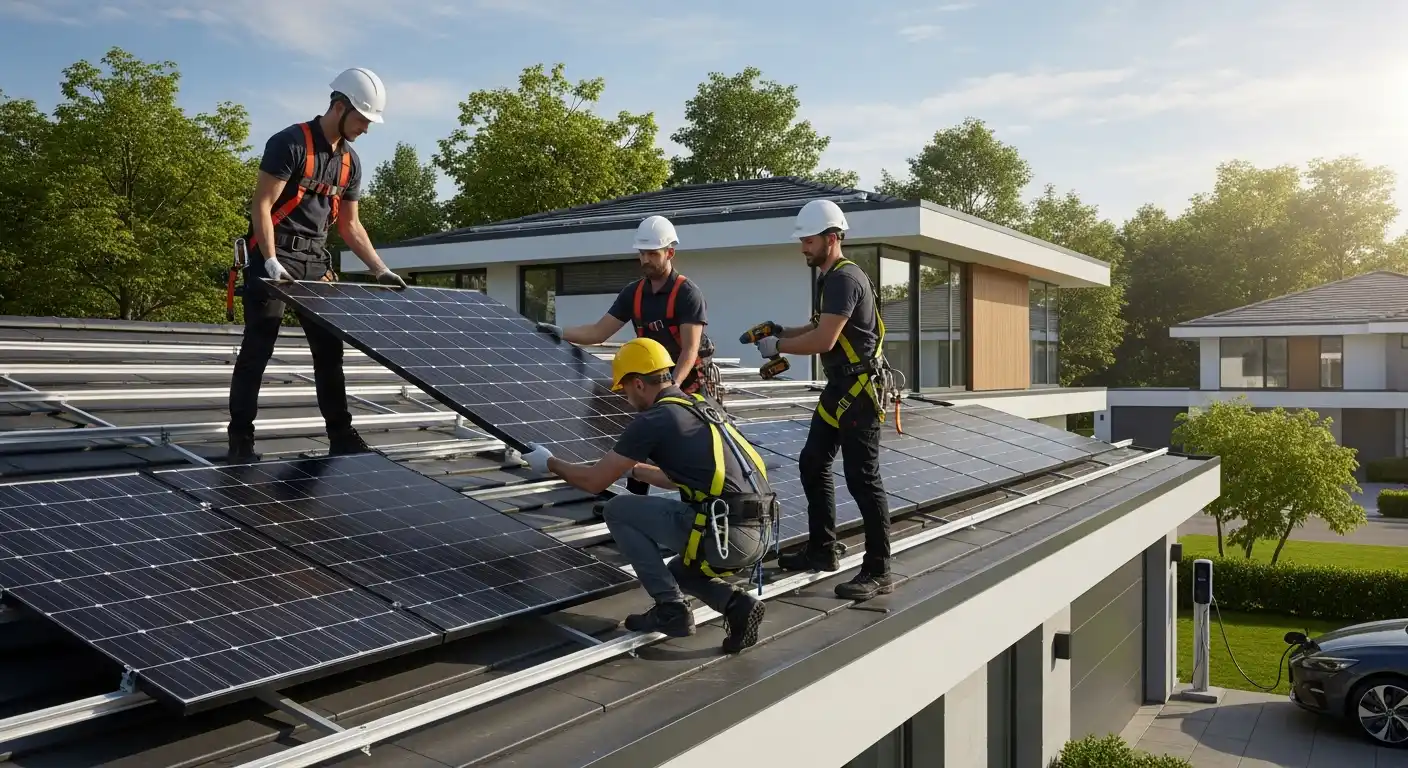
solar panel installation 2026 is no longer a luxury investment—it’s a practical necessity for achieving energy independence and protecting your wallet from the rising costs of grid electricity.
Whether you’re a homeowner in Karachi looking to eliminate those staggering electricity bills, a business owner in Lahore seeking operational cost reduction, or a farmer in Punjab aiming to power irrigation systems, this comprehensive guide covers everything you need to make an informed decision. You’ll discover the latest installation costs, learn about government incentives that can dramatically reduce your upfront expenses, understand the different system types available, and find out exactly how much you can save over the next 25 years.
The Current Solar Landscape in Pakistan: Why 2026 is the Right Time to Go Solar
Rising Electricity Costs Drive Urgent Demand
Pakistan’s electricity tariffs have been rising at an alarming rate. The average household electricity bill has become a significant monthly burden, with some families paying over PKR 15,000-20,000 monthly. At this trajectory, your 25-year grid electricity costs could easily exceed PKR 3,600,000 or more—money that could instead be invested in a solar system that provides virtually free electricity for decades.
Load-Shedding Creates an Energy Crisis
Frequent power outages have become routine in many areas of Pakistan, disrupting daily life, affecting business operations, and causing lost productivity. A solar installation with battery backup ensures uninterrupted power supply regardless of grid status, giving you complete energy security.
Government Incentives Make Installation More Affordable
The Pakistani government has implemented several measures to encourage solar adoption, including:
- Tax exemption on solar equipment – No 18% sales tax on solar panels and components
- Net metering policies – Ability to sell excess electricity back to the grid, earning income from your solar investment
- Financing programs – Banks offering low-interest loans through institutions like Bank Alfalah and First Women Bank
- Subsidies for agricultural users – Special programs for farmers installing solar tubewells
Understanding Solar Panel Installation Costs in Pakistan
Complete Breakdown of 2026 Solar Installation Expenses
When budgeting for a solar panel installation, you need to understand that the panels themselves are only part of the story. Here’s what makes up the total cost:
| Component | Cost Range (PKR) | Percentage of Total | Notes |
|---|---|---|---|
| Solar Panels (per watt basis) | Rs. 27-39/watt | 25-30% | Depends on brand, type (N-Type/P-Type), and efficiency rating |
| Solar Inverter | Rs. 5,000-20,000/kW | 15-20% | Converts DC to AC; MPPT inverters offer better efficiency |
| Battery Storage (optional) | Rs. 50,000-500,000+ | 20-30% | Lithium-ion preferred; lead-acid more budget-friendly |
| Installation Labor & Mounting | Rs. 20,000-50,000 | 10-15% | Varies by system size and roof complexity |
| Wiring, Breakers & Accessories | Rs. 10,000-30,000 | 5-10% | MC4 connectors, DC/AC breakers, safety equipment |
| Permitting & Inspection | Rs. 5,000-10,000 | 1-2% | Minimal costs in most areas |
Total System Cost Examples for Typical Pakistani Homes
3 kW System (ideal for small households with basic appliances)
- Total Cost: PKR 350,000 to PKR 450,000
- Monthly Savings: PKR 3,000-5,000
- Payback Period: 7-10 years
5 kW System (best for medium homes with AC and multiple appliances)
- Total Cost: PKR 700,000 to PKR 1,100,000
- Monthly Savings: PKR 5,000-8,000
- Payback Period: 5-7 years
7 kW System (suitable for large homes or small businesses)
- Total Cost: PKR 950,000 to PKR 1,400,000
- Monthly Savings: PKR 7,000-11,000
- Payback Period: 4-6 years
10 kW System (for businesses, large homes, or commercial use)
- Total Cost: PKR 1,350,000 to PKR 1,800,000
- Monthly Savings: PKR 10,000-15,000
- Payback Period: 3-5 years
Price Trends: Are Costs Going Up or Down?
The critical question every Pakistani homeowner asks is whether they should install solar now or wait for prices to drop. Here’s the reality:
Panel prices have stabilized, hovering around Rs. 27-33 per watt for high-quality A-Grade panels from Tier-1 brands. While some sources predicted dramatic drops after 2025, supply chain challenges and global demand have kept prices relatively consistent. However, installation costs remain reasonable, making 2026 an excellent window for investment.
What changed dramatically in 2025: The U.S. federal tax credit (Section 25D) expired, but this doesn’t directly affect Pakistan. More importantly, the global solar market continues to grow, which indirectly stabilizes prices worldwide. For Pakistani consumers, the stability means you won’t be caught off-guard by sudden price spikes.
Three Essential Types of Solar Panel Systems
Choosing the right system type is crucial because it determines how your solar installation functions and whether you’ll have backup power during load-shedding.
1. Grid-Tied (Grid-Connected) Systems
How It Works: Your solar panels connect directly to the national electricity grid. Excess energy flows back to the grid, and you receive credit on your electricity bill through net metering.
Best For: Urban residents and businesses with reliable grid supply and interest in net metering benefits.
Advantages:
- Lowest upfront cost (no battery required)
- Qualify for net metering income
- Most straightforward installation
- No maintenance complexity
Disadvantages:
- No power during load-shedding or grid outages
- Dependent on grid infrastructure
- Some areas have limited net metering policies
Typical Cost: PKR 350,000-900,000 (without battery)
2. Hybrid Systems (Grid-Tied + Battery Backup)
How It Works: Combines solar panels with battery storage, allowing you to use stored energy during grid outages while maintaining grid connection for excess energy export.
Best For: Pakistani homeowners wanting both energy savings AND backup power—the most popular choice in Pakistan.
Advantages:
- Uninterrupted power during load-shedding
- Can sell excess energy back to grid
- Better control over energy usage
- Reduced dependency on grid
Disadvantages:
- Higher upfront investment due to batteries
- Battery maintenance required every 3-5 years
- More complex installation
Typical Cost: PKR 500,000-1,400,000 (with lithium-ion battery)
3. Off-Grid Systems
How It Works: Completely independent from the national grid. All energy comes from solar panels and is stored in batteries for 24/7 use.
Best For: Rural areas without grid connection, farms, or properties requiring absolute energy independence.
Advantages:
- Complete independence from grid
- Suitable for remote locations
- Works in areas with frequent outages
- No monthly electricity bill whatsoever
Disadvantages:
- Highest upfront investment
- Requires larger battery capacity
- Higher maintenance needs
- Must calculate consumption carefully
Typical Cost: PKR 900,000-2,000,000+ (depending on battery capacity)
Step-by-Step Process for Solar Panel Installation
Understanding the installation process helps you know what to expect and avoid common mistakes during your solar panel installation 2026.
Step 1: Professional Site Assessment & System Design
What Happens: A qualified solar engineer visits your property to evaluate roof condition, sun exposure, structural capacity, and electrical system. They calculate your exact energy needs based on historical electricity consumption.
Timeline: 1-2 days Cost: Usually included with quotes; some providers charge Rs. 5,000-10,000
What You’ll Learn:
- Optimal panel placement and angle (typically 18-36 degrees in Pakistan)
- System size recommendation
- Expected annual energy production
- Potential shading issues
- Roof reinforcement needs
Step 2: Obtain Required Approvals & Permits
What Happens: Your installer applies for necessary NOC (No Objection Certificate) from local authorities and electricity distribution company.
Timeline: 5-15 days Cost: Minimal (Rs. 5,000-10,000)
Important: Some areas in Pakistan require pre-approval before installation. Check with your local DISCO (distribution company) about specific requirements.
Step 3: Procure & Deliver Materials
What Happens: After approvals, your installer sources all components—panels, inverter, batteries (if applicable), wiring, and mounting equipment.
Timeline: 3-10 days Important Tip: Reputable installers should provide bills of materials and verify authenticity of all components.
Step 4: Install Mounting Structure
What Happens: Metal racking systems are securely mounted to your roof or ground foundation, tilted at optimal angles (typically 18-36 degrees depending on your location in Pakistan).
Timeline: 1-2 days Critical Check: Ensure mounting can withstand Pakistan’s monsoon winds and heavy rain; use stainless steel fasteners to prevent corrosion.
Step 5: Mount Solar Panels
What Happens: Panels are carefully positioned onto the racking system using specialized clamps and bolts, aligned perfectly to maximize sun exposure.
Timeline: 1 day Safety Measure: Qualified installers will use safety harnesses and follow proper protocols.
Step 6: Electrical Connections & Wiring
What Happens: Panels are wired together using MC4 connectors in series or parallel configuration. Wiring is run through conduits to the inverter and main electrical panel.
Timeline: 1-2 days Quality Standard: All wiring should meet Pakistani electrical codes; use properly graded copper wiring to prevent voltage drop.
Step 7: Install Inverter & Battery System
What Happens: The inverter (which converts DC solar power to AC household current) is mounted near your main electrical panel. If using a hybrid or off-grid system, batteries are installed in a designated, well-ventilated location.
Timeline: 1 day Safety Consideration: Proper ventilation is essential for battery systems, especially lead-acid batteries.
Step 8: Final Electrical Integration
What Happens: The solar system is connected to your home’s main electrical panel using proper breakers, switches, and protective devices. All connections are verified against electrical codes.
Timeline: 1 day
Step 9: Inspection & Activation
What Happens: The system undergoes final inspection by your installer and possibly local authorities. All safety systems are tested, and the system is activated and commissioned.
Timeline: 1-2 days
Total Installation Timeline: 10-30 days from site assessment to full activation (depending on approvals and complexity)
How Much Can You Actually Save? Real Numbers for Pakistani Users
This is the question that matters most: After installing a solar panel system, how much money will you really save?
25-Year Savings Calculation Example
Let’s use a realistic scenario for a typical Lahore household:
Assumptions:
- 5 kW solar system installed (typical for medium homes)
- Current electricity bill: PKR 15,000/month (PKR 180,000/year)
- Grid electricity annual price increase: 8% per year (conservative estimate based on historical trends)
- System cost: PKR 850,000
- System lifespan: 25 years
- Performance degradation: 0.5% annually (standard for quality panels)
Calculation:
Year 1 Savings: PKR 180,000 – 5,000 (minimal system output degradation) = PKR 175,000 Year 5 Total Savings: PKR 950,000 Year 10 Total Savings: PKR 2,100,000 Year 15 Total Savings: PKR 3,400,000 Year 25 Total Savings: PKR 6,200,000+
Return on Investment: Your system pays for itself in 4-5 years, and the remaining 20 years provide virtually free electricity (except for minimal maintenance costs of Rs. 5,000-10,000 annually).
Critical Factors That Affect Your Savings
1. Your Current Electricity Bill Higher current consumption = greater savings. A household paying PKR 20,000/month will save substantially more than one paying PKR 8,000/month.
2. Electricity Rate Increases If the government continues raising tariffs (likely scenario), your savings accelerate dramatically. For every 1% increase in grid tariffs, your annual savings increase proportionally.
3. System Efficiency Quality panels with high efficiency ratings and proper installation generate 10-15% more electricity than substandard systems over 25 years.
4. Maintenance Systems with regular maintenance (annual cleaning and inspection) maintain 97-98% efficiency. Neglected systems lose 15-20% efficiency within 5-10 years.
5. Net Metering Income (if available in your area) Excess energy sold back to the grid can generate additional PKR 2,000-8,000 annually, depending on your local utility’s policies.
Common Mistakes to Avoid During Solar Installation 2026
Learning from others’ experiences helps you avoid costly errors that reduce efficiency and waste money.
Mistake #1: Choosing Unverified or Imported Panels Without Documentation
Many unscrupulous dealers sell “imported” panels without proper documentation. These panels often fail within 3-7 years.
Solution: Always purchase from authorized dealers with proper bills and international UL certifications. Request manufacturer warranty cards and registration.
Mistake #2: Insufficient System Sizing
Installing a 3 kW system when your consumption requires 5 kW won’t sufficiently reduce your bills and leaves you disappointed.
Solution: Base system size on actual monthly consumption data, not rough estimates. A proper system should offset 80-100% of your current electricity usage.
Mistake #3: Poor Installation Quality
Panels installed at incorrect angles, loose connections, or exposed wiring lead to:
- 10-20% energy loss
- Safety hazards
- Rapid component failure
- Voided warranties
Solution: Hire certified installers with proven track records. Request references and verify their professional certifications.
Mistake #4: Ignoring Battery Quality When Opting for Hybrid Systems
Cheap lead-acid batteries fail within 3 years, requiring expensive replacement. The upfront savings vanish quickly.
Solution: Invest in quality lithium-ion batteries despite higher initial cost. They last 10-15 years and maintain better efficiency throughout their lifespan.
Mistake #5: Skipping Proper Roof Assessment
Installing heavy panels on structurally weak roofs causes leaks, damage, or even collapse.
Solution: Have a structural engineer inspect your roof before installation. Budget for necessary reinforcement if needed.
Mistake #6: Not Planning for Maintenance
Solar systems require minimal maintenance, but complete neglect leads to:
- 20-30% efficiency loss within 5 years
- Component damage from dust and moisture
- Reduced system lifespan
Solution: Plan for annual professional cleaning (Rs. 5,000-10,000) and quarterly visual inspections.
Mistake #7: Overlooking Local Utility Policies
Some areas have complex net metering policies or restrictions on solar size relative to grid connection capacity.
Solution: Contact your local DISCO before installation to understand:
- Net metering eligibility
- Maximum system size allowed
- Approval timelines
- Any specific requirements
Latest Technology Trends in Solar Installation 2026
Understanding emerging technologies helps you future-proof your investment.
N-Type vs. P-Type Solar Panels
N-Type Panels (Newer Technology)
- Efficiency: 19-22%
- Price: Rs. 33-39 per watt
- Advantages: Better performance in hot climates, superior degradation resistance, optimal for Pakistan’s environment
- 25-Year Output: 5-8% higher than P-Type
P-Type Panels (Traditional Technology)
- Efficiency: 17-20%
- Price: Rs. 27-33 per watt
- Advantages: Lower cost, widely available, proven reliability
- Best For: Budget-conscious installations
Recommendation for Pakistani Users: For new installations in 2026, choose N-Type panels if budget permits. The superior performance in Pakistan’s hot climate and better long-term degradation resistance justify the premium cost.
TOPCon Technology
TOPCon (Tunnel Oxide Passivated Contact) panels represent the next generation, already available commercially in 2026. They offer:
- Efficiency ratings of 20-23%
- 10-15% better performance in real-world conditions
- Slightly higher cost than standard N-Type panels
- Expected cost reduction as manufacturing scales up
Current Availability in Pakistan: Limited but growing. Major brands (Longi, Canadian, Trina) now offer TOPCon models.
Bifacial Solar Panels
How They Work: Unlike standard panels that capture sunlight from the front side only, bifacial panels generate electricity from both the front and back surfaces by reflecting ground light.
Performance Boost: 5-10% additional output in suitable environments (especially with reflective ground surfaces like white roofs or light-colored ground)
Cost Premium: 15-25% higher than equivalent monofacial panels
Best Application: Ideal for Pakistani rooftops with white or light-colored surfaces; excellent for ground installations with gravel or light-colored ground surfaces.
How to Choose the Right Solar Installation Company
The quality of your solar panel installation 2026 depends heavily on contractor selection.
Red Flags to Avoid
❌ No Physical Office or Showroom Legitimate solar companies maintain offices where customers can visit and inspect equipment.
❌ Unrealistic Promises Claims like “100% electricity offset” or “zero electricity bills guaranteed” indicate inexperience. Solar systems typically offset 80-95% of consumption.
❌ No Documentation or Warranty Information Professional installers provide detailed warranty cards, component documentation, and performance guarantees.
❌ No References or Customer Reviews Request contact information for at least 10 previous clients. Call them directly and visit their installations if possible.
❌ Pressure to Decide Immediately Avoid companies pushing you to sign contracts the same day. Legitimate installers expect you to get multiple quotes.
❌ Unclear Pricing Structure Complete quotes should itemize every component, labor, permits, and warranties. Vague pricing indicates hidden costs.
What to Look For in Quality Installers
✅ Professional Certifications
- Registered with AEDB (Alternative Energy Development Board)
- ISO 9001 certification
- Certified by Pakistan Standards and Quality Control Authority
✅ Comprehensive Warranty Coverage
- Panels: 25-year manufacturer warranty minimum
- Inverter: 10-year warranty minimum
- Labor/workmanship: 2-5 year warranty
- Battery: 10+ year warranty for lithium-ion
✅ Transparent Pricing and Timeline
- Detailed written quotes
- Clear component specifications and brands
- Realistic installation timeline (10-30 days)
- Comprehensive project timeline
✅ Post-Installation Support
- Free annual maintenance for first year
- 24/7 emergency contact availability
- Monitoring system to track performance
- Clear escalation procedure for issues
✅ References and Verifiable Track Record
- Minimum 5 years in business
- References from residential, commercial, and agricultural customers
- Online reviews on trusted platforms
Pingback: What Reduces Solar Panel Efficiency 2026? Top 10 Factors