
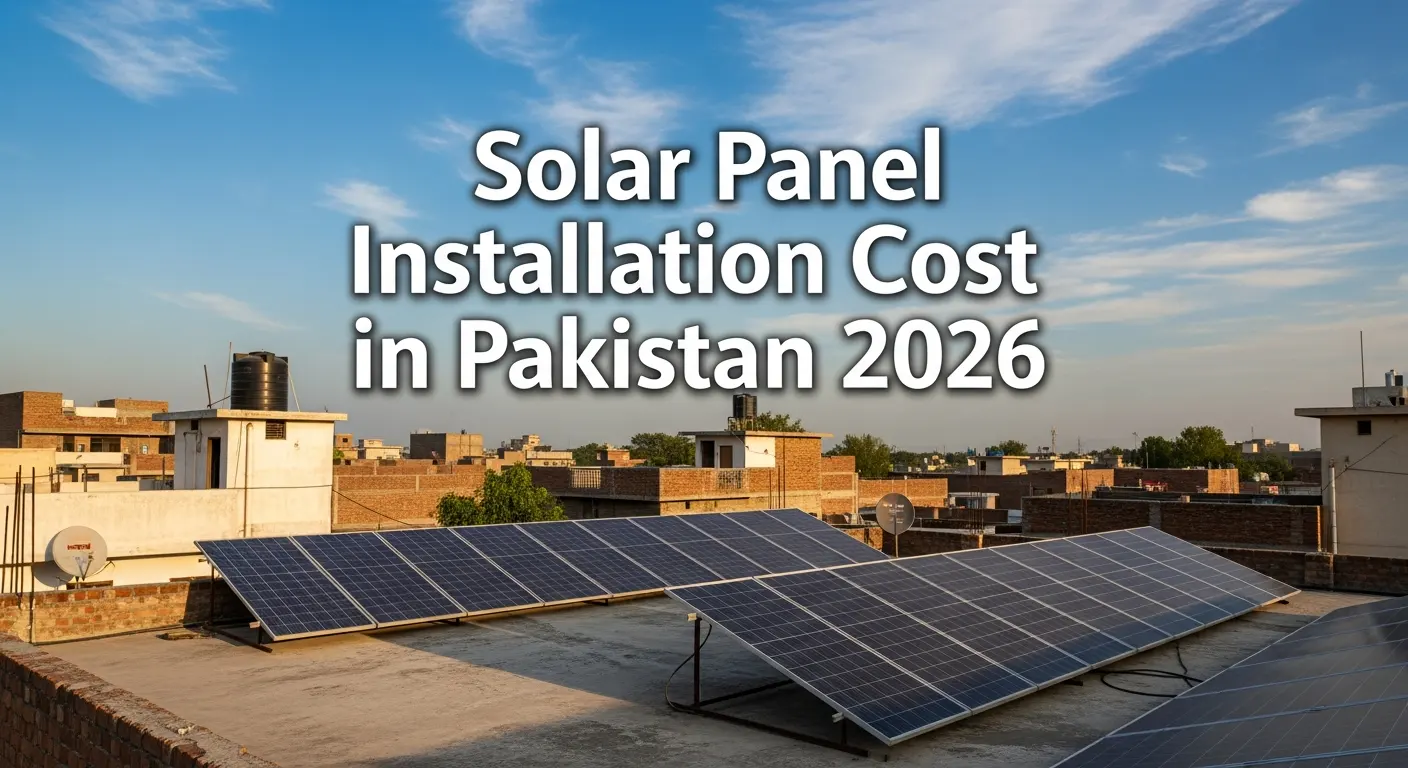
Thinking about going solar but confused about the actual installation costs? You’re not alone. With electricity tariffs skyrocketing and load-shedding disrupting daily life, thousands of Pakistanis are exploring solar energy. But here’s what most people don’t know: Solar Panel Installation Cost in Pakistan 2026 involves much more than just buying panels.
This comprehensive guide breaks down every single cost component—from panels and inverters to labor charges and hidden fees—so you know exactly what to expect. Whether you’re planning a 3kW home system or a large commercial setup, you’ll discover the real costs, money-saving strategies, and insider tips that solar companies don’t always share upfront.
Understanding Solar Panel Installation Costs in Pakistan (2026 Update)
The Solar Panel Installation Cost in Pakistan 2026 has become increasingly competitive in 2026, with complete systems now ranging from PKR 100,000 to PKR 160,000 per kilowatt installed. This translates to approximately:
- 3kW residential system: PKR 400,000 – PKR 600,000
- 5kW medium home system: PKR 700,000 – PKR 900,000
- 10kW large system: PKR 1,200,000 – PKR 1,500,000
However, these figures represent the total turnkey installation price, which includes multiple components working together to create a functional solar energy system.
What’s Included in Solar Installation Cost?
Unlike simply buying solar panels, a complete solar panel installation cost in Pakistan encompasses seven major components:
1. Solar Panels (40-45% of total cost) 2. Solar Inverter (20-25% of total cost) 3. Mounting Structure (8-12% of total cost) 4. Electrical Components & Wiring (5-8% of total cost) 5. Installation Labor (8-12% of total cost) 6. Net Metering Setup (2-5% of total cost) 7. Optional Battery Backup (Additional 30-50% for hybrid systems)
Understanding each component helps you compare quotes accurately and avoid overpaying for your solar installation.
Detailed Solar Panel Installation Cost Breakdown (2026)
Let’s examine each cost component in detail so you understand exactly where your money goes during solar installation:
Component #1: Solar Panels (PKR 27-40 per Watt)
Solar panels are the heart of your system, converting sunlight into electricity. In 2026, A-grade Tier-1 panel prices range from PKR 27 to PKR 40 per watt depending on brand and technology.
Popular Panel Brands & Costs:
| Brand | Technology | Price Per Watt | 550W Panel Cost | Installation Recommendation |
|---|---|---|---|---|
| Longi Solar | N-Type, TOPCon | PKR 34-40 | PKR 18,700-22,000 | Premium residential & commercial |
| Jinko Solar | N-Type, PERC | PKR 30-34 | PKR 16,500-18,700 | Best value for most homes |
| Canadian Solar | TOPCon, Bifacial | PKR 31-36 | PKR 17,050-19,800 | High-efficiency requirements |
| JA Solar | Mono PERC | PKR 29-32 | PKR 15,950-17,600 | Budget-conscious quality buyers |
| Trina Solar | N-Type | PKR 31-35 | PKR 17,050-19,250 | Commercial installations |
| Astronergy | N-Type | PKR 29-33 | PKR 15,950-18,150 | Residential & small commercial |
Cost Example for 5kW System:
- Panels needed: 9 panels × 550W = 4,950W (approximately 5kW)
- Using mid-range Jinko panels at PKR 32/watt
- Total panel cost: PKR 32 × 5,000W = PKR 160,000
Pro Tip: Always insist on A-grade documented panels with proper serial numbers and warranties. B-grade panels may cost PKR 5-7 less per watt but come without warranties and reduced performance guarantees.
Component #2: Solar Inverter (PKR 35,000-60,000 per kW)
The inverter converts DC electricity from panels into AC electricity that your home appliances use. This is the second most expensive component in your solar installation cost.
Inverter Types & Pricing:
| Inverter Type | Price Range (per kW) | Lifespan | Best For |
|---|---|---|---|
| String Inverter | PKR 35,000-45,000 | 8-12 years | Simple rooftop installations |
| Hybrid Inverter | PKR 45,000-60,000 | 10-15 years | Systems with battery backup |
| Micro Inverter | PKR 8,000-12,000 (per panel) | 15-25 years | Shaded roofs, complex layouts |
Popular Inverter Brands in Pakistan:
- Growatt: PKR 38,000-50,000 per kW (most popular in Pakistan)
- Solis: PKR 40,000-52,000 per kW (premium quality)
- Goodwe: PKR 36,000-48,000 per kW (budget-friendly reliability)
- Huawei: PKR 42,000-55,000 per kW (advanced technology)
- Fronius: PKR 50,000-65,000 per kW (European premium)
Cost Example for 5kW System:
- 5kW hybrid inverter (Growatt brand)
- Inverter cost: PKR 45,000 × 5kW = PKR 225,000
For on-grid systems without batteries, you can save approximately PKR 50,000-80,000 by choosing a standard string inverter over a hybrid model.
Component #3: Mounting Structure (PKR 4,000-20,000 per kW)
The mounting structure securely holds your solar panels on the roof and must withstand wind, rain, and Pakistan’s harsh weather conditions for 25+ years.
Mounting Structure Types:
Standard Mounting (PKR 4,000-6,000 per kW):
- Galvanized steel frames
- Basic tilted installation
- Suitable for simple flat or sloped roofs
- 5kW system cost: PKR 25,000-30,000
Premium Mounting (PKR 8,000-12,000 per kW):
- Aluminum alloy construction
- Enhanced rust resistance
- Better aesthetics and adjustability
- 5kW system cost: PKR 40,000-60,000
Custom Mounting (PKR 15,000-20,000 per kW):
- Complex roof structures (tiles, metal sheets)
- Multi-angle optimization
- Ballasted systems for weak roofs
- 5kW system cost: PKR 75,000-100,000
Factors Affecting Mounting Costs:
- Roof type (concrete, asbestos, metal sheets, tiles)
- Roof accessibility and height
- Wind load requirements in your area
- Ground-mounted vs. rooftop installation
Most residential installations in Pakistan use standard mounting structures costing PKR 25,000-40,000 for a 5kW system.
Component #4: Electrical Components & Wiring (PKR 30,000-60,000)
This often-overlooked category includes all the electrical hardware that makes your system safe and functional:
What’s Included:
- DC Cables: PKR 150-300 per meter (typically 50-80 meters needed)
- AC Cables: PKR 100-200 per meter (typically 20-40 meters needed)
- MC4 Connectors: PKR 200-400 per pair (4-6 pairs needed)
- Junction Boxes: PKR 2,000-5,000 (2-3 units)
- AC & DC Circuit Breakers: PKR 3,000-8,000
- Earthing Kit: PKR 5,000-12,000
- Lightning Protection: PKR 8,000-15,000 (recommended)
- Combiner Box: PKR 3,000-6,000
- Cable Management: PKR 2,000-5,000
Cost Example for 5kW System:
- DC cables (60m): PKR 12,000
- AC cables (30m): PKR 4,500
- Connectors & boxes: PKR 8,000
- Protection devices: PKR 10,000
- Earthing system: PKR 8,000
- Total electrical components: PKR 42,500
Important Safety Note: Never compromise on electrical components. Using substandard cables or connectors can cause fire hazards, system failures, and void your warranties.
Component #5: Installation Labor (PKR 10,000-20,000 per kW)
Professional installation labor is crucial for system performance, safety, and warranty validity. In Pakistan, installation costs vary by city, system complexity, and installer experience.
Labor Cost Breakdown by City:
| City | Labor Cost (per kW) | Typical 5kW Installation | Notes |
|---|---|---|---|
| Karachi | PKR 10,000-15,000 | PKR 50,000-75,000 | High competition, lower costs |
| Lahore | PKR 12,000-16,000 | PKR 60,000-80,000 | Moderate pricing, good service |
| Islamabad/Rawalpindi | PKR 14,000-18,000 | PKR 70,000-90,000 | Higher living costs |
| Multan/Faisalabad | PKR 11,000-15,000 | PKR 55,000-75,000 | Growing market |
| Peshawar/Quetta | PKR 13,000-17,000 | PKR 65,000-85,000 | Limited installers |
What Installation Labor Includes:
✓ Site survey and system design ✓ Roof assessment and measurements ✓ Mounting structure installation ✓ Panel mounting and alignment ✓ Electrical wiring and connections ✓ Inverter installation and configuration ✓ System testing and commissioning ✓ Net metering application support (in most cases) ✓ User training on system operation ✓ Documentation and warranty registration
Installation Timeframe:
- 3-5kW residential system: 1-2 days
- 6-8kW medium system: 2-3 days
- 10kW+ large system: 3-5 days
Factors Increasing Labor Costs:
- Multi-story buildings requiring scaffolding (add PKR 10,000-25,000)
- Difficult roof access or steep slopes
- Complex electrical panel upgrades needed
- Remote locations far from city centers
- Weekend or expedited installation requests
Money-Saving Tip: Get installation quotes from 3-5 certified installers. The lowest quote isn’t always best—prioritize experience, warranties, and after-sales service.
Component #6: Net Metering Setup (PKR 15,000-40,000)
Net metering allows you to sell excess solar electricity back to the grid, significantly improving your investment return. However, there are associated costs and regulatory requirements.
Net Metering Cost Components:
| Item | Cost | Notes |
|---|---|---|
| DISCO Application Fee | PKR 5,000-15,000 | Varies by DISCO (LESCO, K-Electric, IESCO, etc.) |
| Bi-Directional Meter | PKR 8,000-18,000 | Provided and installed by DISCO |
| Technical Inspection | PKR 2,000-7,000 | DISCO engineer visit |
| Documentation & Paperwork | PKR 0-5,000 | Often handled by installer |
| Total Net Metering Cost | PKR 15,000-40,000 | One-time investment |
Net Metering Benefits (Current Policy):
- Sell excess electricity at approximately PKR 27 per unit
- One-to-one credit system (1 unit exported = 1 unit credit)
- 7-year license validity
- Dramatically reduces payback period to 2-4 years
2026 Policy Update: NEPRA has proposed changes to net metering that may reduce buyback rates to PKR 10-13 per unit for new installations. If you’re planning to go solar, installing now locks in the more favorable current rates.
Component #7: Battery Backup (Optional – Adds 30-50% to Total Cost)
If you want power during nighttime or load-shedding, you’ll need batteries. This is the single largest cost addition to a basic solar system.
Battery Types & Costs:
| Battery Type | Lifespan | Cost per kWh | 5kWh Battery Bank | 10kWh Battery Bank |
|---|---|---|---|---|
| Lead-Acid (Tubular) | 3-5 years | PKR 40,000-60,000 | PKR 200,000-300,000 | PKR 400,000-600,000 |
| AGM (Sealed) | 5-7 years | PKR 60,000-80,000 | PKR 300,000-400,000 | PKR 600,000-800,000 |
| Lithium-Ion (LiFePO4) | 10-15 years | PKR 100,000-150,000 | PKR 500,000-750,000 | PKR 1,000,000-1,500,000 |
Battery Bank Sizing:
- Small backup (4-6 hours): 5kWh batteries = PKR 200,000-750,000
- Medium backup (8-10 hours): 10kWh batteries = PKR 400,000-1,500,000
- Large backup (12+ hours): 15kWh+ batteries = PKR 600,000-2,250,000
Cost Comparison Example (5kW System):
| System Type | Total Cost | What You Get |
|---|---|---|
| On-Grid (No Batteries) | PKR 700,000-850,000 | Daytime solar power, grid backup at night |
| Hybrid (Lithium Batteries) | PKR 1,200,000-1,600,000 | 24/7 power independence, backup during outages |
| Off-Grid (Full Batteries) | PKR 1,400,000-1,900,000 | Complete independence from grid |
Most Pakistani homeowners choose on-grid systems to minimize costs, relying on net metering credits rather than expensive batteries.
Complete Solar Installation Cost Examples (Real Scenarios)
Understanding theoretical component costs is helpful, but seeing complete real-world installation examples provides better clarity:
Example 1: Small Home – 3kW On-Grid System
Property Profile: 2-bedroom apartment in Lahore, 350 units/month consumption
System Components:
- Solar Panels: 6 × 550W Jinko panels @ PKR 32/watt = PKR 96,000
- Inverter: 3kW Growatt string inverter = PKR 120,000
- Mounting: Standard galvanized structure = PKR 18,000
- Electrical: Cables, connectors, protection = PKR 25,000
- Labor: Professional installation in Lahore = PKR 40,000
- Net Metering: LESCO application & meter = PKR 20,000
Total Installation Cost: PKR 319,000
Monthly Savings: Approximately PKR 6,500 (260 units × PKR 25/unit) Payback Period: 4.1 years 25-Year Savings: PKR 1,950,000 (after initial investment)
Example 2: Medium Home – 5kW Hybrid System
Property Profile: 3-bedroom house in Karachi, 600 units/month, needs 4-hour backup
System Components:
- Solar Panels: 9 × 550W Canadian Solar @ PKR 34/watt = PKR 170,000
- Inverter: 5kW Solis hybrid inverter = PKR 250,000
- Batteries: 5kWh lithium-ion (4-hour backup) = PKR 550,000
- Mounting: Standard structure = PKR 30,000
- Electrical: Cables, connectors, protection = PKR 45,000
- Labor: Professional installation in Karachi = PKR 55,000
- Net Metering: K-Electric setup = PKR 25,000
Total Installation Cost: PKR 1,125,000
Monthly Savings: Approximately PKR 13,000 (520 units × PKR 25/unit) Payback Period: 7.2 years (longer due to battery cost) 25-Year Savings: PKR 2,775,000 (after initial investment)
Added Benefit: Complete protection against 4-6 hours daily load-shedding
Example 3: Large Home/Small Business – 10kW On-Grid System
Property Profile: Large residence or small office in Islamabad, 1,200 units/month
System Components:
- Solar Panels: 18 × 550W Longi N-Type @ PKR 36/watt = PKR 360,000
- Inverter: 10kW Huawei hybrid-ready inverter = PKR 500,000
- Mounting: Premium aluminum structure = PKR 100,000
- Electrical: Cables, connectors, protection = PKR 70,000
- Labor: Professional installation in Islamabad = PKR 140,000
- Net Metering: IESCO application & meter = PKR 30,000
Total Installation Cost: PKR 1,200,000
Monthly Savings: Approximately PKR 27,000 (1,080 units × PKR 25/unit) Payback Period: 3.7 years 25-Year Savings: PKR 6,900,000 (after initial investment)
These real-world examples demonstrate how solar panel installation costs vary based on system size, component quality, and whether you include battery backup.
Hidden Costs in Solar Installation (What Installers Don’t Tell You)
Beyond the main components, several hidden or unexpected costs can increase your final solar panel installation cost in Pakistan:
1. Electrical Panel Upgrades (PKR 15,000-50,000)
Many older homes have outdated electrical panels that can’t safely integrate solar systems. Upgrading to a modern distribution board with proper circuit breakers may be required.
When This Applies:
- Homes built before 2005 with old-style fuse boxes
- Commercial buildings with undersized panels
- Properties requiring additional circuits for solar
2. Roof Repairs or Reinforcement (PKR 20,000-100,000)
Solar panels last 25+ years, so your roof must be in excellent condition before installation.
Potential Roof Issues:
- Weak roof requiring structural reinforcement: PKR 30,000-80,000
- Leaking roof needing waterproofing: PKR 20,000-50,000
- Asbestos roof replacement: PKR 50,000-150,000
- Tile roof repairs before installation: PKR 15,000-40,000
Pro Tip: Address roof issues before installation. Removing and reinstalling panels later costs PKR 25,000-50,000.
3. Scaffolding & Access Equipment (PKR 10,000-30,000)
Multi-story buildings or difficult access situations require scaffolding rental:
- 2-story building: PKR 10,000-15,000
- 3-story building: PKR 15,000-22,000
- 4+ story building: PKR 22,000-30,000
This is a temporary rental cost for the installation period (typically 3-5 days).
4. Extended Cable Runs (PKR 150-300 per meter)
If your inverter location is far from panels or your main electrical panel, extra cabling increases costs:
- Standard installation: 50-70 meters of cable
- Extended runs: 100-150 meters = Additional PKR 7,500-22,500
5. Tree Trimming or Removal (PKR 5,000-50,000)
Shading drastically reduces solar performance. Trees casting shadows may need trimming or removal:
- Minor trimming: PKR 5,000-12,000
- Major pruning: PKR 12,000-25,000
- Complete removal: PKR 25,000-50,000
6. Municipal Permits & NOCs (PKR 5,000-20,000)
Some cities require building permits for solar installations:
- Islamabad CDA NOC: PKR 10,000-15,000
- Lahore LDA approval: PKR 5,000-10,000
- Karachi KMC permit: Usually not required
- Housing society approvals: PKR 5,000-12,000
7. First-Year Maintenance Reserve (PKR 10,000-20,000)
While most installers provide 1-2 years free maintenance, setting aside funds for cleaning, inspections, and minor repairs is wise:
- Professional cleaning (quarterly): PKR 2,000-4,000
- Annual inspection: PKR 3,000-6,000
- Contingency for repairs: PKR 5,000-10,000
Total Potential Hidden Costs: PKR 40,000-310,000 depending on property condition
How to Reduce Solar Installation Costs (Money-Saving Strategies)
Smart shoppers can significantly reduce their solar panel installation cost in Pakistan without compromising quality:
Strategy #1: Time Your Purchase Right
Off-Season Installation (October-January):
- 10-15% lower prices during slow season
- Better installer availability and attention
- Less rushed installation work
- Potential for negotiation
Avoid Peak Season (April-July):
- Higher prices due to summer demand
- Rushed installations to meet demand
- Less negotiating power
- Longer waiting times
Potential Savings: PKR 50,000-100,000 on a 5kW system
Strategy #2: Compare Multiple Detailed Quotes
Minimum 5 Quotes Recommended:
- Compare itemized breakdowns, not just total prices
- Verify exact panel models and specifications
- Check warranty terms and service commitments
- Evaluate installer experience and reputation
Red Flags to Avoid: ✗ Quotes without component breakdown ✗ Suspiciously low prices (30%+ below market) ✗ Vague warranty terms ✗ Pressure tactics or time-limited “special offers” ✗ Unverified company or no physical office
Potential Savings: PKR 40,000-80,000 through better negotiation
Strategy #3: Choose Cost-Effective Component Mix
Smart Component Selection:
- Panels: Mid-tier brands (Jinko, JA Solar) vs. premium (Longi) saves PKR 20,000-50,000
- Inverter: Hybrid-ready instead of full hybrid saves PKR 30,000-60,000
- Mounting: Standard structure instead of premium saves PKR 15,000-30,000
- Skip batteries initially: Save PKR 200,000-750,000 (add later if needed)
Example 5kW System:
- Premium configuration: PKR 950,000
- Smart configuration: PKR 750,000
- Total Savings: PKR 200,000 (same performance for grid-tied use)
Strategy #4: Group Buying with Neighbors
Collective Purchase Benefits:
- Bulk discounts (5-10% on panels and inverters)
- Shared transportation costs
- Better negotiating power with installers
- Reduced per-system installation costs
Potential Savings: PKR 35,000-70,000 per 5kW system
Strategy #5: Leverage Government Schemes & Bank Financing
State Bank of Pakistan Solar Financing:
- Subsidized interest rates (8-12% vs. 15-20% market rate)
- Longer repayment periods (5-7 years)
- Lower monthly burden allowing premium components
Net Metering Advantage:
- Current buyback rate (PKR 27/unit) dramatically improves ROI
- Apply immediately to lock in favorable rates
hoosing the Right Solar Installer (Quality vs. Cost)
Your installer choice dramatically affects both upfront costs and long-term system performance. Here’s how to find the perfect balance:
What to Look For in Solar Installers
Essential Qualifications:
✓ Minimum 3-5 Years Experience: Track record of successful installations ✓ Authorized Dealer Status: For brands like Longi, Jinko, Canadian Solar ✓ Verifiable Portfolio: Photos and references from previous installations ✓ Comprehensive Warranty: Minimum 2 years free maintenance ✓ Transparent Pricing: Detailed written quotations breaking down all costs ✓ Net Metering Support: Assistance with DISCO applications and approvals ✓ Physical Office: Established business with traceable location ✓ Proper Insurance: Liability coverage for installation workers
Questions to Ask Every Installer
Before committing to any solar installation company, ask these critical questions:
1. Technical Questions:
- What exact panel model and wattage will you install?
- Can I see the panel datasheet and verify serial numbers?
- What inverter brand and model is included?
- How will you determine optimal panel orientation?
- What size cables will you use for my system?
2. Warranty & Service Questions:
- What’s your installation workmanship warranty?
- How long is your free maintenance period?
- Who handles warranty claims—you or the manufacturer?
- What’s your average response time for service calls?
- Do you have a dedicated service team?
3. Cost & Payment Questions:
- Is this quote itemized or all-inclusive?
- What’s NOT included in this price?
- Do you offer payment plans or financing?
- What’s your payment schedule (usually 50% advance, 50% on completion)?
- Are there any hidden charges for net metering, permits, etc.?
4. Timeline & Process Questions:
- How long from payment to installation completion?
- Who handles the net metering application?
- Will you apply for necessary permits?
- How many days will installation take?
- What’s included in post-installation support?
Red Flags: When to Walk Away
🚩 Avoid installers who:
- Refuse to provide written quotations
- Can’t show previous installation photos
- Offer prices 30-40% below market average
- Use high-pressure sales tactics
- Don’t have a physical office or showroom
- Can’t explain component specifications
- Won’t allow you to verify panel serial numbers
- Demand 100% payment upfront
- Provide vague warranty terms
Installer Price Ranges
Budget Installers: PKR 95,000-120,000 per kW
- New companies or less experienced teams
- May use lower-tier components
- Limited after-sales support
- Shorter warranties
Mid-Range Installers: PKR 110,000-145,000 per kW
- Established companies (3-5 years)
- Balance of quality and price
- Good after-sales service
- Standard warranties (2-3 years maintenance)
Conclusion
The solar panel installation cost in Pakistan in 2026 ranges from PKR 100,000-160,000 per kilowatt for complete turnkey systems—translating to PKR 400,000-1,500,000 for typical residential installations. While this represents a significant upfront investment, the financial mathematics are compelling: most systems pay for themselves within 3-5 years and generate PKR 3-7 million in profits over their 25+ year lifespan.
Pingback: Solar Panel Installation 2026 - DON'T OVERPAY! SEE COSTS
Pingback: Solar System for Tube Well in Pakistan 2026 Price Guides!