A solar system for home 2026 has transitioned from luxury investment to practical necessity for millions of Pakistani households battling record electricity tariffs and relentless load shedding. With electricity costs soaring 20-30% annually and many cities experiencing 6-10 hours of daily blackouts, residential solar installations have exploded across Pakistan—from Karachi’s coastal neighborhoods to Lahore’s sprawling suburbs to remote mountain villages.
This comprehensive guide reveals everything you need to know about installing a solar system for your home in 2026: current pricing by system size, the critical differences between on-grid, off-grid, and hybrid systems, how to calculate your specific energy needs, which brands deliver genuine value, installation timelines, government incentives, and realistic financial returns. Whether you’re considering a budget-friendly 3kW system or investing in a premium 10kW+ installation, this article provides the complete roadmap to making one of the best long-term investments available to Pakistani families.
Why Now? The 2026 Solar Boom in Pakistan
Understanding why solar installation is accelerating helps explain the urgency and opportunity in today’s market.
Pakistan’s Electricity Crisis: The Driving Force
Rising Tariffs:
- 2020: Average residential tariff PKR 15-18/unit
- 2023: PKR 22-25/unit
- 2025: PKR 28-35/unit
- 2026: Expected to reach PKR 35-40/unit
- 8-year increase: 150-200%
Load Shedding Reality:
- Karachi: 4-6 hours daily
- Lahore: 6-8 hours daily
- Interior Sindh: 8-10 hours daily
- Rural areas: 12+ hours daily
Fuel Adjustment Charges: Most shocking: Fuel adjustment charges add PKR 10-15/unit monthly, often exceeding base electricity rates.
Result: Average Pakistani families now pay PKR 8,000-15,000 monthly for electricity alone—equivalent to a second car payment or child’s education expense.
Solar ROI: The Financial Reality 2026
A 5kW solar system costing PKR 800,000-950,000 in 2026:
- Reduces monthly electricity bill by PKR 5,000-12,000
- Generates 75-100 units daily (25-30 kWh)
- Achieves complete payback in 5-7 years
- Provides 25+ years of free electricity generation thereafter
- Delivers 10-year total savings of PKR 600,000-1,200,000
The mathematics are irrefutable: A solar system today is one of Pakistan’s highest-return investments. (Internal link suggestion: link to your article on “solar ROI calculator for Pakistan”)
Complete Solar System Pricing Guide: Pakistan 2026
Pricing varies dramatically based on system type, capacity, and components quality.
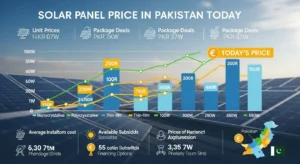
Solar System Cost by Capacity (February 2026)
| System Size | Grid-Tied Cost | Hybrid Cost | Off-Grid Cost | Monthly Savings | Best For |
|---|---|---|---|---|---|
| 3 kW | PKR 350K-450K | PKR 500K-650K | PKR 650K-850K | PKR 2K-4K | Studios/apartments |
| 5 kW | PKR 550K-800K | PKR 900K-1.3M | PKR 1.2M-1.6M | PKR 5K-12K | Average homes |
| 6 kW | PKR 700K-950K | PKR 1M-1.5M | PKR 1.4M-1.8M | PKR 6K-14K | Medium homes |
| 7 kW | PKR 850K-1.1M | PKR 1.2M-1.7M | PKR 1.6M-2.1M | PKR 7K-16K | Larger homes |
| 10 kW | PKR 1.2M-1.6M | PKR 1.8M-2.4M | PKR 2.4M-3.2M | PKR 10K-24K | Commercial/large |
Price Per Watt Breakdown (2026):
- Budget systems: PKR 90-110/watt
- Standard systems: PKR 110-130/watt
- Premium systems: PKR 130-160/watt
Why the wide range? Differences in:
- Solar panel brand (LONGi/Jinko more expensive than local brands)
- Panel efficiency (21% vs. 23% efficiency = 10-15% cost difference)
- Inverter quality (Huawei/Tesla vs. local brands = 20-30% cost difference)
- Battery type (lithium vs. lead-acid = 50-100% cost difference for hybrid/off-grid)
- Installation complexity (rooftop vs. ground mount = PKR 20-50K difference)
Three System Types: Complete Comparison for Pakistan Homes
1. Grid-Tied (On-Grid) Solar Systems – Most Popular
How It Works:
- Connected directly to your local electricity grid (LESCO, WAPDA, KE, GEPCO)
- No batteries required
- During day: Solar panels power your home + excess flows to grid
- At night/cloudy: Grid supplies power automatically
- Net metering: You get credited for surplus electricity
Pricing (5kW Example):
- Solar panels (10 × 550W): PKR 185,000
- Grid-tied inverter: PKR 80,000-120,000
- Mounting structure: PKR 35,000
- Wiring/DC breakers/AC breaker box: PKR 40,000
- Net metering installation: PKR 125,000
- Professional installation: PKR 25,000
- Total: PKR 490,000-530,000 (without batteries)
Advantages: ✓ Lowest cost option (40-50% cheaper than hybrid/off-grid) ✓ No maintenance (batteries are reliability liabilities) ✓ Net metering benefits: Reduce bills 70-90% ✓ Government incentives available ✓ Fastest ROI (4-5 years typical)
Disadvantages: ✗ No backup during grid outages (system automatically shuts down) ✗ Dependent on grid connectivity (rural areas may not have stable grid) ✗ New 2026 policy changes reduced buyback rates (Rs 11-15/unit vs. previous Rs 26)
Best For:
- Urban households (Karachi, Lahore, Islamabad) with stable grid supply
- Families prioritizing maximum ROI
- Homes where load shedding is manageable (3-4 hours daily)
- Budget-conscious buyers
2026 Policy Note: New Prosumer Regulations 2026 reduced export rates significantly. However, self-consumption (using your own generated electricity) remains the primary benefit. (link to your article on “NEPRA net metering regulations 2026“)
2. Hybrid Solar Systems – Growing Popularity
How It Works:
- Connected to grid PLUS battery storage
- During day: Solar powers home + charges batteries + sends surplus to grid
- During load shedding: Batteries provide backup power
- At night: Uses grid or battery (if charged)
- Still supports net metering for surplus exports
Pricing (5kW System + 10kWh Battery):
- Solar panels: PKR 185,000
- Hybrid inverter (5kW): PKR 150,000-200,000
- Battery (10kWh lithium): PKR 600,000-900,000
- Mounting/wiring/installation: PKR 100,000
- Total: PKR 1,035,000-1,385,000
Advantages: ✓ Backup power during load shedding (critical benefit in Pakistan) ✓ Still supports net metering (financial benefit) ✓ Battery charges during peak generation, used during peak tariff hours ✓ Completely uninterrupted power supply ✓ Can shift consumption timing for maximum grid credits
Disadvantages: ✗ Significantly more expensive (100-150% premium vs. grid-tied) ✗ Battery replacement needed every 8-15 years (PKR 600K-900K cost) ✗ Requires monitoring (batteries need active management) ✗ Complex system = more things that can malfunction ✗ Longer ROI (7-9 years vs. 4-5 for grid-tied)
Best For:
- Karachi/Lahore families experiencing frequent load shedding
- Those wanting “peace of mind” security
- Homeowners with irregular grid supply
- Medium-to-large homes (5kW+)
- Families using AC/heating and need uninterrupted power
Growing Trend in 2026: Hybrid systems gaining popularity as load shedding increases and electricity tariffs spike. Survey data shows 35-40% of new installations in 2026 are hybrid vs. grid-tied only.
3. Off-Grid Solar Systems – Complete Independence
How It Works:
- Completely independent from electricity grid
- All power comes from solar panels + battery storage
- No grid connection or monthly electricity bill
- Batteries are absolutely mandatory (unlike grid-tied systems)
Pricing (5kW System + 15kWh Battery):
- Solar panels: PKR 185,000
- Off-grid inverter: PKR 120,000-150,000
- Battery (15kWh lithium): PKR 900,000-1,350,000
- Mounting/wiring/installation: PKR 100,000
- Total: PKR 1,305,000-1,785,000
Advantages: ✓ Zero electricity bills (ultimate savings) ✓ Complete energy independence ✓ Perfect for rural/remote areas (no grid available) ✓ No monthly meter readings or government regulations ✓ Battery becomes your personal power reserve
Disadvantages: ✗ Most expensive option (180-250% premium vs. grid-tied) ✗ Requires substantial battery investment ✗ Complex system requiring expert monitoring ✗ Battery replacement is major expense (every 8-15 years) ✗ Longer ROI (8-10+ years) ✗ Requires careful consumption management (can’t exceed battery capacity) ✗ Seasonal variation means less power in winter
Best For:
- Remote villages/farms without grid access
- Areas with extremely unreliable grids (interior Sindh/Balochistan)
- Complete energy independence seekers
- Agricultural operations (water pumping, cold storage)
Reality Check: Off-grid systems are rarely chosen by urban Pakistan. Expensive battery costs + limited ROI + availability of grid make off-grid impractical for most Pakistani households.
Solar System Components: Understanding What You’re Buying
A complete solar system requires five essential components:
1. Solar Panels (30-35% of cost)
Leading Brands Available in Pakistan 2026:
- Tier-1 Global: LONGi, Jinko, Canadian Solar, Trina, JA Solar, REC
- Local Assembly: Inverex, Reon Energy
- Mid-Range: Astronergy, Risen, JinkoStar
Key Specifications:
- Wattage: 400W-600W per panel
- Efficiency: 18-23% depending on technology
- Temperature Coefficient: -0.35%/°C (better in heat)
- Warranty: 10-12 years product + 25-30 years performance
Pakistan 2026 Pricing:
- Budget brands: PKR 27-32/watt
- Mid-range brands: PKR 32-36/watt
- Premium brands: PKR 36-40/watt
Recommendation: LONGi, Jinko, or Canadian Solar offer best price-to-performance ratio in Pakistan’s market. Local brands (Inverex) cost slightly less but have less global warranty support.
2. Inverter (15-20% of cost)
The “brain” of your solar system, converting DC electricity to AC.
Types Available:
- Grid-tied inverters: PKR 80K-150K (string inverters most popular)
- Hybrid inverters: PKR 150K-250K (for battery systems)
- Off-grid inverters: PKR 120K-200K
Popular Brands in Pakistan:
- Best for Grid-Tied: Huawei, SMA, Fronius (German quality)
- Best for Hybrid: Tesla, SMA Sunny Boy, Crown (local support)
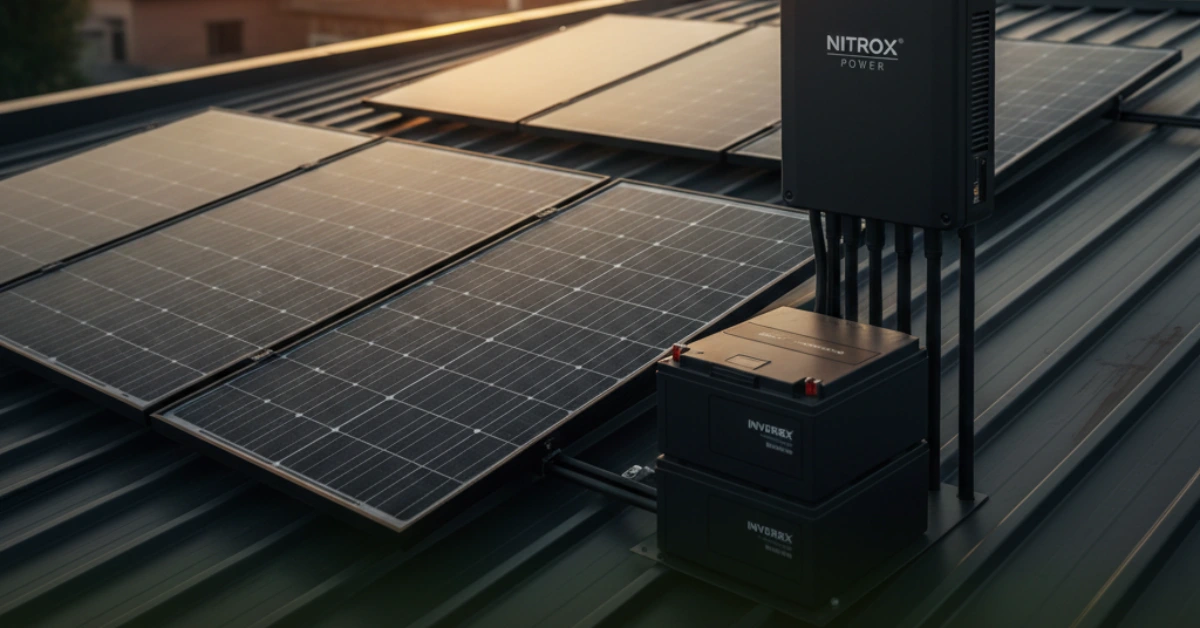
- Local Option: Inverex (Nitrox/Veyron series)
Recommendation for Pakistan: Hybrid inverters increasingly popular because:
- Single device manages both grid and batteries
- Better performance than separate components
- Lower total cost despite higher unit price
- Supports net metering while providing backup
3. Battery Storage (if hybrid/off-grid)
Lithium-Ion (LiFePO4) – Recommended:
- Cost: PKR 150,000-200,000 per kWh
- 5kWh battery: PKR 750K-1M
- 10kWh battery: PKR 1.5M-2M
- 15kWh battery: PKR 2.25M-3M
- Lifespan: 10-15 years
- Maintenance: Zero
Lead-Acid (Older Technology):
- Cost: PKR 60,000-100,000 per kWh
- 5kWh battery: PKR 300K-500K
- Lifespan: 3-5 years only
- Maintenance: Monthly water refilling required
- Not recommended (replaced by lithium due to cost-of-ownership)
Top Battery Brands in Pakistan:
- Tesla Powerwall (premium, PKR 500K+ for 13.5kWh)
- Pylontech (excellent value, PKR 150K-200K/kWh)
- Narada (reliable, PKR 140K-180K/kWh)
- Crown (local support, PKR 160K-200K/kWh)
4. Mounting Structure, Wiring, Breakers, Earthing
Often overlooked but critical:
- Mounting structure: PKR 25K-50K (depends on roof type)
- DC/AC wiring and connectors: PKR 30K-50K
- DC/AC breakers and disconnect switches: PKR 15K-25K
- Earthing and safety equipment: PKR 10K-20K
- Net metering installation (if applicable): PKR 125K
Quality matters here: Cheap wiring and poor earthing cause system failures and fire risks. Always use quality copper wiring and proper earth rods.
5. Professional Installation (PKR 25K-50K)
Why professional installation is non-negotiable:
- Roof assessment ensures structural safety
- Proper spacing for heat dissipation (affects efficiency)
- Correct electrical connections (safety critical)
- BMS calibration for battery systems
- Warranty validity (many manufacturers void warranty for DIY)
Installer Licensing: Always verify installer has NEPRA/AEDB certification for grid-tied systems.
How to Determine Your System Size: Complete Calculation Guide
Oversizing wastes money; undersizing disappoints. Here’s how to get it right:
Step 1: Calculate Daily Energy Consumption
Review your electricity bills for past 12 months:
- Find monthly consumption in kWh (or units × 1 kWh per unit)
- Calculate average monthly: Sum all 12 months ÷ 12
- Convert to daily: Average monthly ÷ 30
Example:
- Monthly bills range PKR 6,000-15,000
- Average monthly at PKR 30/unit = 300 units = 300 kWh
- Daily consumption: 300 ÷ 30 = 10 kWh daily
Step 2: Account for Pakistan’s Peak Sun Hours
Pakistan has excellent solar resources:
- Karachi/Hyderabad: 5.5-6 peak sun hours daily
- Lahore/Faisalabad: 4.5-5.5 peak sun hours daily
- Islamabad/Peshawar: 4-4.5 peak sun hours daily
- Interior Sindh/Balochistan: 5-6 peak sun hours daily
Step 3: Calculate Required System Size
Formula: System Size (kW) = Daily Need (kWh) ÷ Peak Sun Hours ÷ 0.75 (loss factor)
Example Calculation:
- Daily need: 10 kWh
- Peak sun hours: 5 (average for most Pakistan)
- System size: 10 ÷ 5 ÷ 0.75 = 2.67 kW
- Recommended: 3 kW system (round up for safety margin)
Another Example (larger home):
- Daily need: 20 kWh
- Peak sun hours: 5
- System size: 20 ÷ 5 ÷ 0.75 = 5.33 kW
- Recommended: 5.5-6 kW system
Quick Reference Table
| Monthly Bill | Daily kWh | System Size (Karachi) | System Size (Lahore) | System Size (Islamabad) |
|---|---|---|---|---|
| PKR 5,000 (150 kWh/mo) | 5 | 1.5 kW | 1.8 kW | 2.2 kW |
| PKR 10,000 (300 kWh/mo) | 10 | 3 kW | 3.6 kW | 4.4 kW |
| PKR 15,000 (450 kWh/mo) | 15 | 4.5 kW | 5.4 kW | 6.7 kW |
| PKR 20,000 (600 kWh/mo) | 20 | 6 kW | 7.2 kW | 8.9 kW |
Why Round Up? Pakistan’s winter has fewer peak sun hours (4-4.5). Oversizing ensures you meet winter needs when solar generation is lowest.
Installation Timeline: What to Expect
A typical solar system installation timeline in Pakistan:
| Phase | Timeline | Activities |
|---|---|---|
| Consultation & Survey | Days 1-3 | Site inspection, shading analysis, electrical assessment |
| System Design | Days 4-7 | Engineering calculations, component selection, quote preparation |
| Approval & Permits | Days 8-14 | NEPRA/DISCO approvals (if grid-tied), structural permits |
| Equipment Procurement | Days 15-28 | Ordering panels, inverter, batteries, mounting structures |
| Installation | Days 29-35 | Roof mounting, wiring, electrical connections (3-5 days actual work) |
| Testing & Commissioning | Days 36-42 | System testing, safety verification, user training |
| Grid Connection | Days 43-56 | Final DISCO approval, meter installation (if net metering) |
| Total Timeline | 6-8 weeks | From consultation to operational system |
Faster Option: Some installers offer “quick install” packages (4-6 weeks) with pre-approved designs.
FAQ: Solar System for Home 2026 in Pakistan
Q1: Is a 3kW system enough for my home?
A: Depends on your consumption. A 3kW system generates 12-15 kWh daily in Pakistan, suitable for homes using 250-300 kWh monthly (PKR 7,500-9,000 at current rates). If your bill exceeds PKR 12,000 monthly, a 5kW+ system is needed. Most advisors recommend minimum 5kW for Pakistan’s climate and consumption patterns.
Q2: Should I buy grid-tied or hybrid?
A: Grid-tied if: (1) Load shedding is minimal (3-4 hours daily), (2) Budget is tight, (3) ROI priority. Hybrid if: (1) Load shedding is severe (6+ hours), (2) You want peace-of-mind backup, (3) Can afford 100% premium cost. Reality check: 60% of new installations in major cities are hybrid due to unpredictable load shedding.
Q3: Do I need permission from DISCO to install solar?
A: For grid-tied systems: Yes, NEPRA/DISCO approval required (standard 2-4 week process). For off-grid systems: No permission needed (independent). Hybrid systems: Follow grid-tied rules since connected to grid. Most installers handle approval paperwork on your behalf.