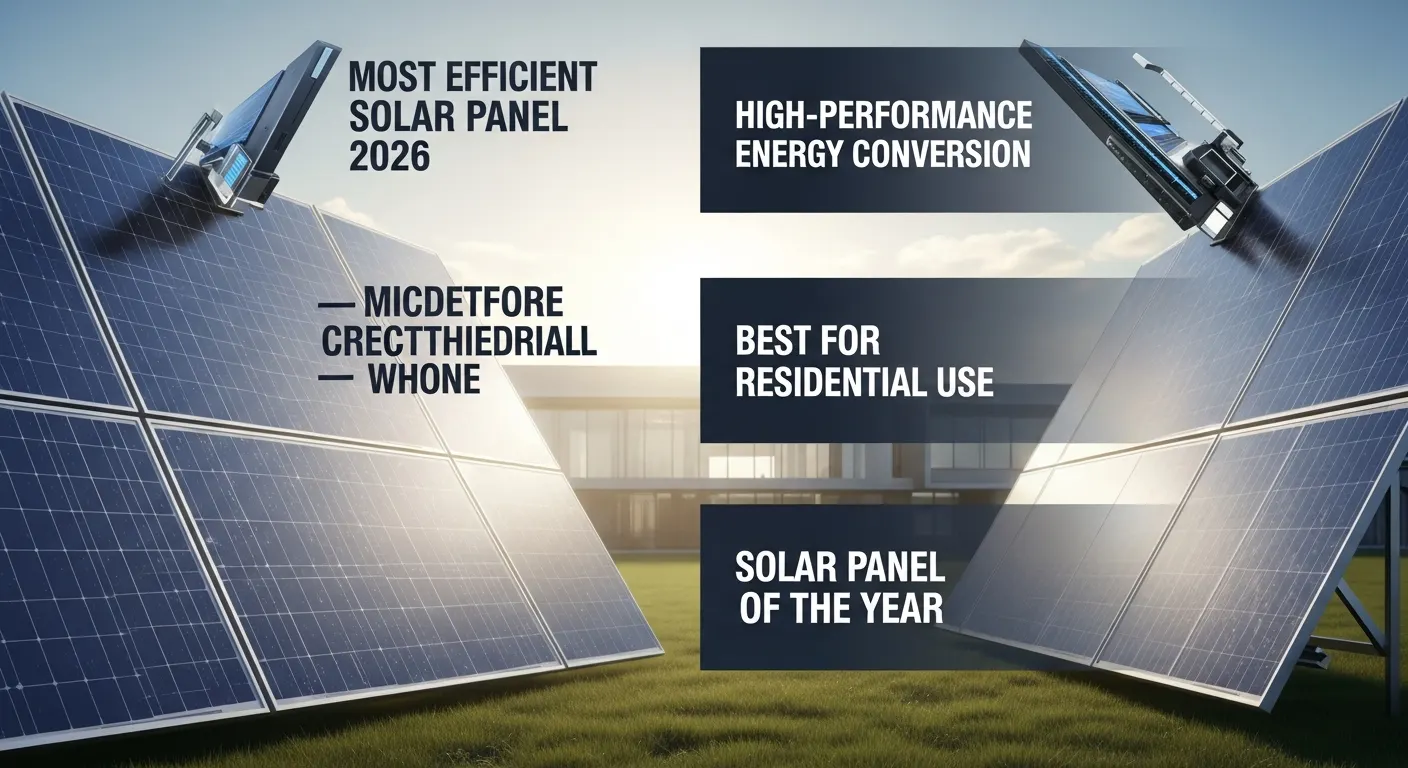
As electricity prices in Pakistan continue to surge, homeowners and businesses are no longer just looking for “cheap” solar plates; they are hunting for the maximum energy harvest per square foot. In 2026, the solar market has shifted from basic P-Type Mono PERC to advanced N-Type TOPCon and HJT (Heterojunction) technologies.
But with dozens of brands like Longi, Jinko, and Canadian Solar flooding the market, the question remains: what are the best and most efficient solar panels available right now that can withstand Pakistan’s extreme 50°C summers and high dust levels?
In this comprehensive guide, we analyze the top-tier modules based on laboratory efficiency, real-world Pakistani field performance, and long-term ROI. By the end of this article, you will know exactly which panel brand and technology will slash your bills to zero for the next 25 years.
Check the Complete Solar System Price in Pakistan to see the total cost including mounting and inverters.)
Understanding Solar Efficiency in the Pakistani Climate
Before diving into brands, it is crucial to understand what “efficiency” actually means for a user in Karachi, Lahore, or Multan. Efficiency is the percentage of sunlight a panel converts into usable electricity.
While a 25% efficiency rating sounds impressive in a lab, Pakistan’s heat can cause panels to “choke.” This is where the Temperature Coefficient becomes more important than raw efficiency.
- N-Type Panels: The gold standard in 2026. They have a lower degradation rate and perform significantly better in high temperatures than older P-Type panels.
- Bifacial Technology: These panels capture sunlight from both sides, increasing yield by up to 20% if installed on reflective surfaces like white-painted roofs.
Top 5 Most Efficient Solar Panels Available in Pakistan (2026)
Based on 2026 availability and performance data, here are the top contenders for the title of the world’s most efficient solar modules currently imported into Pakistan.
AIKO Solar (ABC Technology) – Efficiency: 24% – 25%+
AIKO has disrupted the Pakistani market with its All Back Contact (ABC) technology. By moving all electrical contacts to the rear, the entire front surface is exposed to the sun.
- Best For: Small rooftops where space is limited but power needs are high.
- Key Advantage: Exceptional aesthetics (pure black) and the highest efficiency currently available commercially in Pakistan.
Longi Hi-MO S10 & X10 Series – Efficiency: 23% – 25%
Longi remains the “King of Mono” in Pakistan. Their newest Hi-MO X10 series uses HPBC (Hybrid Passivated Back Contact) technology to reach unprecedented efficiency levels.
- Best For: Reliability and nationwide support. Longi has the strongest distribution network in Pakistan.
- Key Advantage: Lowest degradation rate—guaranteed to provide 88% output even after 30 years.
Jinko Tiger Neo 3.0 (N-Type TOPCon) – Efficiency: 23.5% – 24.8%
Jinko’s Tiger Neo series is arguably the most popular N-Type panel in Pakistan today. It balances high efficiency with a very competitive price point.
- Best For: Hot climates. Its temperature coefficient is among the best, meaning it loses less power during peak June heat.
- Key Advantage: High bifaciality factor, making it the top choice for industrial sheds and large carports.
Canadian Solar TopBiHiKu7 – Efficiency: 22.5% – 23%
Canadian Solar is synonymous with “durability.” Their N-type TOPCon modules are engineered to withstand high wind loads and heavy dust, common in rural Sindh and Punjab.
- Best For: Durability in harsh, dusty, or humid environments.
- Key Advantage: Advanced cell cooling technology that prevents hot spots.
Trina Solar Vertex S+ – Efficiency: 22% – 23.1%
Trina’s Vertex series is famous for its massive 600W+ panels. In 2026, the Vertex S+ (Double Glass) has become a favorite for Pakistani residential projects.
- Key Advantage: The double-glass design makes it fireproof and resistant to salt-mist corrosion (ideal for Karachi).
- Best For: Residential homes looking for a balance between premium tech and budget.
- Read our guide on 5kW Lithium Battery Price in Pakistan to pair your panels with the best storage.)
Comparative Analysis: Efficiency vs. Power Output
To help you decide what are the best and most efficient solar panels for your specific needs, we have summarized the technical specs of the 2026 market leaders below.
2026 High-Efficiency Solar Panel Comparison Table
| Brand & Series | Technology | Efficiency | Temp. Coefficient | Best Application |
| AIKO Neostar | ABC (N-Type) | 24.5% – 25.2% | -0.26%/°C | Luxury Homes / Small Roofs |
| Jinko Tiger Neo | TOPCon (N-Type) | 23.2% – 24.8% | -0.29%/°C | Commercial / Standard Home |
| Longi Hi-MO X10 | HPBC (N-Type) | 23.5% – 25.0% | -0.28%/°C | High-Yield Industrial |
| Canadian Solar | TOPCon | 22.6% – 23.4% | -0.30%/°C | Large Industrial / Utility |
| Trina Vertex S+ | Dual Glass | 22.4% – 23.1% | -0.30%/°C | Coastal & Humid Areas |
Why N-Type TOPCon is Replacing PERC in 2026
If you are asking what are the best and most efficient solar panels, you must look at the cell architecture. In 2025, P-type PERC panels (the blue/black ones we’ve seen for years) hit a “glass ceiling” of about 21% efficiency.
N-Type TOPCon (Tunnel Oxide Passivated Contact) has taken over because:
- Zero LID (Light Induced Degradation): Unlike old panels, N-Type does not lose 2-3% efficiency the moment it hits the sun.
- Better Low-Light Performance: It generates power earlier in the morning and later in the evening compared to PERC.
- Longevity: Most N-Type panels now come with a 30-year power warranty, whereas PERC was usually limited to 25.
Factors to Consider Beyond Efficiency
Efficiency isn’t everything. A 24% efficient panel that breaks after a hailstorm is a bad investment. For Pakistani users, consider these three pillars:
A. The Warranty (Product vs. Performance)
Don’t be fooled by a “25-year warranty.”
- Product Warranty: Covers defects in manufacturing (usually 12-15 years).
- Performance Warranty: Covers the energy output (usually 25-30 years). Always look for brands that offer at least a 15-year product warranty in Pakistan.
B. Tier-1 Status
Only buy brands listed on the BloombergNEF Tier-1 list. This ensures the company is bankable and will likely be around to honor your warranty in 15 years. All brands mentioned above (Longi, Jinko, Canadian, Trina) are Tier-1.
C. Mounting and Installation
Even the best solar panels will underperform if the installation is poor.
- In Pakistan, L3 galvanized iron or aluminum structures are mandatory to prevent rusting.
- Inverters: High-efficiency panels must be paired with high-efficiency inverters (like Huawei or Growatt) to avoid “clipping” losses.
Expert Verdict: Which One Should You Buy?
- If Money is No Object: Go for AIKO ABC or Maxeon (SunPower). They offer the highest efficiency and the best aesthetic look.
- For the Best ROI (Value for Money): Jinko Tiger Neo or Longi Hi-MO 7/X10 are the winners. They provide the most “wattage per rupee” while maintaining elite efficiency.
- For Karachi/Coastal Areas: Choose Trina Vertex S+ (Double Glass). The glass-on-glass protection is vital against salt-mist corrosion.
Frequently Asked Questions (FAQs)
Conclusion
Deciding what are the best and most efficient solar panels is the first step toward true energy independence. In 2026, the clear winners are N-Type TOPCon and ABC technologies offered by Tier-1 brands like Jinko, Longi, and AIKO. These panels don’t just provide more power; they survive the harsh Pakistani climate and offer the fastest payback period (usually under 3 years).
Stop paying for expensive grid electricity and start harvesting the sun with the latest high-efficiency tech.