
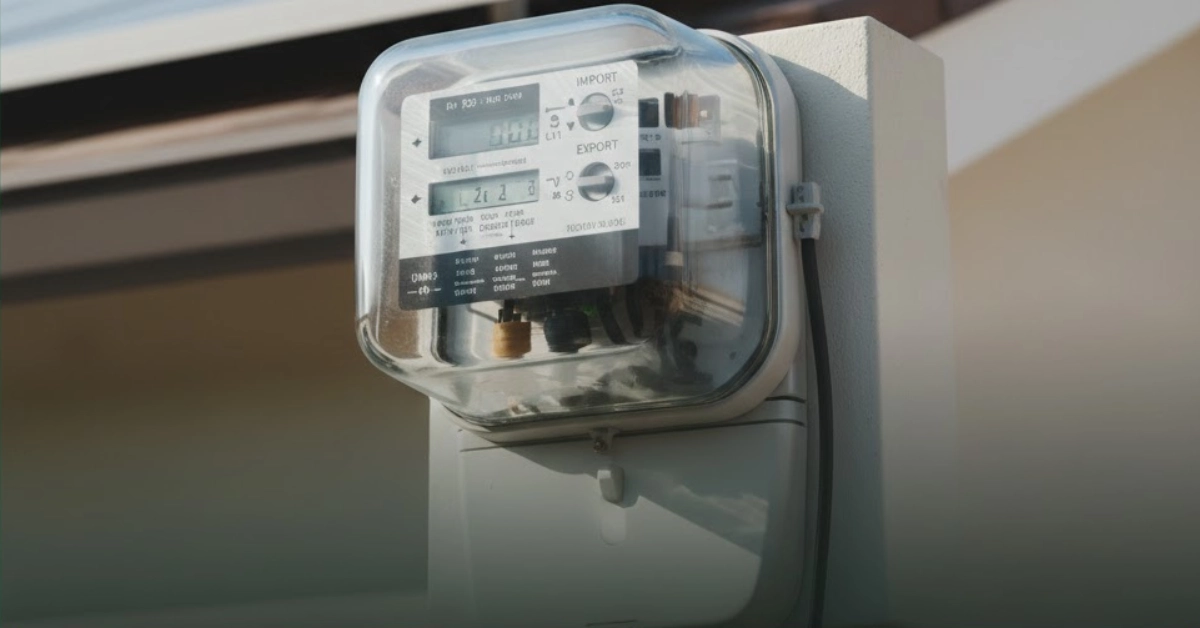
Everything you need to know about the shift from Net Metering to Net Billing in Pakistan.
If you are planning to install solar panels in Pakistan in 2026, the rules of the game have changed. On February, 2026, the National Electric Power Regulatory Authority (NEPRA) officially replaced the decade-old What is Net Billing in Solar 2026? “Net Metering” system with a new “Net Billing” framework.
For years, Pakistani homeowners enjoyed a 1-to-1 exchange of electricity units with the grid. You gave a unit, you got a unit back. That era is over. The new 2026 regulations have introduced a “Buy High, Sell Low” mechanism that fundamentally alters the Return on Investment (ROI) for solar systems.
This guide clarifies exactly what net billing is, how it differs from net metering, and whether solar is still a viable investment for your home or business in Pakistan.
What is Net Billing? (The 2026 Definition)
Net Billing is a mechanism where the electricity you generate and the electricity you consume are treated as two separate financial transactions.
Under the previous Net Metering (2015-2025) model, the grid acted like a battery. If you exported 100 units during the day and consumed 100 units at night, your bill was essentially zero. The units simply cancelled each other out.
Under the new Net Billing (2026) regulations: What is Net Billing in Solar 2026?
- Exports are Sold: Every unit you send to the grid is “sold” to the DISCO (e.g., LESCO, K-Electric, IESCO) at a fixed rate, known as the National Average Energy Price (approx. PKR 11/unit).
- Imports are Bought: Every unit you pull from the grid (at night or on cloudy days) is charged at your full tariff tier (approx. PKR 37-60/unit depending on your slab and taxes).
- The Settlement: At the end of the month, the utility calculates the cash value of your exports and subtracts it from the bill of your imports. Because the import price is 3x-4x higher than the export price, you will likely still have a bill to pay even if you produce as much energy as you use.
Why the Change?
NEPRA and the Ministry of Energy formally shifted to this model to address the “capacity payment” crisis and the financial burden on the national grid. With over 2GW of distributed solar installed by 2025, the government argued that wealthy solar owners were effectively shifting grid maintenance costs onto non-solarized (poorer) consumers. The 2026 policy aims to make solar owners pay their “fair share” for using the grid as a backup.
Net Metering vs. Net Billing: The Key Differences
To understand the financial hit, look at this direct comparison.
| Feature | Old Net Metering (Pre-2026) | New Net Billing (2026 Policy) |
|---|---|---|
| Unit Exchange | 1-to-1 Unit Offset (kWh for kWh) | Monetary Settlement (Rupees for Rupees) |
| Export Rate | Same as Off-Peak Import Rate (~PKR 25-30) | National Average Energy Price (~PKR 11) |
| Import Rate | Standard Tariff | Standard Tariff (~PKR 37-60) |
| Bill Calculation | (Import Units – Export Units) x Rate | (Import Units x High Rate) – (Export Units x Low Rate) |
| Contract Term | 7 Years (often extended) | 5 Years (Renewable at new rates) |
| ROI Impact | Payback in 2-3 years | Payback in 4-5 years |
Who Does This Apply To?
- New Applicants: Anyone applying for a connection after February 2026 falls immediately under Net Billing.
- Existing Users: If you had a net metering license before the cutoff date, you are “grandfathered” in. Your current license remains valid for up to 7 years from its issuance date. After that, you will be forcibly migrated to the Net Billing regime.
The Financial Impact of Net Billing 2026 (ROI Analysis)
This is the big question every homeowner is asking: Does solar still make sense in 2026?
To answer this, we need to run the numbers. Under the old Net Metering policy, your ROI was calculated on avoided cost. Under Net Billing, it is calculated on the difference between what you save (self-consumption) and what you “sell” (export).
Monthly Savings Example: A 10kW System
Let’s assume a standard 10kW On-Grid Solar System in Lahore or Islamabad.
- System Production: ~1,200 units (kWh) per month on average.
- Self-Consumption: 50% (600 units used directly during the day).
- Export to Grid: 50% (600 units sent back to WAPDA).
- Import from Grid: 600 units (consumed at night).
Scenario A: Old “Net Metering” (Pre-2026)
- You exported 600 units and imported 600 units.
- Net Bill: 0 units.
- Cost: You only pay meter rent and taxes.
- Total Monthly Bill: ~PKR 2,500.
Scenario B: New “Net Billing” (2026)
Here is where the math hurts.
- Direct Savings (Self-Consumption): You used 600 units directly from solar, avoiding the grid tariff of ~PKR 45/unit.
- Saving: 600 x 45 = PKR 27,000.
- Export Revenue: You sold 600 units to the grid at the new Buyback Rate (~PKR 11).
- Credit: 600 x 11 = PKR 6,600.
- Grid Bill (Imports): You bought 600 units at night at the full tariff (~PKR 45 + taxes = ~PKR 55/unit).
- Debit: 600 x 55 = PKR 33,000.
- Final Bill: (Grid Bill) – (Export Credit)
- Calculation: 33,000 – 6,600 = PKR 26,400.
The Verdict: Under the old system, your bill was near zero. Under the new 2026 Net Billing system, your same usage results in a monthly bill of PKR 26,400.
How Does This Affect ROI?
Despite the tougher rules, solar is still profitable—just less so.
- Without Solar: Your bill for 1,200 units would create a monthly cost of nearly PKR 70,000.
- With Net Billing Solar: Your bill is PKR 26,400.
- Monthly Savings: You are still saving roughly PKR 43,600 per month compared to having no solar at all.
This means the payback period for a 10kW system (costing approx. PKR 1.5 – 1.8 Million in 2026) has shifted from 2.5 years to roughly 4 – 4.5 years. It is still a far better investment than letting money sit in a bank, but the “free electricity” dream is effectively over.
Net Billing vs. Gross Metering: Clearing the Confusion
Many Pakistani solar adopters confuse “Net Billing” with “Gross Metering”. They are not the same.
- Net Billing: You consume your solar energy first. Only the excess is sold to the grid. This encourages self-consumption and efficiency.
- Gross Metering: Every single unit produced by your panels goes directly to the grid. You are not allowed to use your own solar power. The utility pays you for 100% of production and charges you for 100% of consumption.
Why Net Billing is Better: Net Billing allows you to bypass taxes and distribution margins on the energy you consume directly. In Gross Metering, you lose this advantage. Fortunately, NEPRA’s 2026 policy is Net Billing, not Gross Metering.
The “Hybrid” Solution: Beating the System
Smart consumers are adapting by changing how they install solar. The goal is no longer to export; the goal is to limit imports.
- Hybrid Inverters: Instead of a standard On-Grid inverter, install a Hybrid Inverter (e.g., Sungrow, Huawei, GoodWe).
- Battery Storage (LiFePO4): Add a lithium battery bank (10kWh or more).
- Self-Consumption Strategy: Store your excess 600 units in the battery during the day instead of selling them for cheap (PKR 11). Use that stored battery power at night to avoid buying from the grid at PKR 55.
By adding batteries, you can return your monthly bill to near-zero, though the initial upfront cost of the system increases by roughly 30-40%.
( Read our full guide on [Best Hybrid Inverters in Pakistan 2026] for more details)
Future Outlook: Is Solar Still Worth It in 2026?
With the shift to Net Billing, many are calling it the “death of solar” in Pakistan. This is an exaggeration. While the golden age of 2.5-year ROI is gone, the fundamental reason for going solar—energy independence—is stronger than ever.
Grid tariffs in Pakistan are projected to cross PKR 70/unit by mid-2027 due to inflation and fuel adjustments. Locking in your energy cost now with a 25-year solar asset is still the smartest financial move a homeowner can make.
3 Critical Tips for Solar Owners in 2026
If you are installing solar under the new Net Billing regime, you must change your strategy.
- Undersize Your System (Don’t Oversize): In the old days, if your load was 5kW, you installed 10kW to export and earn credits. Under Net Billing, exporting is a losing game (selling at PKR 11). Only install enough solar to cover your daytime load.
- Shift Your Load: The most expensive electricity is the electricity you pull from the grid at night. Schedule your heavy loads—ACs, washing machines, water pumps, Dishwashers—to run between 10 AM and 4 PM.
- Consider “Zero Export” Devices: If the local DISCO paperwork for Net Billing is too much hassle, or if the grid voltage is unstable, consider a “Zero Export” device. This prevents any energy from going back to the grid, simplifying your setup.
Frequently Asked Questions (FAQ)
What is the buyback rate for Net Billing in 2026?
The buyback rate is linked to the National Average Energy Price, which fluctuates but is currently set around PKR 11 per unit. This is significantly lower than the ~PKR 27 rate seen in previous years under Net Metering.
Will existing Net Metering users be switched to Net Billing?
Yes, eventually. If you already have a Net Metering license issued before Feb 2026, you are protected for 7 years from your issuance date. After that period expires, you will automatically be migrated to the new Net Billing tariff.
Can I use batteries with Net Billing?
Yes, and it is highly recommended. Adding a battery (like a 10kWh Lithium Phosphate generic or branded Pylontech/Narada) allows you to “time-shift” your energy. You store the cheap solar power during the day and use it at night, effectively bypassing the grid’s high rates.
Is Net Billing applicable to commercial users?
Yes, the 2026 Net Billing regulations apply to all distributed usage categories, including domestic, commercial, industrial, and agricultural connections up to 1MW.
Does Net Billing apply to K-Electric consumers?
Yes, NEPRA’s regulations are federal and apply to all distribution companies (DISCOs), including K-Electric in Karachi, LESCO in Lahore, IESCO in Islamabad, and others.
Conclusion
The era of Net Metering in Pakistan has ended, and Net Billing is the new reality for 2026. While the financial returns are not as lucrative as they once were, the core value proposition remains: shielding yourself from rising grid electricity prices.
For the Pakistani homeowner, the strategy has shifted from “maximum export” to “maximum self-consumption.” By rightsizing your system and potentially adding battery storage, you can still achieve a payback period of under 5 years—a solid investment in an uncertain economic climate.

Pingback: 1kW Solar System Price in Pakistan 2026 - Cost Breakdown